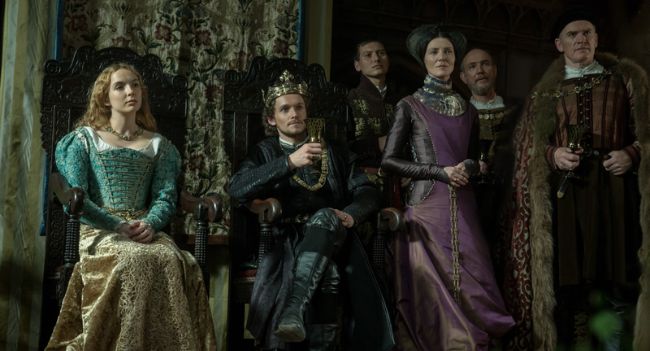
Jodie Comer Leads A Royal Power Struggle In The White Princess
A marriage intended to end England’s civil war becomes the beginning of a far more complicated struggle for power in The White Princess. Starring Jodie Comer as Elizabeth of York, the 2017 historical drama places its young heroine at the centre of the Tudor court, where family loyalties, political ambition and questions over the throne make peace almost impossible.
The seven-part series, based on Philippa Gregory’s novel of the same name, remains a compelling choice for viewers drawn to lavish period dramas with complicated relationships and shifting allegiances. Rotten Tomatoes currently gives the series a 75% Tomatometer score from 16 reviews, alongside an 83% Popcornmeter score.

A royal marriage built on political necessity
Elizabeth of York is brought into a marriage with Henry VII, played by Jacob Collins-Levy, after Henry’s victory over Richard III.
The union is supposed to bring together the rival Houses of York and Lancaster and finally end the Wars of the Roses. But Elizabeth enters the Tudor court with her own loyalties and grievances, while Henry must establish his authority as a king whose claim to the throne remains contested.
Their marriage therefore carries consequences far beyond their personal relationship. Its success could help secure peace, while its failure could leave England vulnerable to renewed conflict.
As Elizabeth adjusts to her new position, she finds herself navigating a court where almost everyone has something to gain. Her York heritage remains important, her loyalty to her family is tested, and the Tudor dynasty demands that she learn quickly how to survive among people competing for influence.

Elizabeth’s real battle is inside the court
One of the drama’s strongest elements is its focus on the women surrounding the throne.
Elizabeth must contend with Lady Margaret Beaufort, Henry’s formidable mother, played by Michelle Fairley. Their relationship becomes a battle of influence, with both women seeking to protect their interests and shape Henry’s decisions.
Elizabeth is also caught between her new Tudor family and her York relatives. Her mother, Dowager Queen Elizabeth Woodville, played by Essie Davis, remains deeply concerned about the fate of her family, including rumours surrounding her missing son.
That gives the series a broader perspective than a conventional royal romance. The struggle for power is repeatedly filtered through the women who must find ways to influence events in a world where their position can change overnight.
Harper’s Bazaar described the series as a story in which Elizabeth is forced to balance loyalty to her family, her husband and his mother while establishing herself as an important figure at court.

Jodie Comer’s transformation into Elizabeth
For Comer, the role offered the chance to portray a historical figure about whom relatively little personal information survives.
In an interview with Harper’s Bazaar, Comer explained that she felt an immediate connection with Elizabeth when she first read the scripts, particularly with the character’s adolescence and the process of growing into adulthood.
The larger challenge was the story’s seven-year timeline.
Rather than relying on dramatic physical changes to show Elizabeth aging, Comer focused on how the experiences of the story gradually shaped her. The character begins as a young woman entering a politically charged marriage and becomes increasingly confident as she learns how to operate within the Tudor court.
The production used costume, hair and makeup to reinforce that development. Elizabeth’s clothing becomes more restrictive as the story progresses, while her hair evolves from a loose, romantic style into a more controlled appearance. Comer described the costumes almost as a form of armour, reflecting the turmoil Elizabeth faces.
That attention to character development helps make Elizabeth’s transformation feel like more than a simple change in age. The queen viewers meet later in the story has been shaped by everything she has survived.

A continuation of The White Queen
The White Princess follows The White Queen, the 2013 historical drama that explored the events leading up to the Battle of Bosworth and Henry Tudor’s rise.
While the two series share the same historical world, The White Princess places Elizabeth and the women around the Tudor court much more firmly at the centre of its story.
The result is a drama where romance, family conflict and political manoeuvring are closely connected. Elizabeth’s marriage to Henry is not simply a love story; it becomes the mechanism through which the competing houses attempt to create a new political order.
The series can also be watched on its own, although viewers familiar with The White Queen will recognize many of the historical tensions and family connections.
History, drama and plenty of artistic licence
The series does not present history as a straightforward reconstruction.
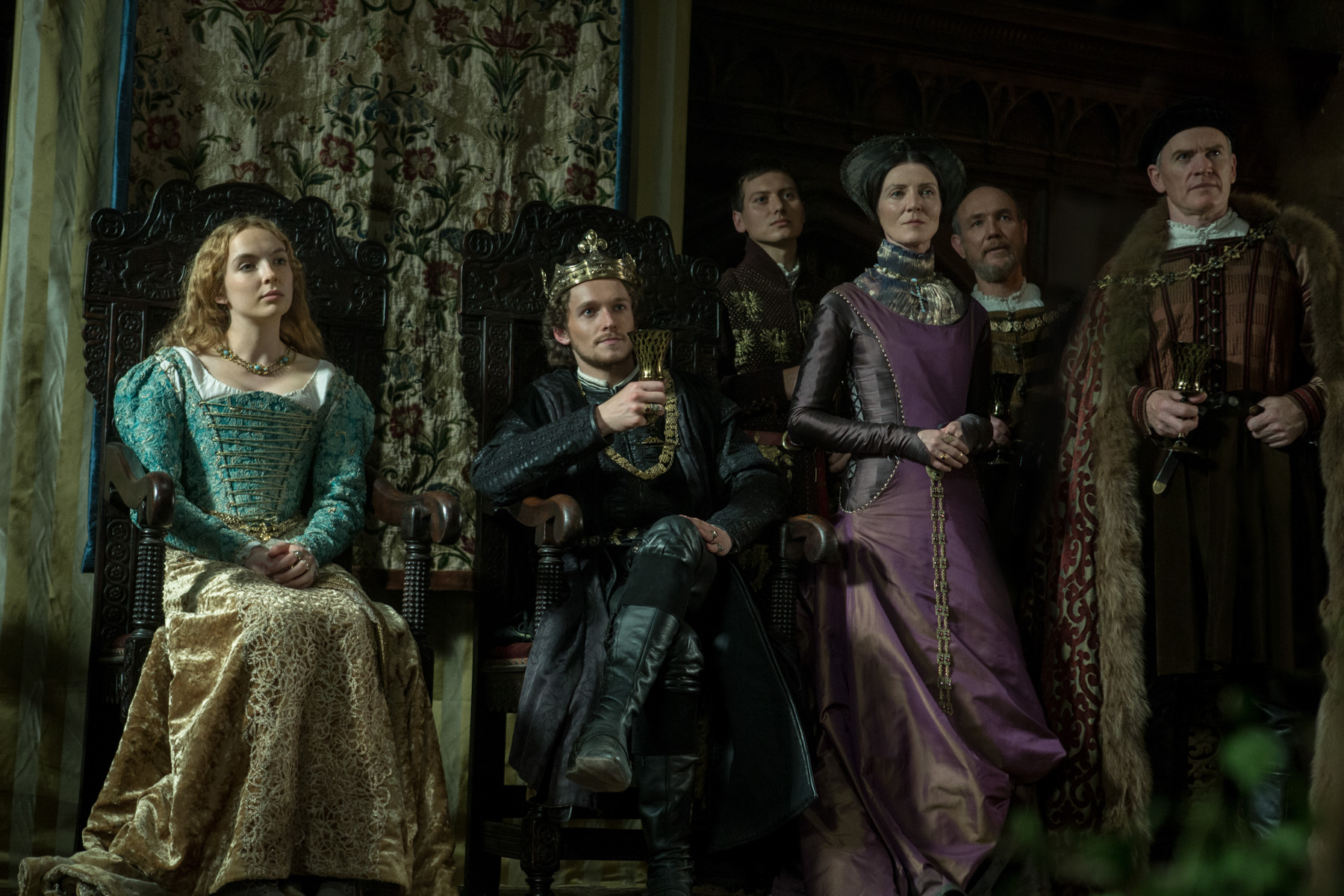
As with many historical dramas, The White Princess reshapes certain events and characters for dramatic purposes. Critics have noted that some elements have been adjusted, while the major historical circumstances provide the foundation for the story.
What remains central is Elizabeth’s uncertain position as a new queen. She must navigate a marriage that carries enormous political consequences while dealing with relatives and rivals whose loyalties are constantly shifting.
Rotten Tomatoes’ critics’ consensus highlights the series’ performances and its perspective on British royal-court drama, while the overall 75% Tomatometer score reflects a generally positive critical response.
The cast also gives the drama considerable weight, with Comer and Collins-Levy joined by Fairley, Davis, Rebecca Benson, Richard Dillane and Kenneth Cranham.

Why The White Princess remains worth watching
At its best, The White Princess works because the political conflict never feels completely separate from the personal story.
Elizabeth is trying to understand her husband while protecting her family, navigating Margaret Beaufort and finding her own authority as queen. Every relationship has political consequences, and every political decision carries a personal cost.
That was also part of what attracted Comer to the material. She told Harper’s Bazaar that beneath the crowns, costumes and historical setting, the story is ultimately about politics, family, love and betrayal — experiences that remain recognizable centuries later.
The result is a period drama built around more than royal spectacle. It is a story about a young woman forced into an extraordinary position and gradually learning how much influence she can have within it.
With its seven-episode structure, Tudor intrigue and central performance from Comer, The White Princess offers a different perspective on one of the most turbulent transitions in English royal history.