BBC’s Miss Austen Turns a Real Literary Mystery Into a Beautiful, Heartbreaking Story About the Sister Who Protected Jane Austen’s Legacy
Jane Austen may be one of the most famous writers in English literature, but this acclaimed BBC period drama places another woman at the heart of her story: the sister who knew her better than almost anyone.
Miss Austen, the four-part adaptation of Gill Hornby’s acclaimed novel, stars Keeley Hawes as Cassandra Austen and builds its story around one of the enduring mysteries surrounding Jane’s life — why Cassandra destroyed so many of her famous sister’s letters after her death.
Rather than presenting that act simply as the destruction of valuable history, the drama imagines the love, grief and determination that might have driven Cassandra to protect Jane’s private life from people eager to uncover it.
PBS, which aired the drama in the US as part of Masterpiece, describes the series as a reimagining of the real literary mystery through a story of “love, sacrifice, and loss.”
Cassandra Austen Has a Secret Reason for Going to Kintbury
The story begins in 1830, years after Jane Austen’s death.
Cassandra receives word that Reverend Fulwar Fowle is dying and travels to Kintbury, where she reconnects with the family of her late friend Eliza.
But Cassandra has another, much more urgent reason for making the journey.
She believes the house may contain letters Jane wrote to Eliza over the course of their friendship — correspondence that could reveal intimate details about Jane and the Austen family.
Cassandra is determined to find those letters before anyone else does.
The problem is that she isn’t the only person interested in Jane’s private correspondence. With the possibility of a biography being written about the celebrated novelist, those letters could become extraordinarily valuable to anyone hoping to uncover the woman behind the books.
That creates the central tension of Miss Austen: Cassandra wants to protect her sister, while others believe Jane’s private writings could offer fascinating new insight into an increasingly important literary figure.
Keeley Hawes Leads the Drama as Cassandra
At the center of the series is Keeley Hawes, familiar to television audiences from Line of Duty, Bodyguard, Spooks and It’s a Sin.
Rather than portraying Cassandra simply as Jane Austen’s surviving sister, the drama gives her an emotional history of her own.
As she searches through old correspondence, Cassandra is pulled back into memories of her youth with Jane and the relationships that shaped both women’s lives.
The letters therefore become more than evidence about Jane.
They unlock Cassandra’s memories.
Through the series’ movement between past and present, viewers gradually discover her relationship with Tom Fowle, the man she loved and intended to marry, as well as the painful events that followed his death.
By the second episode, Cassandra’s memories take her back to the difficult period after losing Tom and the circumstances that followed at her brother’s estate in Kent.
The result is less a conventional Jane Austen biographical drama than a story about sisterhood, memory and the price of protecting someone after they are gone.
Patsy Ferran Brings the Young Jane Austen to Life

Jane remains essential to the story, appearing through Cassandra’s memories.
Patsy Ferran plays the celebrated novelist, allowing Miss Austen to explore the relationship between the two sisters before Jane became the literary icon remembered today.
Their scenes emphasize an intimacy that helps explain Cassandra’s fierce protectiveness decades later.
The first episode, for example, uses one of Jane’s letters to Eliza to transport Cassandra back into the sisters’ younger years, when Cassandra was looking forward to seeing Tom Fowle.
Rather than treating the surviving letters simply as historical documents, the drama turns them into portals into Cassandra’s memory.
That structure gives Jane an important presence without making the entire series another straightforward account of her life.
The Story Is Inspired by a Genuine Austen Mystery

Gill Hornby’s novel takes inspiration from something Cassandra Austen really did.
A substantial amount of Jane’s correspondence was destroyed, and Cassandra has consequently been blamed by generations of biographers and Austen enthusiasts for eliminating material that might have revealed more about her famous sister.
Only around 160 of Jane’s letters are known to have survived.
Hornby has explained that those surviving letters reveal something important about the relationship between the sisters: Jane’s affection for Cassandra was profound.
That led the novelist to reconsider Cassandra’s reputation and imagine the destruction of the letters from her point of view.
Hornby said she respected the established historical facts while using the gaps in the surviving record as space for fiction.
That distinction is important.
Miss Austen isn’t claiming to provide a definitive historical explanation for everything Cassandra did. It uses a genuine unanswered question as the foundation for historical fiction.
Protecting Jane Becomes Increasingly Difficult

As Cassandra’s search continues, keeping Jane’s correspondence hidden becomes more complicated.
Mary Austen is particularly interested in whether any letters have survived, while Cassandra becomes increasingly determined that Jane’s private words should not end up in the wrong hands.
At the same time, another problem demands Cassandra’s attention.
She becomes concerned about Isabella Fowle’s future and begins trying to ensure she will have somewhere secure to live.
Those two threads — protecting Jane’s legacy and protecting Isabella — gradually become intertwined with Cassandra’s memories of her own younger life.
By Episode 3, Cassandra becomes seriously ill.
Even while suffering from fever and drifting through memories of the past, she continues trying to keep Jane’s letters away from Mary. Her condition causes past and present to collide, while Isabella’s circumstances push Cassandra toward increasingly decisive action.
It gives the series an urgency that might be unexpected from a drama centered around old correspondence.
Rose Leslie Is Part of the Ensemble
The supporting cast adds considerable weight to the production.
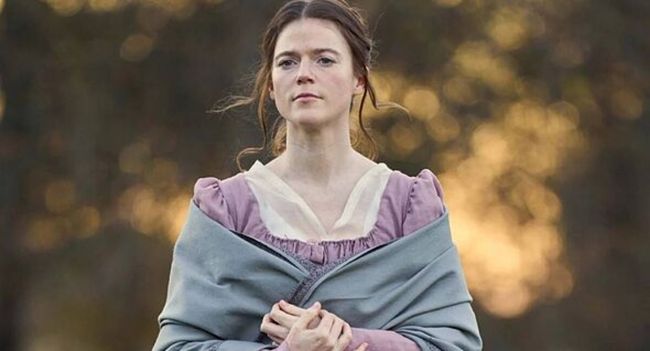
Rose Leslie, known for Game of Thrones and Vigil, plays Isabella Fowle, whose circumstances become increasingly important to Cassandra as the story develops.
Patsy Ferran appears as Jane Austen, while Calam Lynch plays Tom Fowle and Alfred Enoch portrays Mr Lidderdale.
Together, the ensemble allows the drama to move between Cassandra’s present-day mission and the emotional experiences of her younger years.
The two timelines gradually illuminate one another.
What Cassandra chooses to do with Jane’s letters becomes easier to understand once viewers have seen the love, grief and disappointments that shaped the sisters’ lives.
It Is Really a Story About Cassandra and Jane
The title Miss Austen is deliberately ambiguous.
Jane may be the sister whose name became famous, but Cassandra is the woman driving the story.
Her relationship with Jane is the emotional foundation beneath everything else.
That makes the drama particularly interesting for audiences who already know Austen’s novels.
Instead of attempting another adaptation of Pride and Prejudice, Sense and Sensibility or Emma, the series turns its attention toward the family surrounding the author and asks what it might have meant to live beside someone whose reputation would eventually become enormous.
Cassandra’s dilemma is especially compelling because there is no simple answer.
Preserving every letter could have given future generations more information about Jane.
Destroying private correspondence, however, could also be understood as one sister honoring another sister’s privacy.
Miss Austen explores that tension without reducing Cassandra to the woman who simply deprived historians of valuable material.
The Final Decision Brings the Story Back to Jane’s Legacy
The four episodes gradually move toward the historical act that inspired Hornby’s novel.
After uncovering the letters, revisiting painful memories and becoming increasingly involved in Isabella’s future, Cassandra must finally decide what should happen to Jane’s private words.
The finale brings her back to Chawton, where she burns the letters as her final act of protecting her sister’s legacy.
Because viewers have spent the previous episodes experiencing Cassandra’s memories, the moment carries meaning beyond the destruction of historical documents.
It becomes the culmination of a story about two sisters.
That emotional perspective is one reason Miss Austen has resonated with viewers who might initially expect a conventional costume drama about a famous novelist.
Gill Hornby Wanted to Reconsider Cassandra’s Reputation
Hornby’s fascination with Cassandra grew partly from the difference between how later generations viewed her and how Jane herself appeared to feel about her sister.
While Cassandra has often been criticized for destroying correspondence, Hornby found a very different relationship when reading Jane’s surviving letters.
The novelist has argued that Cassandra was enormously important in Jane’s life and played a major role in supporting her.
That became the foundation for telling the story from Cassandra’s perspective rather than treating her as a supporting figure in someone else’s biography.
The missing letters themselves gave Hornby another creative opportunity.
Because so much of Jane’s private correspondence no longer exists, there are unavoidable gaps in what historians know. Hornby used those spaces to create fictional possibilities while keeping known events as the framework for the story.
A Different Kind of Jane Austen Adaptation
That approach helps Miss Austen stand apart from the many Austen adaptations already available.
There are no Bennet sisters waiting for Mr Darcy here.
Instead, the drama explores the women behind the literary history — their relationships, sacrifices and the limitations placed on their choices.
Romance is present, particularly through Cassandra’s memories of Tom, but the central love story is ultimately between sisters.
PBS summarized the adaptation in similar terms, describing it as a witty and heartbreaking reimagining of Cassandra’s destruction of Jane’s letters through the lens of sisterly love.
For viewers who know Jane Austen primarily through her novels, it offers a different doorway into her world.
Four Episodes Make It an Easy Period-Drama Binge
The drama is also compact.
Its story unfolds across four episodes of roughly 53 minutes each, moving between Cassandra’s 1830 search and memories from decades earlier.
That gives the series enough time to develop Cassandra, Jane, Isabella and the Fowle family without stretching its central mystery unnecessarily.
The letters remain the narrative engine, but the emotional questions surrounding them become increasingly important.
Who has the right to decide what survives after a person’s death?
How much of a celebrated writer’s private life belongs to the public?
And how should Cassandra be judged when the person she was trying to protect was not yet simply “Jane Austen,” literary legend, but her beloved sister?
Those questions give Miss Austen more weight than its elegant period-drama surface initially suggests.
A Beautiful Drama With a Painful Question at Its Heart
For Austen admirers, the irresistible hook may be the possibility of lost letters containing secrets about one of literature’s most famous writers.
But Miss Austen ultimately finds its strongest material elsewhere.
It is Cassandra’s story.
Keeley Hawes plays a woman confronting the memories of the person she loved most while trying to decide how much of that person’s private self should be left for strangers to examine.
Patsy Ferran’s Jane gives those memories warmth and personality, while Rose Leslie’s Isabella provides Cassandra with a present-day situation that echoes the choices and losses of her own youth.
The historical mystery provides the structure.
Sisterhood provides the heart.
And by imagining why Cassandra Austen might have destroyed so much of Jane’s correspondence, Miss Austen turns one of literary history’s most frustrating losses into a moving examination of love, grief, privacy and remembrance.
Miss Austen is available to stream on BBC iPlayer in the UK. In the US, it is available through PBS Masterpiece