
Netflix’s Perfect-Score Nordic Noir The Chestnut Man Is Back — And Its Second Mystery May Be Even More Disturbing
A tiny handmade figure left beside a murder victim. Two Copenhagen detectives pulled into an increasingly disturbing investigation. And a clue that appears to connect a string of killings to the disappearance of a politician’s daughter.
That unsettling premise helped turn The Chestnut Man into one of Netflix’s most acclaimed Scandinavian crime dramas when it arrived in 2021.
Five years later, detectives Naia Thulin and Mark Hess are back — but the chestnut figures have given way to another seemingly innocent childhood tradition transformed into something sinister.
The Danish thriller returned on May 7, 2026 with The Chestnut Man: Hide and Seek, a standalone six-part sequel involving a missing woman, disturbing messages and a killer forcing victims into deadly versions of children’s games.
For Nordic noir fans, there is another reason to pay attention: The Chestnut Man currently carries a perfect 100% average Tomatometer score on Rotten Tomatoes, with both its original season and Hide and Seek sitting at 100%.

The Original Mystery Started With a Chestnut Doll
The first season introduced Copenhagen detective Naia Thulin, played by Danica Curcic, and Mark Hess, played by Mikkel Boe Følsgaard.
Their investigation begins with a gruesome murder and an unusual piece of evidence: a small figurine constructed from chestnuts.
It initially looks like little more than a disturbing signature.
But when similar figures begin appearing at other crime scenes, Thulin and Hess realize they may be dealing with a killer following a deliberate pattern.
The most troubling connection points toward Rosa Hartung, a prominent politician whose daughter disappeared and was presumed murdered.
Netflix’s official synopsis captures the central hook simply: the chestnut figurine becomes the clue that sends two detectives hunting for a murderer connected to the politician’s missing child.
What follows is a bleak Copenhagen investigation in which the significance of the handmade dolls gradually becomes much more disturbing.

A Danish Thriller From the Creator of The Killing
The Chestnut Man comes from Søren Sveistrup, the Danish writer and producer whose name already carried considerable weight with crime-drama audiences.
Sveistrup created The Killing, the influential Danish series that became one of the defining international successes of Scandinavian crime television.
The Chestnut Man began as his 2018 bestselling novel before being adapted for television.
That pedigree is evident in the Netflix series.
Rather than rushing from one revelation to another, the drama builds its mystery through procedural investigation, damaged characters and an oppressive atmosphere.
The first season also gives its central detectives very different personalities.
Thulin wants to move away from homicide work, while Hess arrives as a reluctant new partner. Their uneasy relationship develops alongside the case rather than instantly turning them into a conventional detective pairing.
Netflix currently lists the programme as a two-season thriller starring Curcic, Følsgaard and Iben Dorner.
The First Season Earned a Perfect Critics’ Score

The critical reception helps explain why the series continued attracting new viewers long after its original 2021 release.
Rotten Tomatoes currently lists Season 1 at 100% on the Tomatometer. The overall series also holds a 100% average critics’ score, while its audience score sits at 78%.
Viewers have frequently praised exactly the elements that Nordic noir devotees tend to look for: bleak atmosphere, unsettling imagery, patient storytelling and a mystery that doesn’t make its answers obvious too early.
The performances of Curcic and Følsgaard have also been central to the show’s appeal.
Instead of presenting Thulin and Hess as glamorous super-detectives, The Chestnut Man allows their professional tensions and personal complications to become part of the investigation.
That combination helped make the original six episodes particularly suited to binge viewing: one disturbing discovery leads directly into another without requiring an enormous season-long commitment.
Five Years Later, Thulin and Hess Are Reunited
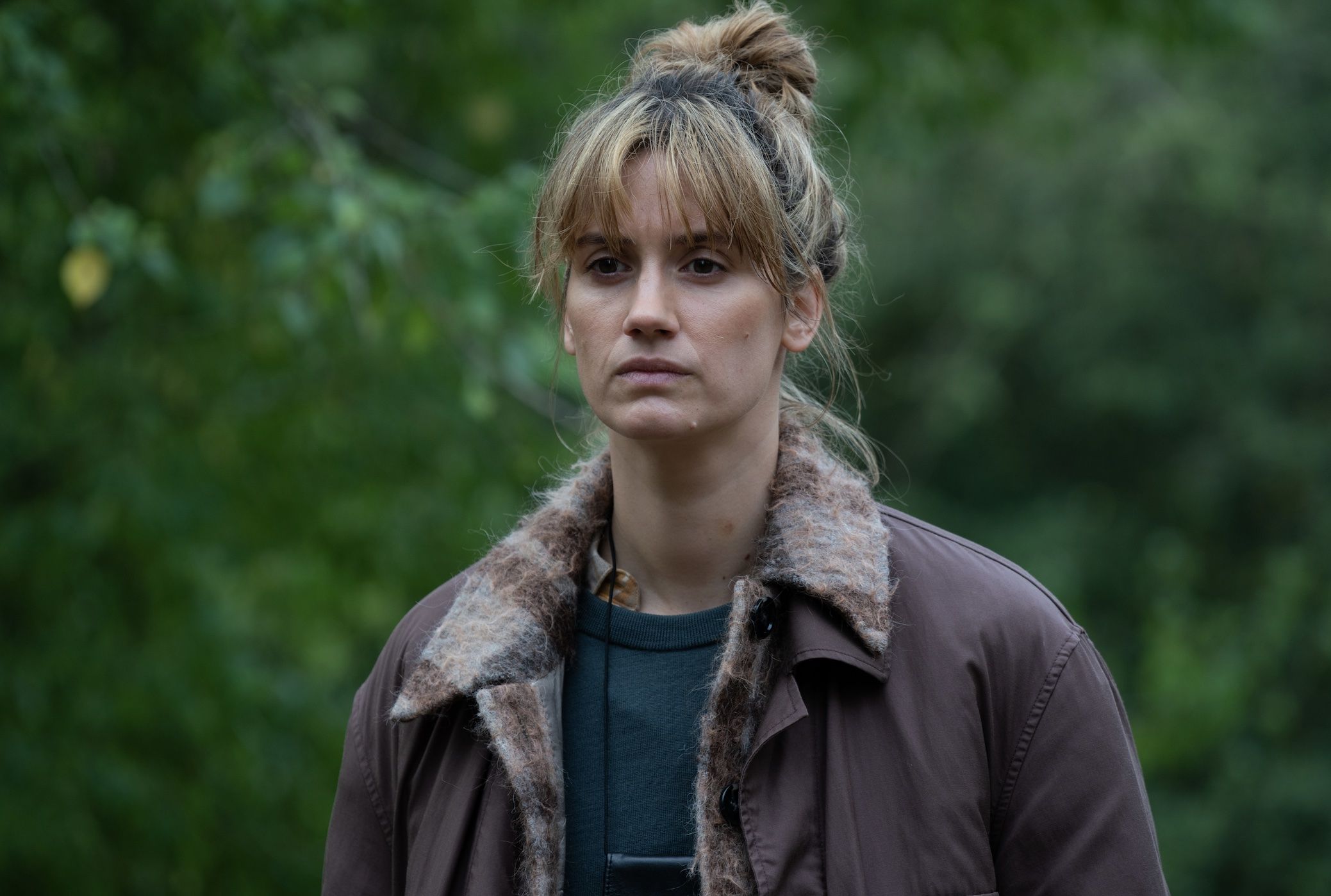
For years, the original six episodes appeared capable of standing alone.
Then Netflix brought its detectives back.
The Chestnut Man: Hide and Seek premiered globally on May 7, 2026, almost five years after viewers last saw Thulin and Hess together.
The new story doesn’t simply repeat the chestnut-doll murders.
Instead, it introduces a completely different case while preserving one of the original series’ most effective ideas: taking something associated with childhood innocence and turning it into the calling card of a deeply unsettling crime.
This time, that idea is hide-and-seek.
Season 2 Starts With a Missing Woman
The second investigation begins when a 41-year-old single mother in Copenhagen disappears.
When police examine her digital trail, they discover evidence suggesting she had been stalked for months.
Her abandoned phone contains disturbing messages from someone using a Nordic children’s rhyme connected to hide-and-seek. The evidence eventually points investigators toward an older unresolved case involving a missing teenager.
That brings Thulin and Hess back together.
Their relationship remains complicated, but the detectives quickly recognize that they may be dealing with something much larger than a straightforward missing-person investigation.
As additional victims become involved, the perpetrator’s game grows increasingly dangerous.
Netflix describes the story as a race against time in which the pair must identify the person twisting an innocent children’s game into a lethal hunt.
Hide and Seek Is Another Six-Episode Mystery
Like its predecessor, the sequel keeps its story compact.
The Chestnut Man: Hide and Seek consists of six episodes, all released on Netflix on May 7. Rotten Tomatoes’ episode listings show the investigation progressing from the missing woman’s stalking evidence through new victims, suspects and connections to the past before reaching its final confrontation.
The format means the entire mystery can be watched as a relatively short binge.
Netflix has also described Hide and Seek as a standalone sequel, so although returning viewers already understand Thulin and Hess’s complicated history, the central criminal case is new.
That distinction matters.
The new season doesn’t attempt to manufacture another version of the Chestnut Man case simply because the original worked.
Instead, it preserves the characters and atmosphere while building a new mystery around a different childhood motif.
Danica Curcic and Mikkel Boe Følsgaard Return

The sequel once again puts Danica Curcic and Mikkel Boe Følsgaard at the center of the investigation as Naia Thulin and Mark Hess.
Sofie Gråbøl and Katinka Lærke Petersen also star in the new six-part story.
Gråbøl’s presence carries particular significance for Scandinavian crime fans because she starred as Sarah Lund in The Killing, the series created by Chestnut Man author Søren Sveistrup.
For viewers familiar with the evolution of Nordic noir on international television, her appearance creates an intriguing connection between one of the genre’s defining earlier hits and one of Netflix’s modern Danish successes.
Season 2 Also Has a Perfect Rotten Tomatoes Score
The follow-up had significant expectations to meet after the reception of the first series.
So far, critics have responded strongly.
Rotten Tomatoes currently lists The Chestnut Man: Hide and Seek at 100%, meaning both seasons carry perfect Tomatometer scores at the time of writing.
That doesn’t mean every viewer will respond to its deliberately grim tone or patient pacing in the same way.
The Chestnut Man is not designed as a light mystery.
Its murders are dark, its atmosphere is oppressive, and its investigators operate in a world where family trauma and past crimes frequently bleed into the present.
For audiences who enjoy The Killing, The Bridge and other Scandinavian crime dramas, however, those qualities are precisely the attraction.
Why The Chestnut Man Works So Well as Nordic Noir

There is nothing radically unfamiliar about detectives pursuing a serial killer.
The difference is in the execution.
Copenhagen isn’t merely a background for the story. Its streets, homes, forests and colder landscapes contribute to the oppressive feeling that surrounds the investigation.
Then there are the childhood symbols.
The first series uses crude chestnut figures.
The second uses hide-and-seek and a children’s rhyme.
Both take something simple and recognizable and gradually make it threatening.
That contrast gives the franchise a visual and thematic identity beyond the crimes themselves.
Just as importantly, Thulin and Hess aren’t treated as interchangeable detectives whose personal lives disappear whenever a case begins.
Their difficult partnership gives the procedural investigation an emotional center.
From One Bestseller to a Two-Season Netflix Crime Hit
When The Chestnut Man premiered on September 29, 2021, it arrived as an adaptation of Sveistrup’s bestselling novel.
There was no need for the story to become an ongoing franchise.
Its central mystery had an ending.
But bringing Thulin and Hess back with an entirely new investigation offered a way to continue the world without simply undoing what made the original story satisfying.
That is the approach Netflix ultimately took.
Rather than calling the follow-up another chapter of the same murder investigation, Hide and Seek establishes a new case with its own victims, clues and disturbing game.
The connective tissue is the detectives.
Two Dark Mysteries Are Now Available to Binge
For anyone discovering The Chestnut Man for the first time, Netflix now offers two complete investigations.
Season 1 begins with the chestnut figurines and the mysterious connection to a politician’s missing daughter.
Season 2 turns a children’s game into the foundation of another disturbing Copenhagen case.
Together, they offer 12 episodes centered on Thulin and Hess, with both seasons currently holding perfect Tomatometer scores.
The franchise doesn’t need supernatural monsters or elaborate spectacle to create unease.
A handmade chestnut doll is enough.
So is a familiar children’s rhyme.
And that ability to make something innocent suddenly feel deeply threatening remains one of The Chestnut Man‘s most effective tricks.
Both seasons of The Chestnut Man, including the six-part sequel The Chestnut Man: Hide and Seek, are streaming on Netflix.