East of Eden Review: Florence Pugh Powers a Lavish, Compelling Steinbeck Adaptation
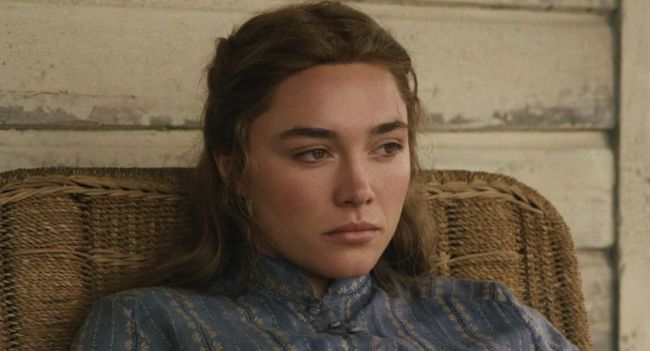
Florence Pugh arrives in East of Eden battered, bloodied and crawling through a muddy field toward the only house for miles. Two brothers emerge to meet her. Adam Trask (Christopher Abbott) immediately moves to help. His brother Charles (Mike Faist) takes one look at the stranger and declares, “This is a mistake.”
He has no idea how right he is.
That woman is Cathy Ames, and her arrival sets off the family saga at the heart of Netflix’s lavish new adaptation of John Steinbeck’s 1952 novel. Developed by Zoe Kazan, the seven-episode series plunges into the darkness of the Trask family, exploring love, resentment, ambition, cruelty and the question of whether people are born good or evil — or can choose who they become.
A Family Built On Resentment
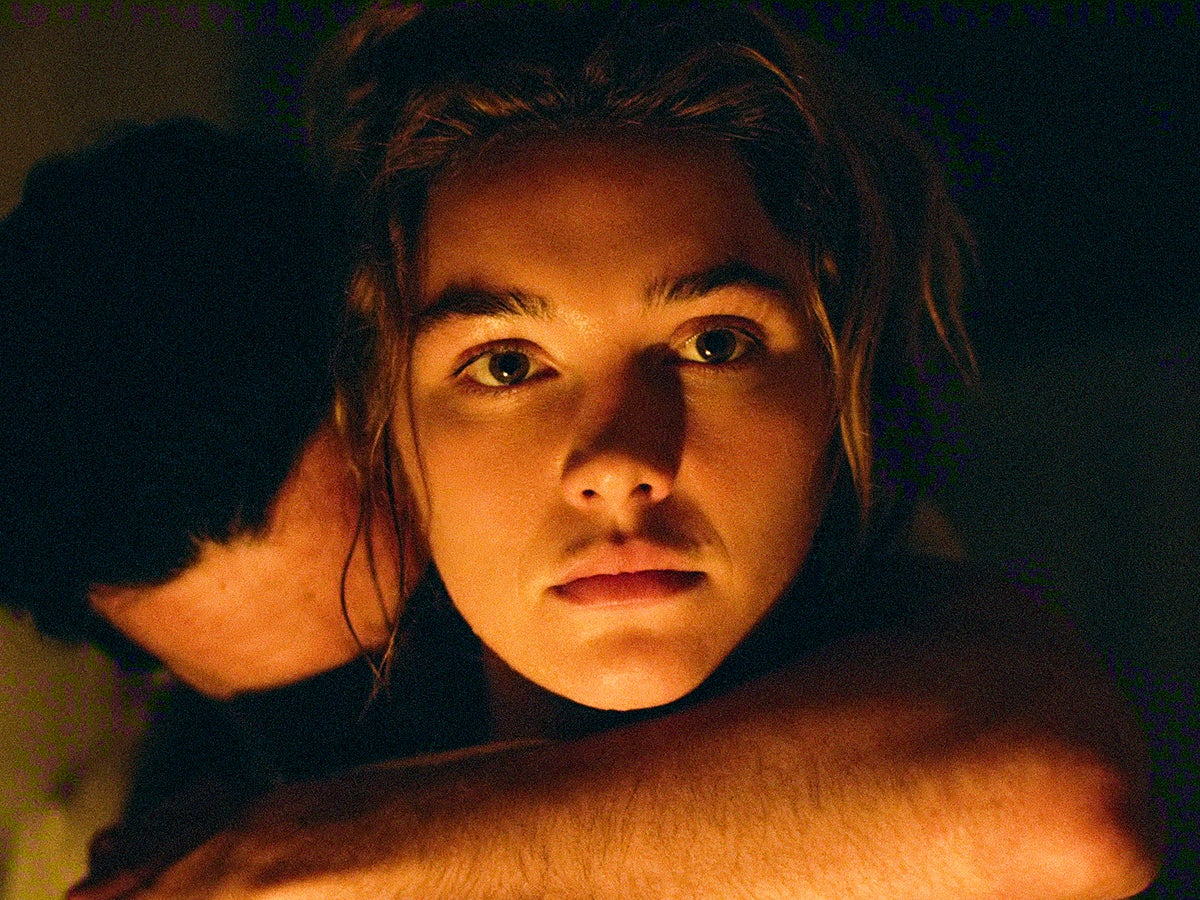
The story begins 25 years earlier, when Adam and Charles are growing up in an essentially motherless household dominated by their father, Cyrus Trask (Tracy Letts), a Civil War veteran who never seems to tire of recounting his wartime exploits.
Charles idolises his father and wants to follow in his footsteps. Adam, by contrast, is punished for lacking his brother’s aggression. Yet Cyrus makes a telling decision: he sends Adam away to enlist while forcing Charles to remain behind and work the family farm.
His reasoning is that Charles has something in him that needs to be restrained.
Charles’ resentment eventually boils over. The night before Adam leaves for the army, he nearly kills his brother. But years later, Cyrus is dead, leaving behind a fortune of questionable origins. Adam returns home, and the brothers attempt to bury their old grievances and build something resembling a decent life.
Then Cathy arrives.
Her presence changes everything.
Florence Pugh’s Cathy Dominates the Story

Steinbeck’s East of Eden was his penultimate major work, and he reportedly considered it his finest. Critics at the time were less convinced, particularly by its treatment of good and evil and its insistence on questions of morality, instinct and free will.
Readers responded differently. The novel became a bestseller, embracing the melodramatic power of its family story: essentially a Cain-and-Abel tale played out across generations in the American West.
That is the element Kazan’s adaptation handles particularly well.
The series is richly produced, emotionally intense and filled with strong performances. Adam becomes hopelessly captivated by Cathy, while Charles recognises the danger almost immediately. Their conflicting reactions to her create a volatile triangle in which love, suspicion and resentment continually collide.
Netflix’s version also gives Cathy a far more central position than the famous 1955 film adaptation directed by Zoe Kazan’s grandfather, Elia Kazan. The new series covers the story across decades, from the Civil War era through World War I, allowing Cathy and the Trask family to occupy the centre of the drama.
And Pugh is unquestionably the production’s most magnetic presence.
Cathy Ames Is Impossible to Ignore
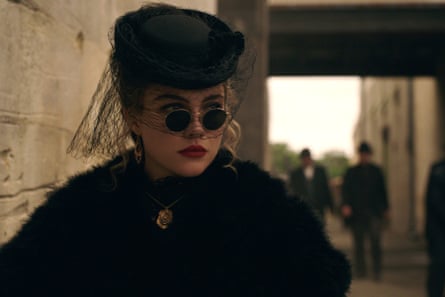
The second episode digs deeper into Cathy’s past, revealing just how destructive she can be. She manipulates the people around her, leaves devastated relationships behind, turns to prostitution as a means of survival and profit, betrays those who trust her, commits arson, fakes her own death and abandons husbands and eventually children in pursuit of wealth and freedom.
Whether she is driven by survival, selfishness or something darker is one of the series’ central questions.
Cathy’s extreme nature was among the aspects of Steinbeck’s novel that drew criticism when the book was first published. The idea of a woman being portrayed as profoundly manipulative and seemingly without conventional moral restraint was especially controversial.
Kazan’s adaptation approaches the character through a more contemporary lens, while Pugh gives her an unsettling presence that keeps the audience watching even when Cathy’s actions become increasingly difficult to comprehend. Recent reviews have similarly highlighted Pugh’s performance as one of the series’ major strengths.
Yet there is a limitation to the characterisation. For all the fascination Cathy generates, the drama can sometimes leave her feeling more like an extraordinary spectacle than a fully developed human being.
The Brothers Bring the Emotional Weight
The men surrounding Cathy arguably receive more room to develop.
Adam and Charles have a complicated bond built from years of competition, resentment and conflicting ideas about their father. Their relationship becomes one of the show’s most absorbing threads as they struggle with what they feel for each other, for Cathy and for the lives they have inherited.
The series also finds quieter emotional territory away from the central family conflict.
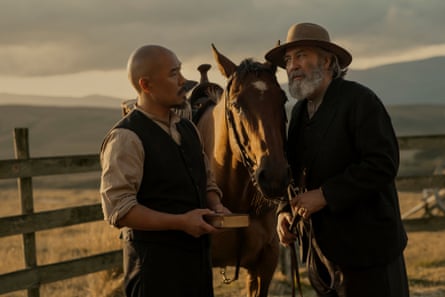
After Adam and Cathy move to California’s Salinas Valley, a particularly affecting relationship develops between Adam’s neighbour Samuel Hamilton (Ciarán Hinds) and Lee (Hoon Lee), Adam’s manservant. Their friendship provides a welcome change of pace from the relentless turmoil surrounding the Trasks.
Hinds brings warmth and humanity to Samuel, while Hoon Lee gives Lee an intelligence and emotional steadiness that make him one of the series’ most engaging figures. Netflix describes Lee as a Chinese American whose intellect is matched by his ability to care for those around him.
Martha Plimpton also makes a strong impression as Faye, the unexpectedly vulnerable owner of a brothel. She first becomes Cathy’s employer before eventually becoming another person caught in Cathy’s orbit.
A Soap Opera With Serious Ambitions
There is a deliberate melodramatic quality to East of Eden, and that is where the adaptation is most successful.
The production embraces the novel’s sweeping family conflicts rather than trying to make them smaller or more restrained. Love turns obsessive. Sibling rivalry becomes destructive. Family history follows the characters from one generation to the next.
Kazan has described her approach to the material as needing to be both epic and intimate, a balance she developed while returning to Steinbeck’s own writing and letters during the adaptation process.
The result is a series that is expansive without losing sight of its central relationships.
It also benefits from having considerably more time than a feature film. Unlike the 1955 adaptation, which concentrated on only part of Steinbeck’s sprawling story, the Netflix version has room to explore the wider family saga and the generations connected to Cathy and the Trasks.
Brilliant Family Drama, Less Convincing Moral Examination
As a sweeping family saga, East of Eden is difficult to resist. It has scale, atmosphere, emotional conflict and performances strong enough to carry its most heightened moments.
As a serious examination of human nature, however, the series is less convincing.
Steinbeck’s central questions remain fascinating: How much of our behaviour is determined by instinct? Are people capable of resisting the traits they inherit? And ultimately, how much freedom do we have to choose who we become?
The adaptation raises those questions, but the sheer force of its melodrama can sometimes overwhelm the philosophical weight behind them.
Still, that may not be a fatal weakness. East of Eden works exceptionally well when it allows its characters to collide — when brothers love and resent each other, when Cathy destabilises everyone around her, and when quieter relationships offer moments of humanity amid the chaos.
With Florence Pugh at its centre and a sprawling story built around one of Steinbeck’s most enduring family conflicts, Netflix’s East of Eden is lavish, absorbing television — even when its examination of good, evil and human nature does not quite reach the depth of its ambitions. All seven episodes are now streaming globally on Netflix.