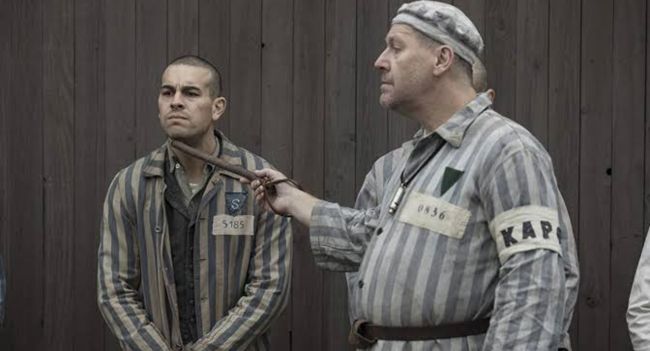
Netflix’s Harrowing WWII Drama Tells the True Story of the Photographer Who Risked Everything to Preserve Evidence of Mauthausen

A camera became an unlikely weapon against one of history’s darkest crimes in The Photographer of Mauthausen, the harrowing Spanish World War II drama now available on Netflix.
Directed by Mar Targarona and released in 2018, the film is based on the extraordinary true story of Francesc Boix, a Catalan photographer and Spanish Republican who was imprisoned at the Nazi concentration camp complex of Mauthausen-Gusen in Austria.
Played by Mario Casas, Boix finds himself in a position few prisoners could have imagined: working with photographs produced inside the camp. What he sees in those images is evidence — visual documentation of atrocities that the perpetrators might one day attempt to deny.
Boix and other Spanish prisoners therefore embark on an extraordinarily dangerous mission.
They begin secretly preserving photographic negatives.
Getting caught could mean death. But allowing the images to disappear could mean losing proof of what had happened inside Mauthausen forever.

The True Story Behind The Photographer of Mauthausen
Boix was born in Barcelona in 1920 and became involved with the Republican cause during the Spanish Civil War.
After the Republican defeat, he fled to France. Following the German occupation, he was captured and eventually deported to Mauthausen, arriving there in January 1941.
Thousands of Spanish Republicans who had gone into exile in France ultimately found themselves imprisoned in Nazi camps. Mauthausen became particularly associated with Spanish deportees; thousands were sent there, and many did not survive.
Boix was assigned to work in the camp’s photographic service.
That position gave him access to images created by the SS — photographs that documented aspects of life, death and official activity inside the concentration camp.
It also presented an extraordinary opportunity.
If some of those images could survive the war, they could become evidence.

A Secret Mission to Save the Negatives
This is the central struggle dramatized in Targarona’s film.
Boix does not act alone. With assistance from other Spanish prisoners involved in clandestine resistance inside Mauthausen, he works to prevent photographic negatives from being destroyed.
The images documented the machinery of the camp from the inside, including prisoners, forced labor, official visits and killings.
Saving them required enormous risk.
In the film, every photograph carries two meanings at once. For the SS, photography can be part of documentation and control. For Boix and his fellow prisoners, those same images can become proof.
That tension gives The Photographer of Mauthausen much of its power.
The prisoners cannot undo what the photographs show. They cannot immediately bring the camp system down.
But they can try to make sure the evidence survives.

The Photographs Eventually Reached the Nuremberg Trials
The importance of Boix’s actions became unmistakable after the war.
The photographs he and his fellow prisoners managed to preserve did not simply become historical records. They were used as evidence in postwar proceedings against Nazi officials.
Boix himself appeared as a witness at the Nuremberg Trials in January 1946.
There, he was asked to identify and explain photographs taken by the SS at Mauthausen, including the circumstances surrounding the images and the people appearing in them.
His evidence helped establish the presence of senior Nazi officials at the camp.
One surviving photograph showing Heinrich Himmler and Ernst Kaltenbrunner during a visit to Mauthausen later contributed to the case against Kaltenbrunner, who was convicted at Nuremberg.
The images were also relevant to proceedings at Dachau, becoming part of the wider effort to document crimes committed within the concentration-camp system.
That history gives the film’s central mission an extraordinary weight.
Boix and the prisoners helping him were not merely saving photographs.
They were protecting evidence that could one day confront perpetrators with a visual record of their crimes.
Mario Casas Undergoes a Striking Transformation as Francesc Boix
Mario Casas leads the film as Boix, delivering a performance far removed from many of the roles that made him one of Spain’s best-known actors.
For the production, Casas reportedly lost around 12 kilograms to portray the physical condition of an imprisoned and malnourished Boix.
The supporting cast includes Richard van Weyden as Ricken, Alain Hernández as Valbuena, Adrià Salazar as Anselmo, Eduard Buch as Fonseca and Stefan Weinert as Franz Ziereis.
The screenplay was written by Roger Danès and Alfred Pérez Fargas, with cinematography by Aitor Mantxola and music by Diego Navarro.
Rather than turning Boix into a conventional action hero, the film builds suspense around observation, secrecy and survival.
The danger comes from being noticed.
A negative discovered in the wrong place, a suspicious guard or one mistake could destroy the entire effort.
That restraint makes the story especially unsettling because the stakes are so enormous despite the apparent simplicity of the objective: keep the photographs hidden long enough for the truth to survive.
The Film Does Not Separate Survival From Resistance
One of the most compelling aspects of The Photographer of Mauthausen is its understanding that resistance inside a concentration camp could take many forms.
For Boix and the prisoners around him, survival itself is a daily struggle.
Yet they also recognize that survival without evidence creates another danger: the possibility that the people responsible for the atrocities could erase, distort or deny what occurred.
Their mission therefore becomes about something larger than any single prisoner.
The negatives have to outlive the camp.
That gives the film an unusual structure for a World War II drama. There are no large battlefield sequences at its center and no military campaign driving the story forward.
Instead, the most consequential objects are pieces of photographic film.
The most important victories involve keeping them away from the people who would destroy them.
The Real Francesc Boix Continued His Work After the War
Boix survived Mauthausen and continued working as a photographer after liberation.
He settled in France and became a photojournalist, contributing to publications including L’Humanité and Regards.
His life after the camp, however, was tragically short.
Boix died in 1951 at just 30 years old. Historical accounts have linked his early death to health problems resulting from his imprisonment at Mauthausen.
His photographic legacy survived him.
The negatives saved by the prisoners became an enduring visual record of Mauthausen and the people responsible for what occurred there.
Decades later, those photographs continue to serve the very purpose for which Boix and his fellow prisoners risked so much: ensuring that evidence remained when witnesses themselves were gone.
A Spanish Film Grounded in Real History
The Photographer of Mauthausen, originally titled El fotógrafo de Mauthausen, was released theatrically in Spain on October 26, 2018.
The 110-minute film was produced as a Spanish historical drama and directed by Targarona. Spanish cinema records show it drew more than 416,000 theatrical admissions and grossed approximately €2.45 million in Spain.
The film also received four nominations at the 33rd Goya Awards, including recognition for art direction, costume design, production supervision, and makeup and hairstyling.
Those technical elements are particularly important to a film attempting to recreate such a specific and horrifying historical environment.
The production does not need to manufacture suspense through elaborate twists. The audience understands from the beginning what discovery could mean for Boix and the prisoners helping him.
Instead, the tension comes from watching them attempt to preserve evidence under the eyes of the very people implicated by it.
Why Photography Matters So Much to the Story
The most haunting idea at the center of The Photographer of Mauthausen is also the simplest.
Photographs remember.
People can lie about what they did. Institutions can destroy documents. Governments can attempt to rewrite history. Witnesses eventually die.
An image, if it survives, can remain.
Boix understood that the photographs produced at Mauthausen had significance beyond the camp itself.
They showed prisoners and perpetrators. They recorded official visits. They documented the brutal system operating behind the camp walls.
Preserving those images meant preserving something that could later be examined, identified and presented before a court.
At Nuremberg, that is exactly what happened.
Boix stood before the tribunal and explained photographs that had once existed inside a system built around secrecy and extermination.
The images had escaped.
So had the truth they contained.
More Than Another World War II Survival Drama
That is ultimately what separates The Photographer of Mauthausen from many other films set during World War II.
It is certainly a survival story.
It is also a story about resistance.
But above all, it is a film about evidence.
Boix and his fellow prisoners could not know exactly how the war would end when they began protecting the negatives. They could not know which perpetrators would eventually stand trial or how the photographs might be used.
They only understood that the images mattered.
The risk was immediate.
Their importance would come later.
And that knowledge makes the story particularly difficult to shake: some of the most powerful weapons against the crimes committed at Mauthausen were not guns, armies or acts of escape.
They were photographs hidden by prisoners who understood that one day the world might need proof.
The Photographer of Mauthausen Is Streaming on Netflix
Netflix currently lists The Photographer of Mauthausen as a 2018 Spanish drama based on real events, starring Mario Casas, Richard van Weyden and Alain Hernández. The platform describes it as emotional, suspenseful, critically acclaimed and rooted in political rebellion and World War II history.
For viewers looking for a historical drama built around real people rather than battlefield spectacle, the film offers a deeply unsettling perspective on the war.
Its most devastating moments are not simply about whether Boix will survive.
They are about whether the evidence will.
Because Boix understood something that would become crucial after liberation: surviving the horror was one battle.
Making sure nobody could erase what happened was another.