Endeavour Fans Are Calling Sharon D Clarke’s Crime Drama Ellis a “Must-Watch”
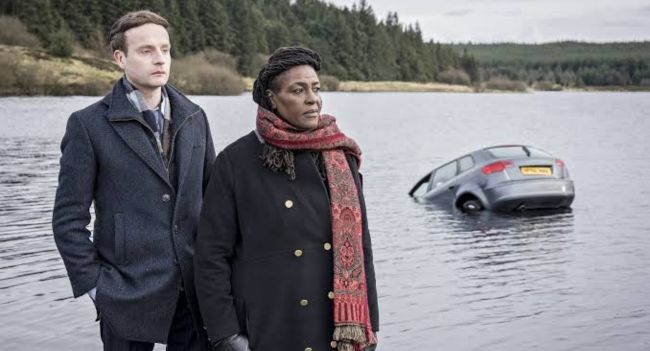
Crime drama fans searching for something to fill the gap left by Endeavour may have found their next obsession in Ellis, the British detective series starring Sharon D Clarke and Andrew Gower.
Originally launched on Channel 5 in October 2024, the drama follows Detective Chief Inspector Ellis, an exceptionally capable investigator brought into police stations where major cases have stalled or gone badly wrong. Rather than remaining attached to one force and one town, Ellis travels from investigation to investigation alongside DS Chet Harper, played by Gower, confronting unfamiliar officers, suspicious communities and murder mysteries that have already defeated local teams.
That distinctive format, combined with Clarke’s commanding performance and mysteries filled with carefully placed clues and red herrings, quickly won the series an enthusiastic following.
For viewers who enjoy character-driven British mysteries such as Endeavour and Broadchurch, fans say Ellis deserves a place near the top of the watchlist.
A Detective Called In When Investigations Are Falling Apart
DCI Ellis does not arrive at crime scenes under ordinary circumstances.
She is effectively sent in when an investigation needs rescuing.
Each case takes Ellis and Harper to a different police station, where the pair must understand what has gone wrong, navigate resistance from officers already working the investigation and uncover evidence that may have been overlooked.
Ellis is accustomed to being underestimated, but she rarely allows that to distract her.
Channel 5 described the character as a first-class murder detective whose determination to pursue justice is matched by compassion for the people caught up in the cases she investigates.
Her partnership with Harper gives the series another important dimension.
While Ellis is authoritative, observant and often intimidating to those around her, Harper provides a contrasting presence. Their working relationship gradually develops as they move between investigations, giving viewers a continuing character story even as the locations and murder cases change.
Sharon D Clarke Leads a Groundbreaking British Detective Drama
Clarke’s casting was significant from the beginning.
The acclaimed stage and screen performer is a three-time Olivier Award winner and BAFTA nominee, with credits including Mr Loverman, Showtrial, Lost Boys & Fairies and Rocketman.
When Channel 5 renewed Ellis, the broadcaster described the drama as the first UK detective series to feature a Black woman as its solo lead.
Clarke herself previously reflected on how unusual that remained on British television, explaining that she had not seen a dark-skinned Black woman occupy the title role in a police drama before Ellis.
But the appeal of the character extends beyond the significance of that milestone.
Ellis is allowed to be complicated.
She can be formidable when confronting police officers who have mishandled an investigation, but the character also displays considerable empathy. Rather than being written simply as another emotionally detached television detective, her authority and toughness coexist with a more human side.
That combination has become one of the qualities viewers praise most.
Viewers Have Compared It to Endeavour
Audience reaction has been particularly enthusiastic among fans of traditional British detective dramas.
One viewer reviewing the series on Rotten Tomatoes described Inspector Ellis as an unexpected discovery that remained engaging from beginning to end, praising its writing, suspense, production values, scenery and cast.
Another praised the mysteries for using red herrings and twists effectively enough to keep viewers guessing until the eventual revelations.
Clarke has attracted some of the strongest reactions.
One viewer admitted arriving late to the series but described the actress as “awesome” in the role, while another praised the quality of her performance and the chemistry between Ellis and Harper.
Perhaps the most revealing comparison came from a fan still missing ITV’s Endeavour, which concluded in 2023 after nine series.
The viewer described Ellis as the best show they had found since Endeavour ended, praising the gradual development of the two central characters and the fact that the culprit is not obvious before Ellis and Harper piece the mystery together.
For fans of the long-running Inspector Morse prequel, that is significant praise.
Why the Endeavour Comparison Makes Sense
Ellis is not an imitation of Endeavour, and its structure is markedly different.
But the shows share qualities likely to appeal to the same audience.
Both place considerable emphasis on the detectives themselves rather than treating the characters merely as vehicles for solving crimes. Relationships develop gradually, clues matter and murder investigations are constructed to keep viewers uncertain about the answer.
The pleasure comes partly from watching the detectives think.
In Ellis, that process is complicated by the fact that the lead investigators repeatedly enter police stations where they are outsiders.
Ellis is not only trying to solve a murder. She may also have to determine why the original investigation failed.
Was evidence missed?
Were assumptions made too early?
Are witnesses hiding something?
Or is somebody inside the investigation itself creating a problem?
That structure gives the drama an additional layer of tension and allows each case to introduce a largely new group of characters.
Series One Delivered Three Feature-Length Mysteries
The first series premiered on Channel 5 on October 31, 2024.
It consisted of three feature-length episodes, each running for approximately two hours with adverts.
Rather than stretching one murder across an entire season, each installment took Ellis and Harper somewhere new.
The first case brought them to Hanmore following the death of 18-year-old Rowan Edwards and the disappearance of his girlfriend Maggie.
Their next investigation took them to Callorwell, where the disappearance of police officer Jenny Lawler forced the pair to examine disturbing possibilities within the local force.
The finale moved the detectives to Brindleton following the disappearance of two honeymooners. When their phones were discovered near a dangerous river, murder-suicide initially appeared to be a possible explanation. The discovery of a severed hand near their camper van dramatically changed the investigation.
Across all three stories, the format remained consistent: Ellis and Harper arrived as outsiders and had to dismantle assumptions surrounding cases that were already in trouble.

The First Series Became a Ratings Success
The audience response translated into strong viewing figures.
According to Channel 5, Ellis launched with more than 2.4 million viewers in October 2024. The broadcaster subsequently described the programme as a ratings hit when announcing its renewal in May 2025.
The recommission reunited Clarke and Gower and continued the show’s central idea of sending the detectives into struggling investigations across northern England.
The first series also attracted attention beyond its viewing figures, particularly for Clarke’s central performance and the way the drama explored racial and gender bias within policing.
Its success made a continuation unsurprising.
But viewers had one recurring complaint: there simply was not enough of it.
With only three feature-length stories in the first run, fans quickly began asking for more.

Series Two Changes the Format
Ellis returned to Channel 5 in March 2026, with Clarke and Gower once again leading the cast.
This time, however, the structure changed.
Instead of three standalone feature-length episodes, the second series consists of four episodes covering two investigations, with each mystery unfolding across two parts.
The first case takes Ellis and Harper to the village of Ashenham.
They are called in following the murder of local businessman Peter Barron, entering a community divided by a controversial rehabilitation programme and reluctant to reveal its secrets.
When progress in the murder investigation begins to stall, the disappearance of a local boy adds urgency to the case and pushes Ellis and Harper deeper into the village’s hidden relationships.
The second two-part story takes them to Elmsly.
There, the death of a student at a stone works is initially treated as an accident. Ellis suspects otherwise and begins uncovering evidence of intimidation, exploitation and a potentially much larger cover-up.
Ellis and Harper’s Partnership Remains at the Heart of the Show
The locations may change, but the relationship between Ellis and Harper provides continuity.
Andrew Gower, known for Outlander, Carnival Row and The Winter King, plays DS Chet Harper as Ellis’s right-hand man.
Their dynamic has become one of the drama’s strongest elements.
Some viewers have described the relationship as almost mentor and protégé, with Ellis gradually revealing more warmth beneath her intimidating professional exterior.
Series two gives that partnership more room to develop while also exploring Ellis’s personal life, including uncertainty surrounding her relationship with her daughter Grace. Gower suggested that this storyline could affect Ellis and the future of her partnership with Harper.
The result is a detective drama where the murder mysteries remain central but the characters do not simply reset when one investigation ends.

A Strong Supporting Cast Expands the Second Series
The second series brings several new faces into Ellis and Harper’s investigations.
Among the cast are Mark Addy as Elliot Quinn, John Hollingworth as DS Malcolm Oliver, Dorothea Myer-Bennett as Lucy Quinn, Matilda Freeman as Mackenzie Quinn and Charlotte McCurry as DC Kate Trent.
As before, each new location creates its own collection of suspects, witnesses and police officers.
That allows Ellis to operate almost like a sequence of feature-length murder mysteries while maintaining Clarke and Gower as the consistent thread connecting the stories.
The production also continues to make atmosphere an important part of the drama.
Although the investigations are set across northern England, the series has been filmed extensively in Northern Ireland, with locations including Dromore in County Down and Gracehill in County Antrim.
The rural landscapes and small communities contribute to the feeling that Ellis and Harper are entering self-contained worlds where everyone appears to know everyone else — and where long-held secrets can complicate even the simplest investigation.
Fans Are Already Hoping for Series Three
With the second series extending the relationship between Ellis and Harper, attention has naturally turned toward whether the detectives will return again.
Andrew Gower has made his own position clear.
Asked by Radio Times whether he would come back for a third series, the actor described the answer as an easy “yes,” pointing to the opportunity to continue working with Clarke and developing the lives of Harper and Ellis.
For now, however, viewers waiting for another chapter will have to be patient.
The enthusiasm surrounding the series makes that understandable. Ellis has built its appeal without reinventing the murder-mystery genre completely. Instead, it takes familiar ingredients — suspicious communities, complicated killings, misleading clues and an unusual detective partnership — and gives them a distinctive structure.

A Strong Choice for Fans of Endeavour and Broadchurch
British television has no shortage of murder mysteries, which makes standing out increasingly difficult.
Ellis succeeds largely because of its lead character.
Sharon D Clarke gives DCI Ellis the authority expected from a senior detective while avoiding the sense that viewers have seen exactly the same character many times before. Her Ellis can be intimidating, compassionate, impatient and quietly vulnerable, often within the same investigation.
Andrew Gower’s Harper provides an effective counterbalance, and their developing partnership gives audiences something to follow beyond the individual murders.
For viewers missing the carefully constructed mysteries of Endeavour, or those who enjoy the character-driven investigations and community secrets associated with dramas such as Broadchurch, Ellis offers an easy recommendation.
It has twists without relying entirely on shock value, detectives whose personalities develop alongside the investigations and mysteries designed to keep the culprit hidden until Ellis has assembled the pieces.
That may explain why viewers who discovered the drama unexpectedly are now asking for exactly the same thing:
More episodes.