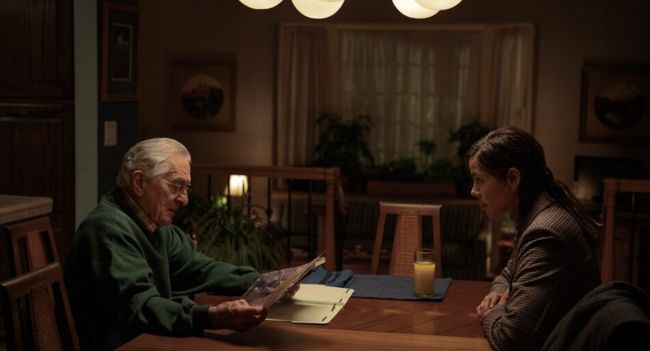
The Whisper Man Makes One Major Change From Alex North’s Bestseller — Putting Robert De Niro and Adam Scott’s Broken Father-Son Relationship at the Heart of the Nightmare
A child disappears. His desperate father turns to the man he has spent years keeping at a distance. And waiting behind their fractured relationship is an old serial-killer case that was supposed to have ended more than a decade earlier.
Netflix’s The Whisper Man takes the chilling premise of Alex North’s bestselling 2019 novel and makes a significant structural change: Jake Kennedy’s abduction happens much earlier.
It may sound like a simple adaptation decision, but moving the kidnapping forward fundamentally changes the film. Instead of waiting until late in the story to place Jake in immediate danger, director James Ashcroft and screenwriters Ben Jacoby and Chase Palmer use his disappearance to force Tom Kennedy and his estranged father, retired detective Pete Willis, together.
That gives Robert De Niro and Adam Scott considerably more time to explore the damaged relationship that Ashcroft believes sits beneath the serial-killer mystery.
For North, watching his first novel reach the screen has been an emotional experience of its own.
“I have finally seen it on the screen, and I love it,” the author told Netflix.

A Serial-Killer Thriller With a Family Story Underneath
On the surface, The Whisper Man has all the ingredients of a disturbing crime thriller.
Tom Kennedy, played by Adam Scott, is a widowed crime writer raising his eight-year-old son Jake, played by Acston Luca Porto.
When Jake is abducted, Tom is forced to contact his estranged father Pete Willis, played by Robert De Niro.
Pete is no ordinary grandfather.
He is the retired police detective responsible for catching the notorious serial killer known as the Whisper Man years earlier. The new disappearance appears to have a disturbing connection to that old investigation, even though the convicted killer has long been behind bars.
That mystery provides the film’s thriller machinery, but Ashcroft was interested in something deeper when he encountered North’s novel.
For him, the story’s emotional power came from its fathers and sons — particularly the way relationships repeat themselves across generations.
The director described that dynamic as the element that drew him into both North’s book and the screenplay.

Alex North’s Own Experience of Fatherhood Shaped the Novel
That emotional foundation wasn’t accidental.
North has said his fiction tends to contain autobiographical elements, not necessarily in its literal characters or events but in the fears and ideas behind them.
By the time he was writing The Whisper Man, his own life had moved into parenthood.
His son was slightly younger than Jake, and many of the concerns surrounding being a father naturally found their way into the novel.
The story therefore isn’t simply concerned with the terrifying possibility of losing a child.
It is also interested in what fathers pass down to their sons — emotionally, psychologically and sometimes unintentionally.
Ashcroft wanted that idea to survive the transition from page to screen.
The serial killer may provide the threat, but Pete, Tom and Jake provide the emotional architecture.
The Film Moves Jake’s Kidnapping Much Earlier
Perhaps the most consequential difference between North’s novel and the Netflix adaptation involves when Jake disappears.
In the book, Jake isn’t kidnapped until late in the third act.
The film brings his abduction forward.
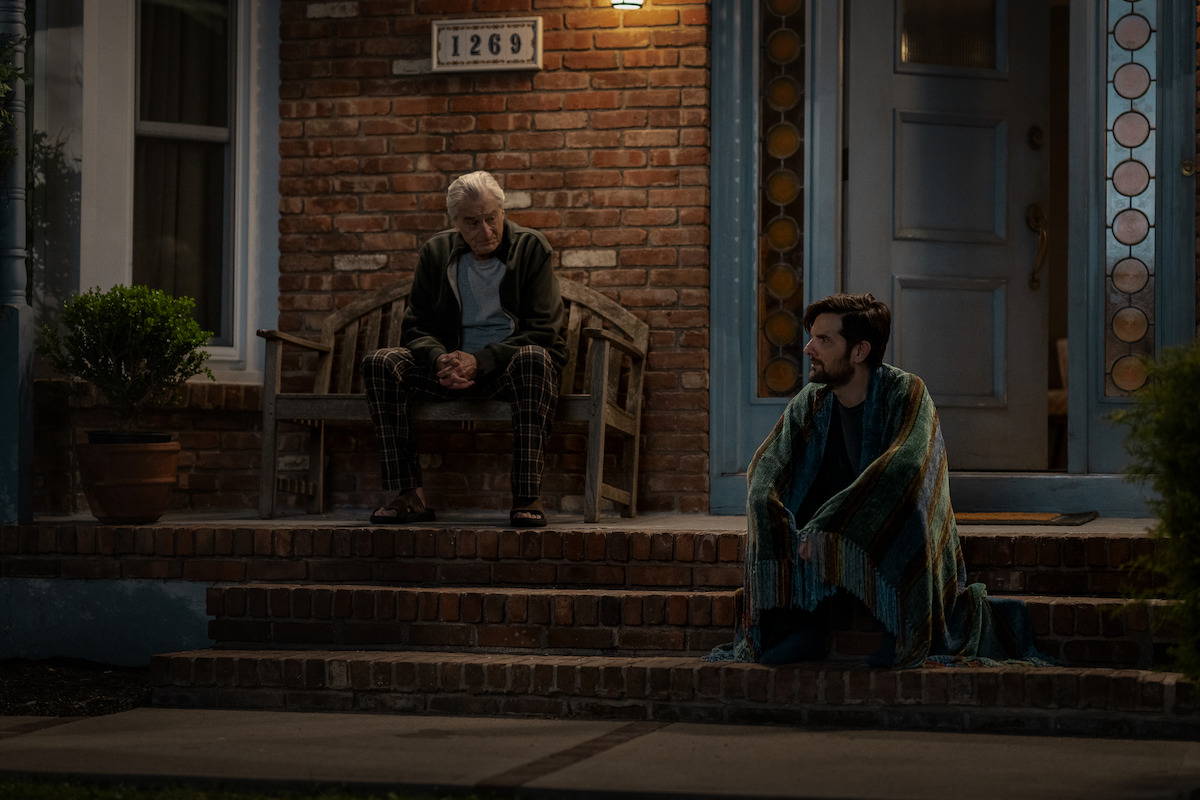
That decision changes the balance of the story because it gives Tom an immediate reason to seek Pete’s help and creates more screen time for father and son to investigate together.
North understood why the filmmakers made the change.
“It made sense to me that they would move that,” he said, noting that the story could be approached in different ways.
Rather than attempting to preserve the book scene by scene, the adaptation reorganizes its events around the relationship between Tom and Pete.
Jake’s disappearance becomes the crisis neither man can ignore.
Whatever anger or resentment exists between them suddenly has to compete with something far more urgent: finding the child.
Robert De Niro Plays the Detective Who Never Escaped the Case
Pete Willis may have retired from policing, but the Whisper Man investigation never entirely left him.
Years earlier, he caught the killer.
Now children are disappearing again, and Pete is drawn back toward the nightmare — except this time his own grandson is involved.
Netflix describes Pete as a retired detective called back into action when Jake becomes the new killer’s target.
But Pete isn’t merely the experienced cop brought in to solve an old-fashioned mystery.
His relationship with Tom is deeply damaged.
Tom resents his father, yet Jake’s disappearance leaves him with little choice but to ask for Pete’s expertise.
Ashcroft was particularly interested in the quietness De Niro brought to the role. Pete may not constantly explain himself, but the character is simultaneously trying to navigate the investigation and determine whether anything can be repaired between himself and his son.
That tension allows the film’s procedural and family stories to operate together rather than as separate threads.
Adam Scott’s Tom Is Fighting Two Different Battles
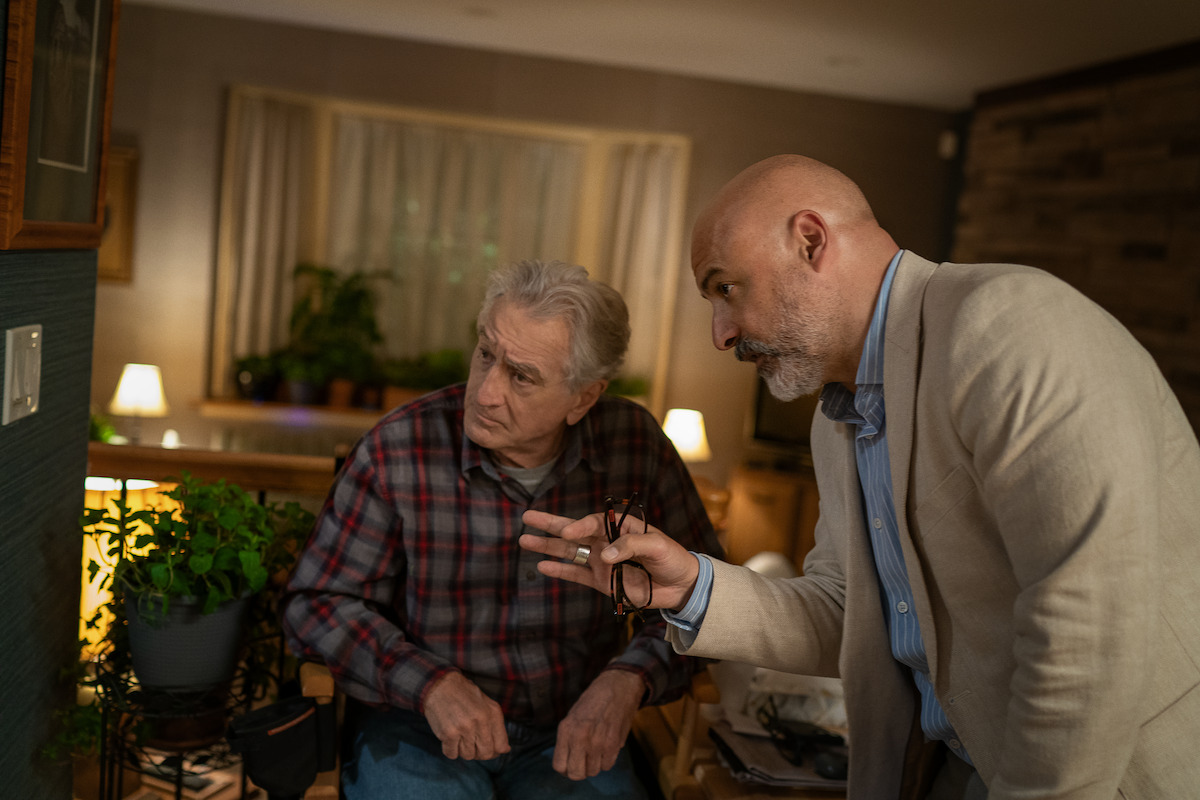
Tom’s situation is equally complicated.
He has already lost his wife and is struggling to raise Jake alone.
According to Scott, father and son haven’t completely figured out how to rebuild their lives following that loss.
Then Jake disappears.
Tom’s worst possible fear becomes reality at exactly the moment when he is still trying to understand what kind of father he needs to be.
His decision to contact Pete therefore carries considerable emotional baggage.
He needs his father’s knowledge.
That doesn’t mean he has forgiven him.
One exchange highlighted in Netflix’s trailer makes the distance between them unmistakable. When Pete suggests that the crisis has finally brought them together, Tom rejects the idea: he is asking for help, not reconciliation.
That distinction becomes central to their journey.
Finding Jake requires cooperation.
Repairing their relationship is something else entirely.

The Setting Has Also Moved Across the Atlantic
Jake’s earlier kidnapping isn’t the only major alteration.
North’s novel is set in Britain, while the movie relocates its story to the northeastern United States.
For the author, that wasn’t a fundamental problem.
North has explained that he doesn’t tend to think of setting as the defining element of his stories. His primary interest lies in the characters and their relationships.
The themes surrounding fathers and sons, he felt, were universal enough to survive the move.
That philosophy gave the filmmakers considerable freedom.
The geography could change.
The sequence of events could change.
What needed to remain intact was the emotional core.

North Readily Accepted That the Movie Would Be Different
Authors can have complicated relationships with screen adaptations of their work, particularly when filmmakers restructure major events.
North appears to have approached The Whisper Man differently.
He understood from the beginning that the movie would not simply reproduce his novel.
Ashcroft, the actors and the filmmaking team were creating their own version of the story.
And North has responded enthusiastically to the finished result.
That distinction matters because the film makes substantial choices rather than merely trimming the novel to fit a two-hour running time.
The Netflix movie runs approximately 1 hour 54 minutes.
Within that space, Ashcroft had to decide which elements of the book were essential to preserve and which could be restructured for a different medium.
The father-son story became the priority.
James Ashcroft Read the Novel and Screenplay Side by Side
Ashcroft had an unusual opportunity when he became involved with the project.
He received North’s book and the screenplay at roughly the same time and read the two alongside each other.
That allowed him to immediately compare the source material with the choices Jacoby and Palmer had already made while adapting it.
Jacoby previously worked on The First Omen, while Palmer’s credits include It. Netflix also confirmed Anthony Russo, Joe Russo, Angela Russo-Otstot and Michael Disco as producers through AGBO.
For Ashcroft, however, the attraction remained the same across both versions.
Beneath the genre mechanics was an opportunity to examine damaged family relationships and whether wounds passed between generations can ever truly heal.
Robert De Niro’s Casting Left Alex North Stunned
For an author seeing his first novel adapted for the screen, learning that Robert De Niro would play one of the central characters was understandably difficult to process.
North recalled receiving an unexpected email from his film representatives informing him that De Niro had signed on as Pete.
His reaction was disbelief.
“I was just over the moon,” North said, adding that he initially struggled to believe the message was real.
De Niro is joined by Scott as Tom and Michelle Monaghan as Detective Amanda Beck.
The wider cast includes Hamish Linklater, Owen Teague, Acston Luca Porto and Will Brill. Michael Keaton and John Carroll Lynch also joined the production.
It is a formidable ensemble for a story that ultimately depends as much on intimate family tension as its serial-killer mystery.
Michael Keaton Plays the Original Whisper Man
The old case at the center of the story leads back to Frank Carter, the convicted serial killer known as the Whisper Man.
Michael Keaton plays Carter, whose history with Pete continues to cast a shadow over the retired detective years after his capture.
That history makes Jake’s disappearance especially troubling.
The man Pete originally caught is already incarcerated.
Yet the old pattern appears to be resurfacing.
The mystery consequently forces Pete to confront a case that damaged far more than his professional life.
Netflix’s own description of the film emphasizes that combination: The Whisper Man is both a chilling mystery and a family drama.
That dual identity is crucial.
Remove the family conflict and the story becomes another investigation into a serial killer.
Remove the crime story and Pete and Tom might never have been forced back into each other’s lives.
The two halves need each other.
One of the Book’s Most Disturbing Images Survived Intact
Not everything was changed.
One of the novel’s most memorable sequences made the journey from North’s imagination to the screen largely intact.
A gloved hand reaches through the Kennedy family’s letterbox, attempting to lure young Jake toward the person waiting on the other side.
It is an unnerving image precisely because the threat is crossing into what should be the child’s safest space: his home.
The moment became important enough to feature prominently in the film’s promotional artwork.
For North, however, judging whether the scene remains frightening is surprisingly difficult.
He imagined it while writing the novel and has lived with the idea ever since.
Being so close to the material, he explained, makes it difficult to experience the scene the way a new reader or viewer might.
For audiences encountering that blue-gloved hand for the first time, the effect may be considerably different.
The Whisper Man Is More Than the Killer
The title naturally draws attention toward the serial killer.
But the film’s deeper preoccupation is with what fathers leave behind in their sons.
Pete’s failures affected Tom.
Tom is trying to raise Jake while dealing with grief.
Jake’s disappearance then forces all of those unresolved relationships into the same crisis.
North’s experience as a relatively new parent informed those anxieties when he wrote the book, while Ashcroft recognized them as the material that could give the film emotional weight beyond its mystery.
That explains why moving Jake’s kidnapping earlier becomes such an important adaptation decision.
It isn’t simply about accelerating the plot.
It puts Pete and Tom together.
And once they are together, the movie can ask whether finding Jake might also force them to confront everything that drove them apart.
The Russo Brothers’ AGBO Helped Bring the Bestseller to Netflix
The Whisper Man is also the sixth movie produced through the ongoing partnership between Netflix and the Russo brothers’ AGBO.
James Ashcroft directs after Coming Home in the Dark and The Rule of Jenny Pen, while Jacoby and Palmer adapted North’s novel for the screen.
For North, the finished movie represents another milestone: despite the success of his books, this is the first adaptation of one of his novels to reach the screen.
And rather than demanding literal fidelity, he appears pleased that the filmmakers found their own way into the material.
The result preserves the story’s central anxieties while reshaping how audiences experience them.
A Bestseller Reworked Around Its Emotional Core
Adapting a popular novel always creates an impossible balancing act.
Stay too close to the page and a film can feel constrained by the structure of another medium.
Change too much and the qualities readers loved may disappear.
The Whisper Man makes its intentions clear.
Jake disappears earlier.
Britain becomes the northeastern United States.
The investigation is reorganized to bring Pete and Tom together sooner.
Yet the story North considers essential remains intact: fathers, sons, fear, regret and the damage one generation can unintentionally pass to the next.
Ashcroft has described the movie as an exploration of healing old wounds approached with empathy rather than simply another serial-killer hunt.
That is ultimately why the biggest changes don’t necessarily move the film away from the novel.
In some ways, they push it closer to what North says the book was always about.
The Whisper Man may be waiting in the darkness.
But the real story belongs to the fathers and sons trying to find their way back to one another before it is too late.
The Whisper Man is now streaming on Netflix.