Making A Murderer: Where Steven Avery And Brendan Dassey Are Now
More than a decade after Making a Murderer introduced Steven Avery and Brendan Dassey’s cases to a global audience, both men remain in prison — and both are now seeking shorter sentences through Wisconsin’s new commutation process.
Avery and Dassey submitted applications asking Wisconsin Governor Tony Evers to reduce their sentences for the 2005 murder of Teresa Halbach. Both continue to maintain their innocence, although Dassey has also expressed doubts about whether his uncle was involved.
The applications come after years of unsuccessful legal challenges. Wisconsin’s Commutation Advisory Board, established by Evers in 2026, reviews eligible applications and makes recommendations to the governor. A commutation reduces a sentence being served; it does not overturn a conviction.

What Happened To Teresa Halbach?
The case began on October 31, 2005, when 25-year-old photographer Teresa Halbach disappeared after travelling to Avery’s Auto Salvage in Manitowoc County, Wisconsin, for an assignment photographing a vehicle for AutoTrader magazine.
At the time, Steven Avery was already pursuing a $36 million civil lawsuit against Manitowoc County after spending years imprisoned for a 1985 sexual assault and attempted murder that he did not commit.
DNA testing eventually established that Avery had been wrongly convicted in that earlier case and identified Gregory Allen, a known sex offender, as the actual perpetrator. The Wisconsin Innocence Project helped secure the DNA testing that led to Avery’s exoneration and release.
That history later became an important part of the argument surrounding the Halbach investigation.

Five days after Halbach disappeared, her Toyota RAV4 was found at Avery’s salvage yard. Investigators subsequently recovered human remains and other evidence from the property.
Avery was arrested and charged with Halbach’s murder, kidnapping, sexual assault and mutilation of a corpse. Evidence presented at his trial included blood in Halbach’s vehicle, her DNA on Avery’s bedroom key, her licence plates in another vehicle and a bullet fragment containing her DNA.
Avery maintained that he was innocent. His defence later argued that authorities could have planted evidence because of his previous wrongful conviction and the lawsuit he had filed against the county.

Brendan Dassey Becomes Part Of The Case
The investigation took another major turn in March 2006, when Avery’s 16-year-old nephew, Brendan Dassey, was charged in connection with Halbach’s death.
Dassey gave investigators a videotaped confession in which he said he had helped Avery rape and murder Halbach before disposing of her body.
He later withdrew that confession.
Dassey’s interrogation became one of the most controversial aspects of the case. His lawyers argued that his age, intellectual limitations and the techniques used by investigators made the confession involuntary.
In 2016, U.S. Magistrate Judge William Duffin ruled that Dassey’s confession had been coerced and ordered that his conviction be overturned. That ruling was subsequently reversed by the Seventh Circuit Court of Appeals, and the U.S. Supreme Court declined to hear the case in 2018. Dassey’s conviction therefore remains in place.

Avery And Dassey Receive Different Sentences
In March 2007, Avery was convicted of first-degree murder and illegal possession of a firearm. He was sentenced to life imprisonment without the possibility of parole.
Dassey was also convicted in 2007. His life sentence allows for parole eligibility in 2048, meaning he would be close to 60 years old by then.
Over the years, both men have continued to challenge their convictions, but their appeals have been unsuccessful. The new commutation applications represent a different legal route: rather than asking the courts to overturn their convictions, they are asking for their sentences to be shortened.

Avery’s Life Behind Bars
Now 64, Avery has spent years in prison while maintaining his innocence.
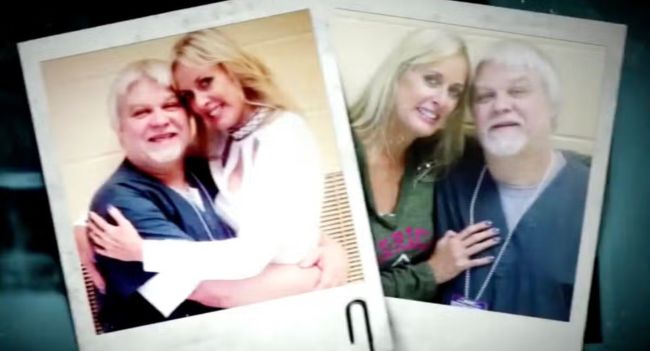
His personal life has also attracted considerable attention. He previously became engaged to Sandra Greenman, with whom he remained close after their relationship ended.
He later began a relationship with Lynn Hartman, a Las Vegas legal secretary. The pair became engaged in 2016 after eight months of dating and one in-person visit.
The relationship ended shortly after becoming public, with both sides making allegations about the other.
Greenman has continued to support Avery. In 2024, she said they remained friends and that Avery had a girlfriend whose identity was being kept private.
Avery has also continued to receive support from members of the public. Following the success of Making a Murderer, reports emerged that he received large numbers of letters from people interested in his case.

Avery’s Latest Bid For Freedom
In his latest commutation application, Avery continues to deny responsibility for Halbach’s death.
He also points to his conduct in prison and letters of support from family and friends. Among his hopes if he is released is the possibility of opening his own auto body business.
The Wisconsin commutation process is separate from a pardon. According to the governor’s office, a commutation shortens a sentence that someone is currently serving, while a pardon is a different form of executive clemency.
The Commutation Advisory Board began hearing applications in August 2026, with additional cases heard in September.
Where Is Brendan Dassey Now?

Dassey is now 36 and remains incarcerated in Wisconsin.
Unlike Avery, he has expressed doubts about his uncle’s involvement in Halbach’s death. In the account cited by the original report, Dassey said that as he grew older, he began to consider the possibility that Avery may have been involved, adding that if he were released, he would want no relationship with his uncle.
Despite that, Dassey continues to maintain his own innocence.
His lawyers have described him as hopeful despite the circumstances of his imprisonment. His latest application for commutation gives him another opportunity to seek a reduction of his sentence, even though his previous appeals have been exhausted.
The Legacy Of Making A Murderer

When Netflix released Making a Murderer in 2015, the documentary series turned the Avery and Dassey cases into an international subject of debate.
The series focused heavily on questions surrounding the investigation, Avery’s earlier wrongful conviction and Dassey’s disputed confession. The cases have continued to attract sharply differing views, including from Halbach’s family, who have maintained that Avery was responsible for her death.
The legal status, however, remains clear: Avery and Dassey remain convicted and incarcerated, while their latest applications seek reductions to their existing sentences rather than overturning those convictions.
For now, both men are waiting on the Wisconsin commutation process — more than 20 years after Teresa Halbach disappeared and more than a decade after Making a Murderer brought their cases to millions of viewers.