Netflix Viewers Rediscover Unbelievable, the Powerful True-Crime Drama Still Being Called a “Must-Watch”
More than six years after its debut, Netflix’s Unbelievable is finding its way back into viewing recommendations, with audiences continuing to praise the eight-part limited series for its performances, gripping investigation and deeply troubling true story.
Released in 2019, the crime drama stars Kaitlyn Dever, Toni Collette and Merritt Wever. Rather than relying on a fictional mystery, the series was inspired by real events documented in the Pulitzer Prize-winning investigation “An Unbelievable Story of Rape” by T. Christian Miller and Ken Armstrong, as well as the This American Life episode “Anatomy of Doubt.”
Netflix currently lists all eight episodes of the limited series as available to stream.
A crime story that begins when a young woman is not believed

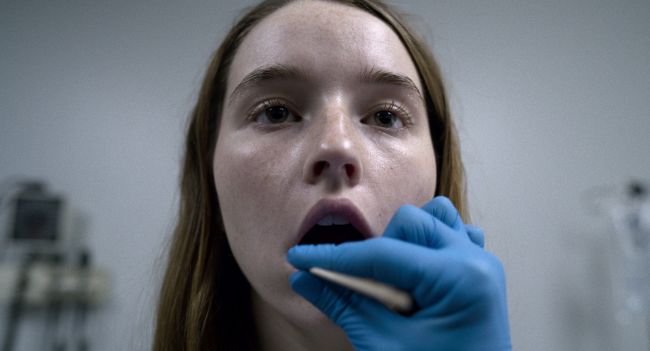
At the center of Unbelievable is Marie Adler, played by Kaitlyn Dever, a teenager who reports that an intruder sexually assaulted her inside her home.
Instead of finding immediate support, Marie faces increasing skepticism. Investigators begin questioning inconsistencies in her account, while people close to her also start doubting what she has told them.
Under enormous pressure, Marie retracts her allegation. The consequences of that decision soon become another ordeal of their own.
Hundreds of miles away, however, another investigation begins to unfold.
Detectives Karen Duvall and Grace Rasmussen, played by Merritt Wever and Toni Collette, encounter cases involving strikingly similar attacks. As they compare evidence and begin connecting seemingly separate incidents, the possibility emerges that they may be dealing with the same offender.
The series moves between these two strands: Marie living with the consequences of being disbelieved, and the Colorado detectives methodically following evidence that could eventually reveal what really happened.
The disturbing real story behind Unbelievable
@ohhelloentertainment Watch on @Netflix. #whattowatch #tv #television #netflix #crimedrama ♬ Murmuration Glass – Matty Drift
The drama was inspired by investigative reporting published jointly by ProPublica and The Marshall Project in December 2015.
Written by T. Christian Miller and Ken Armstrong, “An Unbelievable Story of Rape” examined the case of an 18-year-old woman outside Seattle who reported being assaulted at knifepoint.
Police came to doubt her account. After intense questioning, she said she had fabricated the story and was ultimately prosecuted for making a false report.
But the original allegation was not fabricated.
Years later, investigators working on similar cases in Colorado identified a serial offender, and evidence ultimately vindicated the young woman whose account had initially been rejected.
The investigation did more than recount one extraordinary case. It examined failures in the handling of sexual-assault reports and contrasted them with the painstaking work of detectives who successfully connected cases across jurisdictions.
Miller and Armstrong received the 2016 Pulitzer Prize for Explanatory Reporting for the work. The Pulitzer citation praised their examination of law enforcement failures in properly investigating reports of sexual assault and understanding the effects of trauma on victims.
The reporting also received a George Polk Award for Justice Reporting.
Kaitlyn Dever carries the emotional weight of Marie’s story
Much of Unbelievable depends on Kaitlyn Dever’s performance.
Her Marie is not presented through a simple or conventional depiction of trauma. The character can appear detached, frustrated, contradictory and difficult for the people around her to understand.
That complexity is central to the story.
Instead of asking viewers to judge Marie according to how they expect a victim to behave, the series examines what can happen when investigators treat assumptions about trauma as evidence of dishonesty.
Dever is joined by Toni Collette and Merritt Wever, whose characters provide the other half of the drama.
Grace Rasmussen and Karen Duvall approach their investigation by comparing information, following small details and refusing to dismiss connections simply because the cases occurred in different places.
Netflix describes the series as a story of trauma, tenacity and resilience, with the two investigations gradually converging around the same disturbing truth.
Why viewers are still recommending the series

Unbelievable has recently resurfaced through social-media recommendations, including from TikTok creators Max and Skylar, who urged crime-drama fans to seek out the eight-episode series.
Max described it as “eight episodes of TV you absolutely must watch,” while Skylar praised both its writing and acting and highlighted its examination of why women are sometimes not believed.
She also argued that the series demonstrates how real events can prove every bit as compelling as fiction.
Max singled out Collette and Wever’s detectives while also praising Dever’s central performance.
Other viewers echoed those reactions, describing Unbelievable as the kind of miniseries that stays with you after watching it. One called it an “amazing mini series,” while another argued that it “should have been hyped up more.”
Another summed up the uncomfortable combination that defines much of the viewing experience, describing the drama as both deeply upsetting and infuriating.
More than a conventional detective thriller

Although Unbelievable contains many familiar elements of a crime procedural — detectives, evidence, suspects and a hunt for an offender — its central concern reaches beyond solving the case.
The story places equal emphasis on what happens when someone seeking help is treated with suspicion by the very system expected to investigate what happened.
That distinction is also embedded in the journalism behind the adaptation. The Pulitzer-winning reporting contrasted the mishandled investigation in Washington with the collaborative detective work in Colorado that ultimately helped expose the truth.
That gives the Netflix adaptation an unusual tension. Viewers are not simply waiting to discover who committed the crimes. They are watching two radically different responses to victims unfold side by side — and seeing the consequences each approach can have.
Eight episodes tell the complete story
Another reason Unbelievable works well as a recommendation for crime-drama fans is its limited-series format.
There are eight episodes, generally running between roughly 43 and 58 minutes, and the story reaches its conclusion without requiring viewers to commit to multiple seasons.
Across those episodes, Marie deals with the aftermath of her retraction while Karen and Grace’s investigation expands. Small breakthroughs gradually accumulate until the detectives move closer to identifying the person responsible.
The result is a series that combines an investigative thriller with a much more intimate story about doubt, institutional failure and the lasting consequences of not being believed.
Years after its original release, that combination continues to bring viewers back to Unbelievable — and helps explain why the limited series is still being recommended to audiences searching for a serious true-crime drama rather than a conventional whodunit.
All eight episodes of Unbelievable are currently streaming on Netflix.