
The Real History and Biblical Allegory Behind Netflix’s ‘East of Eden’
:max_bytes(150000):strip_icc():focal(652x0:654x2):format(webp)/east-of-eden-2000-6a2db7b080e24e7e86651c3465ba1c78.jpg)
With Netflix’s limited series East of Eden bringing John Steinbeck’s 1952 magnum opus back into the cultural spotlight, viewers are revisiting the origins of its sweeping tragedy. While the 7-episode drama starring Florence Pugh, Christopher Abbott, and Mike Faist is a work of fiction, its roots lie in a mixture of biblical allegory, classic Hollywood cinema, and Steinbeck’s own family history.
A Modern Retelling of Cain and Abel
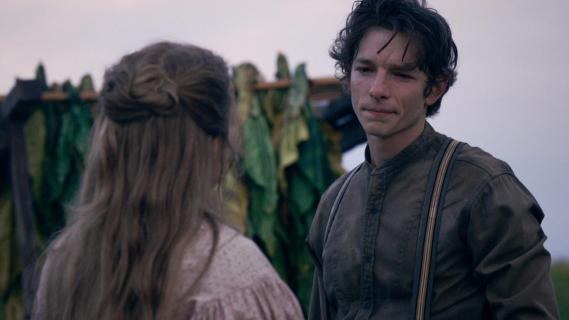
At its foundation, East of Eden is an extended interpretation of the Book of Genesis—specifically the story of Adam and Eve’s first sons, Cain and Abel.
Steinbeck reflected this ancient rivalry across two successive generations:
-
The First Generation: The fraught bond between brothers Adam and Charles Trask as they vie for their father Cyrus’s favor.
-
The Second Generation: Adam’s twin sons, Cal (Joseph Zada) and Aron (Joe Anders), who repeat the cycle of jealousy and rejection.
Central to both the novel and the screen adaptations is the Hebrew concept of timshel (“thou mayest”). Rather than portraying human beings as inherently condemned to repeating generational sin, Steinbeck’s philosophy argues that individuals possess the agency to overcome their dark impulses and choose good over evil.
Steinbeck’s Real Family: The Hamilton Clan
While the central Trask family and the enigmatic Cathy Ames are purely fictional constructs, Steinbeck drew directly from his own lineage when writing the Hamilton family:
-
Samuel Hamilton (played by Ciarán Hinds) was modeled directly on Steinbeck’s maternal grandfather, an inventive Irish immigrant who settled in the Salinas Valley.
-
Liza Hamilton (played by Anita Hegh) was based on Steinbeck’s maternal grandmother.
In the original 600-page novel, the Hamiltons serve as a warm, moral counterweight to the darker Trask saga. However, adapting the sprawling book required tough editorial decisions. Co-showrunner and executive producer Jeb Stuart noted that while the Hamiltons appear briefly, their extensive family subplot was pared back to keep the narrative tightly focused on Cathy and the Trasks.
1955 Film vs. 2026 Netflix Limited Series
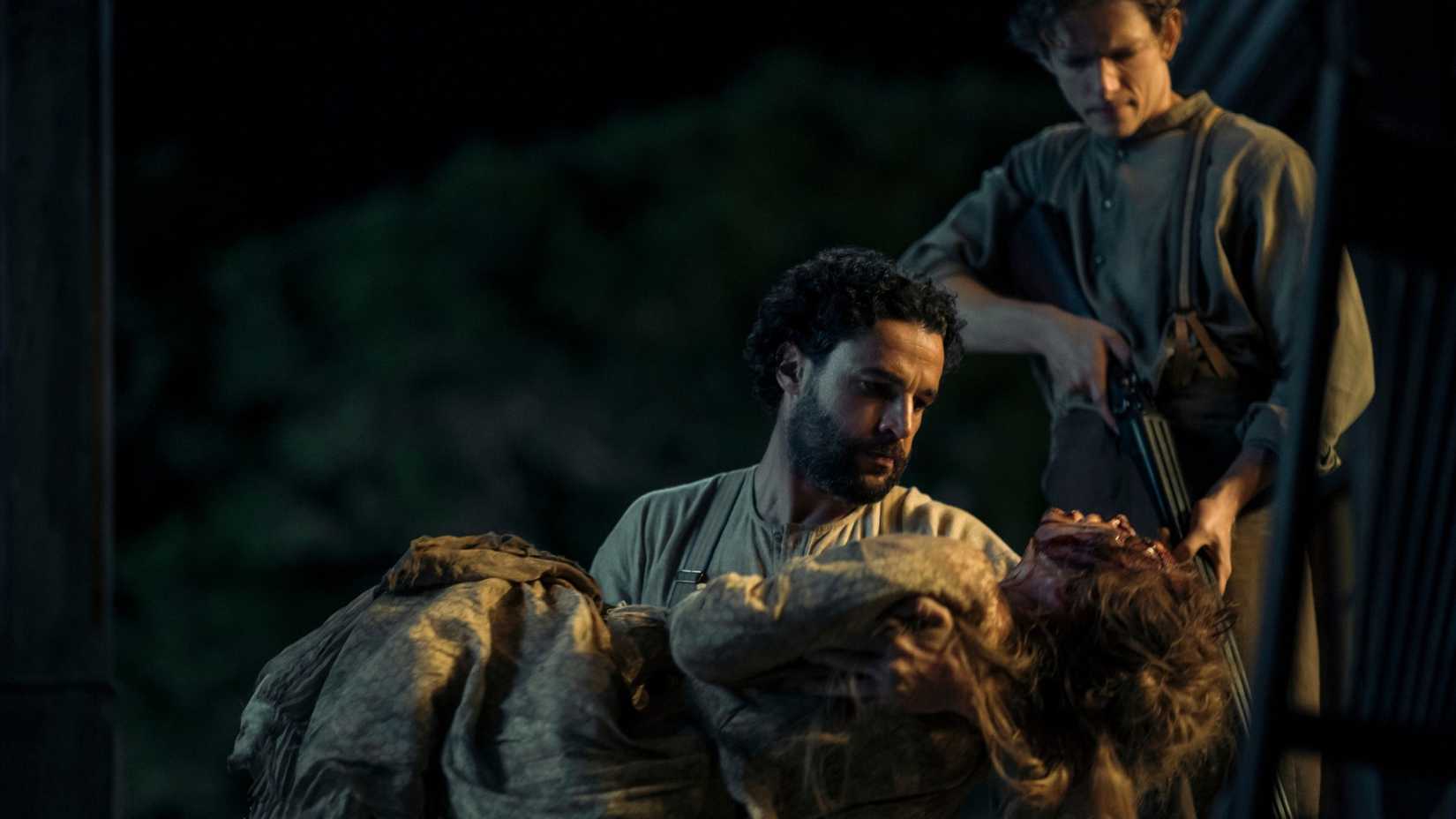
The Netflix production arrives more than seven decades after Elia Kazan directed the famous 1955 film adaptation starring James Dean as Cal. In a poignant creative bridge, the Netflix series is led by Elia Kazan’s granddaughter, Zoe Kazan, who serves as creator, writer, and showrunner.
| Feature | 1955 Film (Dir. Elia Kazan) | 2026 Limited Series (Zoe Kazan) |
| Scope | Focuses almost entirely on the final section of the book | Multi-generational narrative tracking Cathy and both brother pairings |
| Lead Perspective | Centered on Cal’s (James Dean) search for paternal validation | Driven by Cathy Ames’s (Florence Pugh) complete backstory and evolution |
| Approach to Source Material | Loose, condensed adaptation tailored for a 2-hour runtime | Comprehensive 7-episode deep dive into Steinbeck’s broader themes |
“The 1955 film took on only a small part of the book, and I think it’s a fairly loose adaptation,” Zoe Kazan explained. “The things that I loved most about the book were the intergenerational aspect of it, and then all of these rich characters.”