
Harlan Coben’s I Will Find You entered Netflix’s all-time top-ten list for English-language series in late July 2026 with 101.9 million cumulative views — more than Bridgerton Season 3 managed at the same stage — and The Guardian spent a full feature trying to explain why nobody will admit to liking a show this many people have watched. The answer, it turns out, is encoded in the show’s forensic premise. I Will Find You is not just another crime potboiler. It is a thriller engineered to exploit two specific, documented cracks in the American criminal justice system: the gap between DNA evidence’s perceived infallibility and its real-world failure modes, and the neurological reality that a human being can commit a violent act during an NREM sleep episode without any conscious awareness, intent, or memory. Both of those cracks are real. Both have sent innocent people to prison.
Twenty-four million viewers watched the show in its first four days of release alone. The number matters less than the question it raises: why does a story this implausible feel this plausible to this many people? The answer involves forensic science, sleep neurology, and a decade of true-crime media that trained American audiences to distrust the evidence systems the show asks them to doubt.
I Will Find You set a 2026 viewership record with its debut, claiming Netflix’s top spot for five consecutive weeks before Myron Bolitar production began in New York City — marking Coben’s structural evolution beyond self-contained miniseries into a recurring franchise format.

David Burroughs Is Innocent — and the Science Explains Why His Jury Didn’t Know That
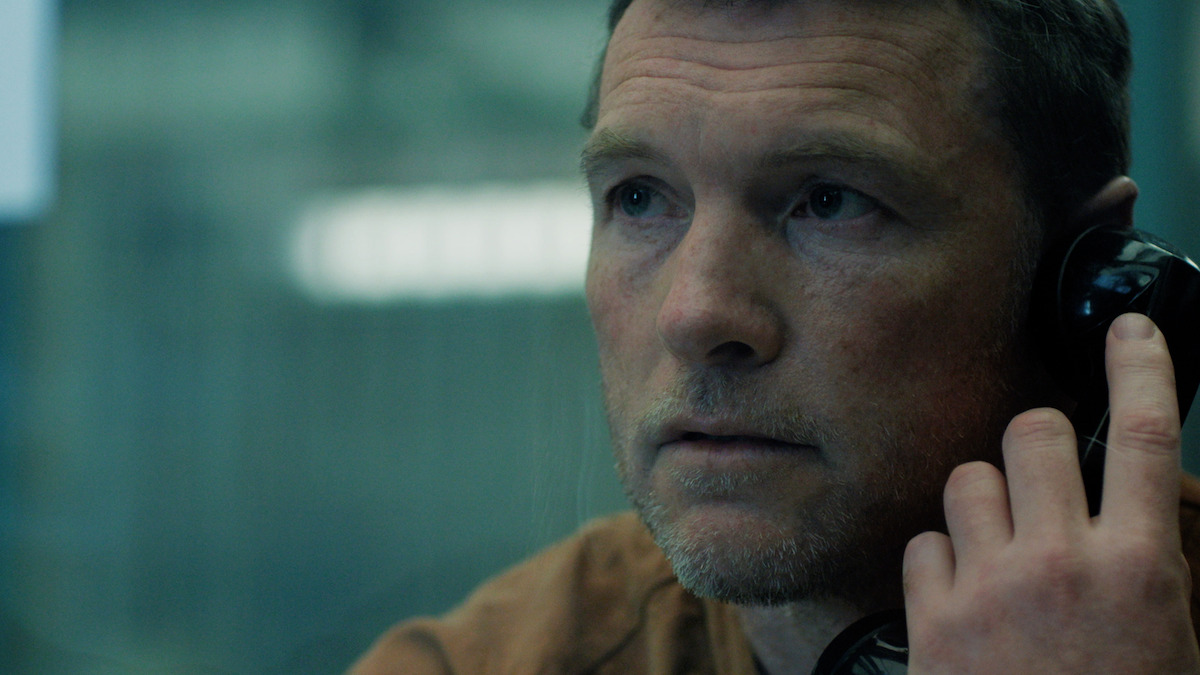
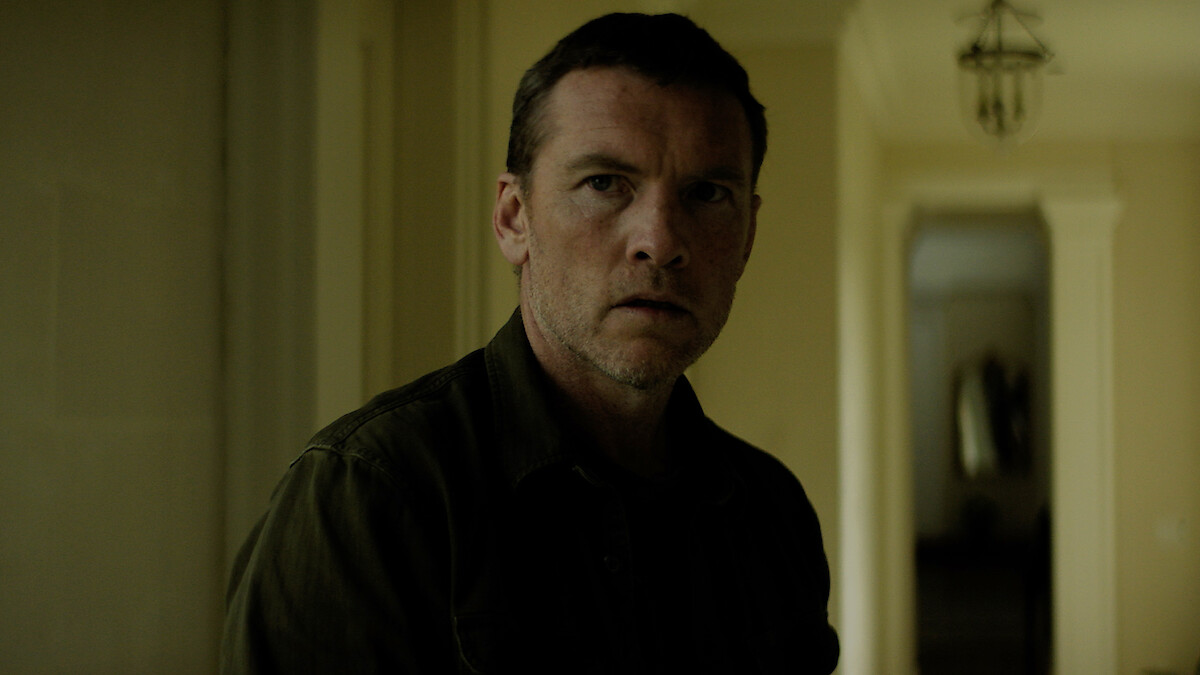
David Burroughs (Sam Worthington) is serving a life sentence for the murder of his three-year-old son Matthew, a crime he maintains he did not commit. The prosecution’s case rested on two pillars: DNA evidence placing the child’s death beyond dispute, and the backstory that David had a documented history of night terrors — severe NREM sleep episodes during which he could move, act, and respond to stimuli without any conscious awareness. The night terror element is introduced early in the series and then largely dropped, serving its purpose: to make a jury’s conviction of an otherwise sympathetic figure comprehensible. If a man might kill in his sleep, a jury does not need to fully believe he chose to kill. The evidence was sufficient. The rest was noise.
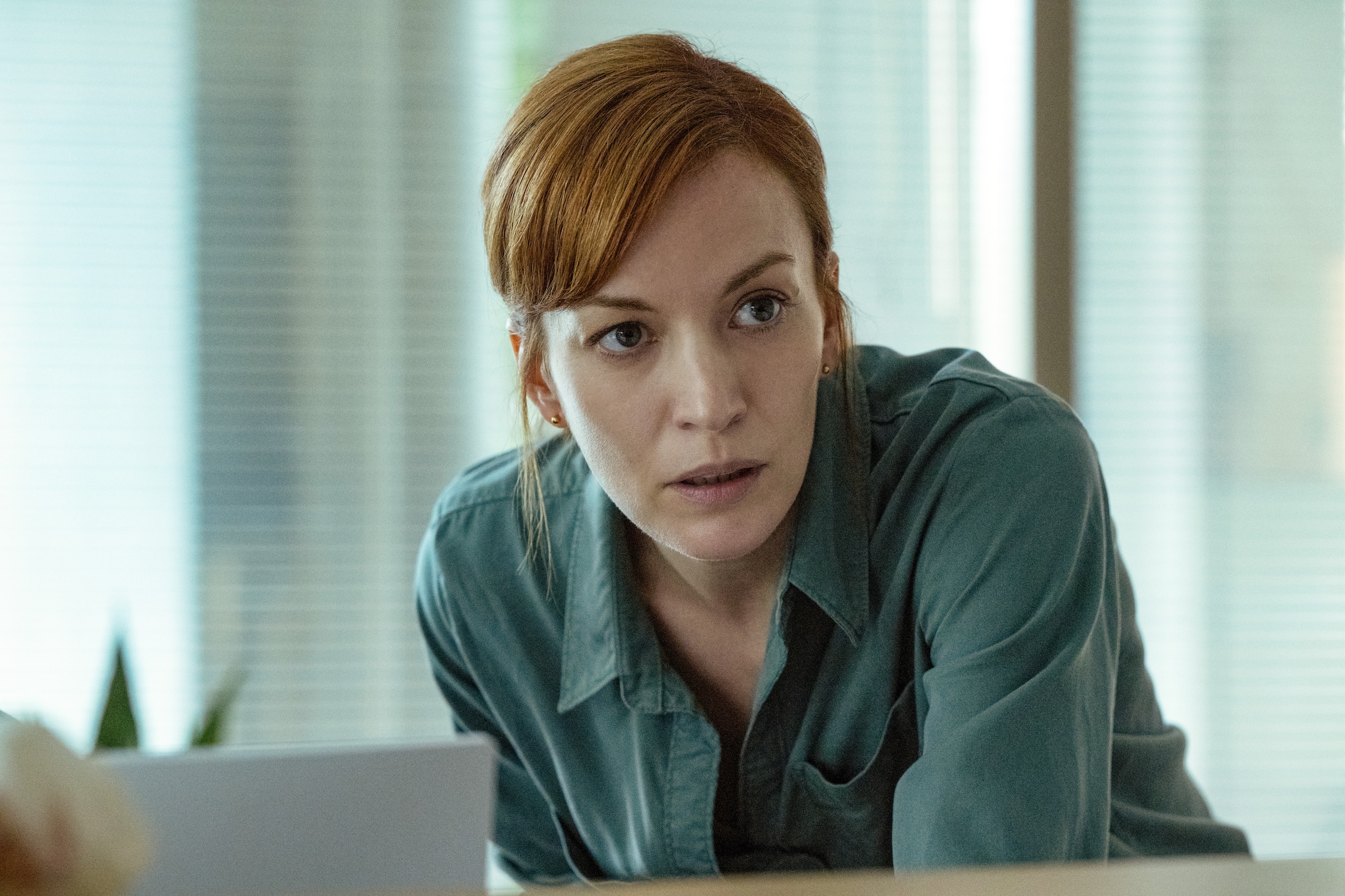
The show’s actual revelation — delivered across its eight episodes and confirmed in the Tudum ending explainer — is that the DNA evidence was fabricated. Villain Hayden Pierce (Milo Ventimiglia) murdered a terminally ill child at a Swiss orphanage run by his mother, substituted that child’s body for Matthew’s at the crime scene, and falsified the DNA results to frame David and protect himself. Matthew Burroughs was alive the entire time.
This is Coben’s actual forensic premise, and it is more analytically interesting than the parasomnia angle the show teases. It maps directly onto a documented and ongoing crisis in American forensic science.
DNA Evidence Is Not What Juries Think It Is
DNA evidence is widely regarded as the gold standard of forensic identification. It is also routinely misrepresented to juries in terms of its certainty, its collection reliability, and its resistance to manipulation. The National Registry of Exonerations — a joint project of three law schools at the University of California Irvine, University of Michigan, and Michigan State University — has documented over 3,600 wrongful convictions in the United States since 1989. Of the 147 exonerations recorded in 2024 alone, 29 percent involved false forensic evidence as a contributing factor. The average exoneree had already served 13.5 years.
The most dramatic documented case of forensic fabrication at institutional scale is the Annie Dookhan scandal in Massachusetts. From 2003 to 2012, Dookhan worked as a chemist at the William A. Hinton State Laboratory Institute, where she tested drug evidence for criminal cases. She falsified test results, contaminated samples intentionally, “dry-labbed” narcotics by identifying them visually rather than running chemical analysis, and pleaded guilty in 2013 to 27 charges including tampering with evidence, obstruction of justice, and perjury. The Science History Institute’s Dookhan investigation traces the institutional failures that enabled a single analyst to corrupt thousands of prosecutions. The Massachusetts Supreme Judicial Court ultimately ordered the dismissal of over 21,000 tainted convictions — the largest mass dismissal in United States history. The state spent at least $8.5 million processing the fallout from a single forensic analyst who saw herself, in her own words, as someone who got drug dealers “off the street.”
That scandal involved drug evidence rather than DNA. But the underlying mechanism — the abuse of prosecutorial and forensic trust, the treatment of a laboratory result as self-evidently true because laboratories are perceived as neutral — is exactly the mechanism I Will Find You exploits. The show’s villain falsified DNA the same way Dookhan falsified drug tests: through access, through institutional trust, through the structural assumption that forensic evidence is not also subject to human corruption.
There is also a subtler forensic problem the show gestures toward without naming: secondary DNA transfer. Research published in Forensic Science International: Genetics has established that DNA profiles can be obtained from objects a person never directly touched via gloves — DNA passes through intermediate contact with shared surfaces or proximity to an original source. Prosecutors’ expert witnesses rarely proactively explain this possibility to juries. The gap between what DNA evidence proves and what juries believe it proves has sent demonstrably innocent people to prison. In a case like David Burroughs’s — a murder committed in the family home, where his DNA was everywhere by ordinary right of residence — secondary transfer would have been forensically invisible against the fabricated evidence planted on top of it.
Can You Go to Prison for Something You Did While Asleep?
The night terror backstory in I Will Find You is narratively economical: it explains why the prosecution’s framing was psychologically plausible to a jury without requiring the show to fully adjudicate whether David actually had a sleep episode that night. The science behind it, however, is worth understanding on its own terms, because it describes a real gap in US criminal law.
NREM parasomnias — including sleep terrors, somnambulism, and confusional arousals — are classified as Disorders of Arousal in the DSM-5 and ICD-11. They occur during partial arousal from N3 (slow-wave, or deep) sleep, a brain state in which the cortex remains functionally disengaged while motor systems can produce complex, coordinated behavior. A person in a sleep terror episode can walk, drive, speak, and respond to stimuli — and has no conscious awareness of doing so, no volitional intent behind the actions, and no memory of the episode afterward. The lifetime prevalence of Disorders of Arousal is approximately 6.9 percent of the population.
Forensic psychiatrist Mark Pressman’s “perfect storm” model, widely cited in the sleep medicine literature, identifies three factors that predispose, prime, and provoke parasomnia violence: a familial genetic predisposition to deep slow-wave sleep; priming conditions including sleep deprivation, psychological stress, or obstructive sleep apnea acting as an arousal stimulus; and a provoking sensory stimulus during the N3 episode itself. The Psychiatric Times overview of sleep-related violence confirms that violence during a sleep episode typically takes the form of defensive aggression in response to an ambiguous sensory input — a bystander’s proximity or physical contact — rather than premeditated or goal-directed action. Sleepwalkers are not inherently violent; the violence is reflexive, context-triggered, and bears no relationship to any conscious wish or plan.
The most consequential legal test of this science remains R. v. Parks (1992, Supreme Court of Canada). Kenneth Parks drove approximately 23 kilometers (about 14 miles) from his home in Pickering, Ontario, to the house of his in-laws in Scarborough, Ontario, in the early morning of May 24, 1987. He entered the home, attacked both in-laws with a tire iron, killing his mother-in-law and seriously injuring his father-in-law. He then drove directly to a nearby police station and surrendered, telling officers he believed he had just killed two people. He claimed to have been asleep throughout. Five expert witnesses — neurologists, psychiatrists, and forensic specialists — testified for the defense that Parks had been sleepwalking, that sleepwalking was not a neurological, psychiatric, or other recognized illness, and that his family had a documented history of NREM parasomnias. The jury acquitted him. The Supreme Court of Canada upheld Parks’s acquittal on appeal, classifying sleepwalking as non-insane automatism — a complete defense resulting in absolute acquittal — rather than as a “disease of the mind” that would require psychiatric commitment.
Every year, dozens of criminal defenses globally are based on parasomnia-related violence claims. The outcomes vary radically by jurisdiction. US states handle the automatism defense inconsistently: some permit it as a standalone non-insane automatism plea producing absolute acquittal; others collapse it into the insanity defense, which produces not acquittal but indefinite psychiatric commitment — a fundamentally different outcome from the defendant’s perspective, and a dramatically lower incentive to raise the defense. Maine, where I Will Find You is set, has historically been ambivalent. In David Burroughs’s fictional case, the night terror backstory was legally irrelevant once the fabricated DNA was introduced — the evidence swamped the defense argument before it could be properly made.

Why America’s True-Crime Priming Made Coben’s Premise Land Harder Here Than Anywhere Else
I Will Find You is the thirteenth Coben-Netflix adaptation and the first to be set in the United States. All twelve prior adaptations were produced in other countries — the UK, Poland, Spain, France, Argentina — and all were successful, earning Coben shows combined viewership of over 450 million on Netflix since 2023. The American setting was commercially logical: Netflix’s largest market had been watching Coben adaptations set everywhere except home. But the American setting was also epistemically precise.
No prior Coben adaptation could assume what I Will Find You assumed: that its audience had already been educated, over the previous decade, to distrust DNA evidence and prosecutorial certainty in exactly the way the show requires. Serial premiered in 2014 and put wrongful conviction doubt into mainstream American ears. Making a Murderer (2015) made Avery a household name and prosecutorial misconduct a dinner table topic. The Innocence Project’s campaigns — documenting over 375 DNA exonerations as of 2020, with the underlying structural critique of forensic misuse available on their website — moved wrongful conviction from an academic concern to a cultural one. The National Registry of Exonerations published its 3,000th wrongful conviction case before I Will Find You even premiered.
A British audience watching a Coben adaptation set in Sheffield does not carry that particular decade of forensic literacy. An American audience watching a story set in Maine — where a man was convicted on DNA evidence that had been fabricated — carries it reflexively. The show did not create the doubt. It channeled doubt that American audiences had already been taught to feel.

What Makes Coben’s Formula Work Across Eight Countries
The forensic premises are interesting. The reason I Will Find You reached 101.9 million views while competent thrillers disappear into streaming oblivion is something different: Coben’s narrative formula is extraordinarily portable.
Industry analysts have described his adaptations as efficient suspense delivery systems. The formula, consistent across all 13 Netflix adaptations, is: an ordinary protagonist with a stable present life is confronted by a secret from the past; the confrontation cascades into multiple simultaneous threats; those threats are revealed to be interconnected; a twist near the end recontextualizes everything. The emotional engine is guilt — specifically the guilt of someone who made a decision under pressure and never fully examined it. The threats are always domestic: marriages, parenthood, sibling bonds. The settings change. The engine does not.
What the Coben Netflix model demonstrates at scale is the distinction between narrative form and narrative content. The Woods relocates from New Jersey to Warsaw; The Innocent goes from New Jersey to Madrid; I Will Find You stays in Boston. The specific crime, the particular cultural context, the social textures of each setting differ entirely. The emotional logic — ordinary life fractured by a buried secret, which turns out to be everyone’s buried secret — translates without loss. It is not that Coben writes universal themes in the vague sense that any literary critic might claim. It is that the specific psychological mechanism his plots require — the collision between a comfortable present and an unexamined past — appears to be genuinely cross-cultural in a way that cultural specificity does not diminish.
The 200 percent book sales lift that Penguin reported for Coben’s adapted titles in the period following each show release — regardless of which country the adaptation originated from — confirms that the formula generates genuine reader interest rather than merely passive viewership.
Myron Bolitar Asks Whether Coben’s Formula Can Sustain a Second Season
Myron Bolitar began filming in New York City on July 27, 2026, with Colin Woodell starring as the title character — a former college basketball player whose NBA career ended in injury and who reinvented himself as a sports agent. KJ Apa plays Win Lockwood; Diane Guerrero plays Esperanza Diaz. David E. Kelley (Big Little Lies, Presumed Innocent) and Kyle Long co-showrun.
The first season will be primarily based on Drop Shot, the second of Coben’s twelve Bolitar novels, with Coben noting in an interview with The Hollywood Reporter that the first season is partly based on Drop Shot while “going in other directions as well, but the mystery is from Drop Shot.”
Bolitar represents a genuine structural departure. Every prior Netflix Coben adaptation has been a closed unit: a self-contained eight-episode mystery based on a single novel, with no planned continuation. Coben himself articulated the logic: “My rule on that is that unless we can come up with a better story, I don’t see a season two. With I Will Find You, what, would we have another kid go missing?” Bolitar, based on a twelve-book franchise designed from the first novel for recurrence, breaks that logic by design.
Whether Coben’s formula — which is engineered to be consumed and discarded with the efficiency of a long-haul flight thriller — can sustain multi-season viewer investment in a single returning character remains genuinely open. The Bolitar books have a built-in answer: Coben has written twelve of them. The show’s challenge is whether the audience that watches I Will Find You and then moves on will come back for Drop Shot’s mysteries a year later. Netflix’s bet, backed by Kelley’s prestige-adjacent pedigree, is that the character is strong enough to generate loyalty that the formula alone does not require.
Coben told The Hollywood Reporter the prospect felt genuinely exciting. At 101.9 million views on the last entry, it is difficult to argue with his confidence.

Frequently Asked Questions
Is I Will Find You based on a real case?
Not directly, but its forensic premise rests on documented real-world phenomena. The central mechanism — DNA evidence fabricated by a conspirator — maps onto real forensic scandals, most notably the Annie Dookhan case in Massachusetts, where a state crime lab chemist intentionally contaminated samples and fabricated results, leading to the dismissal of over 21,000 convictions. The show’s presumption that a jury would convict on falsified DNA evidence reflects a real structural vulnerability: prosecutors’ expert witnesses rarely explain secondary DNA transfer or the possibility of evidence manipulation to juries, and DNA is routinely treated as near-infallible when it is not.
Can you really commit a violent crime during a sleep episode and not be legally responsible?
In some jurisdictions, yes — though the legal outcome depends heavily on where the case is tried. The most significant precedent is R. v. Parks (1992), in which the Supreme Court of Canada upheld the acquittal of a man who drove over 14 miles while asleep and killed his mother-in-law, on the grounds that sleepwalking constitutes non-insane automatism — a complete defense resulting in absolute acquittal — rather than a mental illness. In the United States, the treatment is inconsistent: some states permit a standalone non-insane automatism defense producing acquittal; others collapse it into the insanity defense, which typically results in psychiatric commitment rather than freedom. The neuroscience is real — NREM parasomnias are Disorders of Arousal in both the DSM-5 and ICD-11, and forensic sleep medicine is a recognized subspecialty — but the legal recognition lags behind the science.
Why did Harlan Coben set his biggest show in the United States when all his prior Netflix adaptations were international?
Commercially, Netflix’s largest market had been watching Coben adaptations set in Poland, Spain, France, and Argentina for eight years. The American setting was overdue. Analytically, however, the choice is also forensically precise: American audiences have been primed by a decade of true-crime media — Serial, Making a Murderer, Innocence Project campaigns, the National Registry of Exonerations — to believe, at a cultural level, that DNA evidence can be wrong and that the criminal justice system convicts innocent people. No prior Coben adaptation could assume that existing epistemic readiness. I Will Find You‘s forensic premise did not create doubt in its American audience; it channeled doubt that audience already carried. The Innocence Project’s documented DNA exonerations provided a decade of cultural priming that made the show’s premise feel like confirmation rather than fiction.
Is the Myron Bolitar series a continuation of I Will Find You?
No. Myron Bolitar is a separate character from a separate twelve-book series, unconnected to I Will Find You and based primarily on Coben’s novel Drop Shot (1996) for its first season. The structural novelty is that Bolitar is intended as a recurring multi-season series — the first Coben Netflix adaptation designed for continuation rather than as a self-contained single mystery. Production began in New York City on July 27, 2026, with Colin Woodell as Myron Bolitar and David E. Kelley and Kyle Long co-showrunning.