
Penélope Cruz and Glenn Close Join an Epic Journey Through Nearly a Century of Spanish History in La Bola Negra
After emerging as one of the most acclaimed Spanish films at this year’s Cannes Film Festival, La Bola Negra is preparing for its next chapter with a sweeping new teaser that moves between the 1930s, the Spanish Civil War and modern-day Spain.
Directed by Javier Calvo and Javier Ambrossi — the filmmaking duo popularly known as Los Javis — the ambitious drama follows three men living generations apart whose stories become connected through desire, pain, love and the inheritance left behind by those who came before them.
The film premiered in competition at Cannes in May, where Calvo and Ambrossi shared the Best Director prize. It is now continuing through the fall festival circuit before its theatrical and eventual Netflix release.
Featuring an international ensemble that includes Penélope Cruz, Glenn Close, Miguel Bernardeau, Carlos González and Lola Dueñas, La Bola Negra also marks the acting debut of acclaimed Spanish singer-songwriter Guitarricadelafuente.
At its center is a question that stretches far beyond the lives of its individual characters: what do people do with the history they inherit — particularly when earlier generations were forced to hide parts of themselves?
Three Men, Three Eras and One Shared History
Rather than telling its story chronologically, La Bola Negra moves between three pivotal periods in Spain: 1932, 1937 and 2017.
Each era introduces another man struggling with belonging, identity and desire.
In 1932, Carlos, played by Milo Quifes, searches for a place for himself in a country becoming increasingly divided.
Five years later, during the Spanish Civil War, Sebastián — played by Guitarricadelafuente — forms a connection that crosses enemy lines.
Then, in 2017, Carlos González’s Alberto discovers a family secret that has remained buried for generations.
That discovery begins giving a voice to truths that history had attempted to silence.
The three characters may inhabit different versions of Spain, but their experiences are connected by sexuality, desire, pain and inheritance. Cannes described the movie as an ensemble drama following three men across three eras of a fractured country.
The result is a story in which history isn’t simply background.
It is something the characters carry with them.
The New Teaser Reveals the Film’s Enormous Scope

The latest teaser offers a striking glimpse at the scale of Calvo and Ambrossi’s film.
Set to Vera Lynn’s “We’ll Meet Again,” it cuts between dramatically different periods and environments, moving from an intimate small-town casino to wartime Spain and eventually into the modern era.
The transitions between those periods aren’t incidental.
Calvo and Ambrossi designed the movie around the idea that the past continues bleeding into the present.
Calvo told Netflix that the central concern of the film is what people choose to do with their past and inheritance — including the objects, art and traces that history leaves behind.
Ambrossi explained that the complicated structure was planned in considerable detail before filming began. The filmmakers had already imagined many of the transitions while writing the screenplay, allowing the three periods to function as pieces of one larger story rather than three separate narratives.
That careful construction was essential to a movie whose official Cannes runtime is 155 minutes.
La Bola Negra Became a Major Cannes Success
The film arrived at Cannes as Calvo and Ambrossi’s first feature selected for the festival’s main Competition.
It left with one of the festival’s major prizes.
The pair received the Best Director award, shared with Paweł Pawlikowski, marking a significant milestone for the filmmakers behind Spanish television successes including Paquita Salas, Veneno and La Mesías.
Its world premiere also generated an enthusiastic response.
Atresmedia, one of the companies involved with the film, reported that the Cannes premiere received a 20-minute ovation.
The reception immediately established La Bola Negra as one of Los Javis’ most ambitious projects to date.
But the film’s connection to Spanish culture extends much further back than Cannes.
Federico García Lorca’s Legacy Hangs Over the Entire Story
The title La Bola Negra comes from an unfinished work by Federico García Lorca, the enormously influential Spanish poet and playwright who was killed in 1936 at the beginning of the Spanish Civil War.
His legacy is woven deeply into the movie.
Cannes describes La Bola Negra as being haunted by Lorca’s presence, while the Spanish Ministry of Culture notes that the film connects its three central lives to one of his final unfinished works.
Calvo and Ambrossi co-wrote the screenplay with playwright Alberto Conejero.
The film draws on Conejero’s La piedra oscura, La bola negra and texts associated with Lorca, using those materials as the foundation for a much broader meditation on history, sexuality and memory.
For Los Javis, the goal was never simply to recreate a particular historical period.
They wanted to explore what happens when experiences suppressed in one generation survive into another.
Los Javis Wanted to Tell a Story About Freedom and LGBTQ+
Visibility
Calvo and Ambrossi have described La Bola Negra as a story about freedom, legacy and LGBTQ+ visibility.
More specifically, they wanted the movie to acknowledge generations whose courage and sacrifices helped make freedoms available to people living today.
That intention is reflected in the film’s unusual historical reach.
By moving between 1932, 1937 and 2017, the filmmakers can place queer lives from radically different moments of Spanish history beside one another.
The characters do not experience the same country.
They do not have the same freedoms.
They do not even possess the same language for understanding themselves.
But their stories become part of the same inheritance.
Cannes highlighted another recurring idea within the film: failed communication.
Missed calls, unanswered gestures and prolonged silences repeatedly appear across the story. For the directors, violence can exist not only in actions but also in the things people are unable — or unwilling — to say.
That gives the movie’s generational structure another purpose.
The silence of one era becomes something another generation must eventually confront.
Guitarricadelafuente Makes His Acting Debut as Sebastián
One of the movie’s biggest creative gambles is also one of its most important casting decisions.
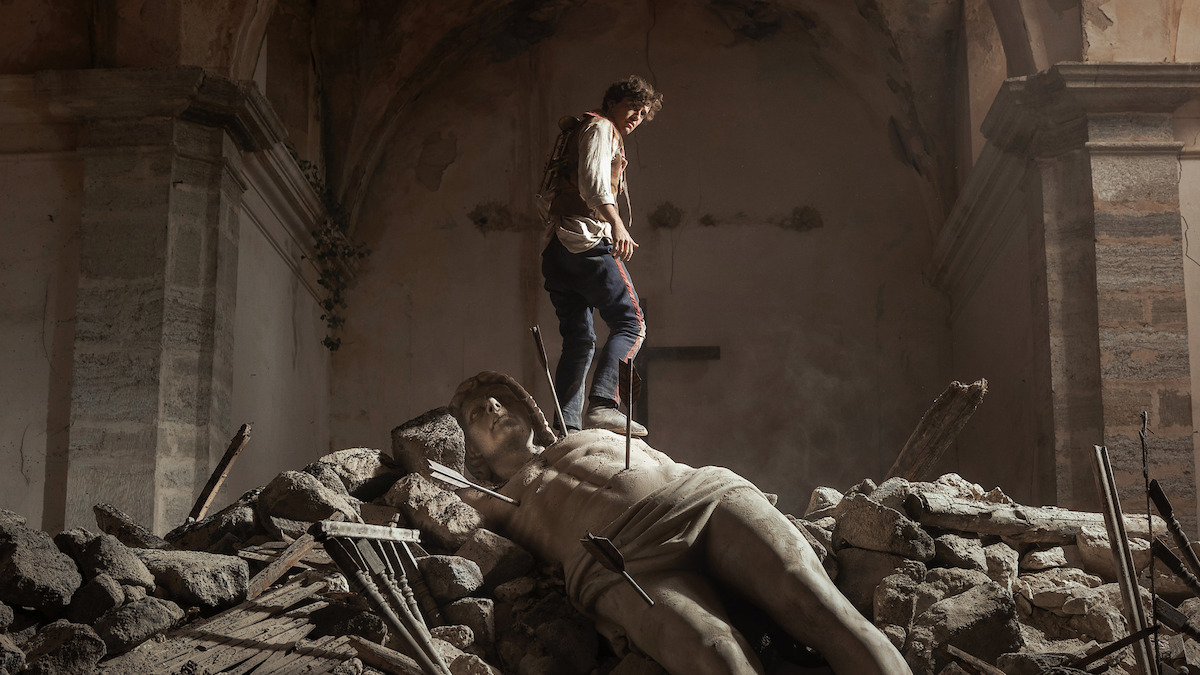
Spanish singer-songwriter Guitarricadelafuente makes his acting debut as Sebastián, the young man whose story unfolds during the Civil War period.
For Calvo and Ambrossi, however, casting him was anything but an afterthought.
The filmmakers were already admirers of his music and stage presence before writing the role.
Calvo explained that they often imagine specific performers while developing characters, and they believed the sensitivity Guitarricadelafuente communicates through his songs could translate into acting.
Ambrossi went even further, describing Sebastián as so essential to the project that the filmmakers felt the movie depended on Guitarricadelafuente agreeing to play him.
The singer joins an ensemble packed with established performers, making his debut alongside some of the most recognizable names in Spanish and international cinema.
Penélope Cruz and Glenn Close Headline the Supporting Ensemble
The cast surrounding the three central men is formidable.
Guitarricadelafuente plays Sebastián.
Milo Quifes portrays Carlos.
Carlos González, known for Veneno and Amar es para siempre, plays Alberto.
Miguel Bernardeau, familiar to Netflix viewers from Elite, appears as Rafael Rodríguez Rapún.
Lola Dueñas, whose credits include The Sea Inside and Los Javis’ La Mesías, plays Teresa.
Julio Torres, the creator and star of Problemista, portrays Juan Pablo.
The film also features two particularly high-profile appearances.
Academy Award winner Penélope Cruz plays Nené Romero, while Glenn Close appears as Isabelle.
Cruz and Close bring additional international visibility to a film already positioned as one of Spain’s major releases of the year.
Yet despite their star power, La Bola Negra remains fundamentally structured around the interconnected experiences of its three men.
The Past Is Almost Another Character
The film’s central concern with inheritance isn’t limited to family.
Art, memory, architecture, political violence and cultural history all appear to form part of the world the characters receive from previous generations.
That is why the jumps between periods matter so much.
Carlos’ Spain in 1932 isn’t merely a historical setting.
Sebastián’s experience during the Civil War isn’t simply another chapter.
And Alberto’s discovery in 2017 isn’t isolated from either of them.
Together, those lives demonstrate how experiences can survive long after the people who originally lived them are gone.
Netflix’s concise description of the film captures that idea: desire, pain and inheritance intimately connect three men in an epic stretching from the 1930s into modern Spain.
The teaser reinforces the scale visually, placing private moments of longing against political upheaval, ruins and the enormous passage of time.
The Film Is a Spanish-French Production
La Bola Negra was produced as a Spain-France collaboration.
The Spanish Ministry of Culture lists Suma Content Films, Los Esquiadores A.I.E., Telefónica Audiovisual Digital/Movistar Plus+ and El Deseo among the main Spanish production companies, with Le Pacte as the French co-producer.
Atresmedia also participated in the project, while Goodfellas handles international sales.
The screenplay is credited to Javier Ambrossi, Javier Calvo and Alberto Conejero.
Gris Jordana serves as cinematographer, Roger Bellés as production designer, Alberto Gutiérrez as editor and Raül Refree provides the music.
That creative team helped Los Javis construct a movie designed to feel simultaneously intimate and epic — a personal story unfolding against almost a century of social and political change.
From Cannes to the Fall Festival Circuit

Following its Cannes premiere and Best Director victory, La Bola Negra is moving through the fall festival season before reaching general audiences.
The film is also set for a Canadian premiere as part of the Toronto International Film Festival’s Special Presentations program, with Penélope Cruz receiving a Special Tribute Award at the TIFF Tribute Awards during the festival, according to Netflix’s announcement.
The expanding festival presence gives the film an extended runway following its Cannes success and before its theatrical rollout.
For Calvo and Ambrossi, the partnership with Netflix will ultimately allow the movie to reach a significantly wider international audience.
The filmmakers said they were grateful that the arrangement would help carry both the film’s message and Lorca’s legacy to viewers beyond Spain.
When Is La Bola Negra Coming to Netflix?

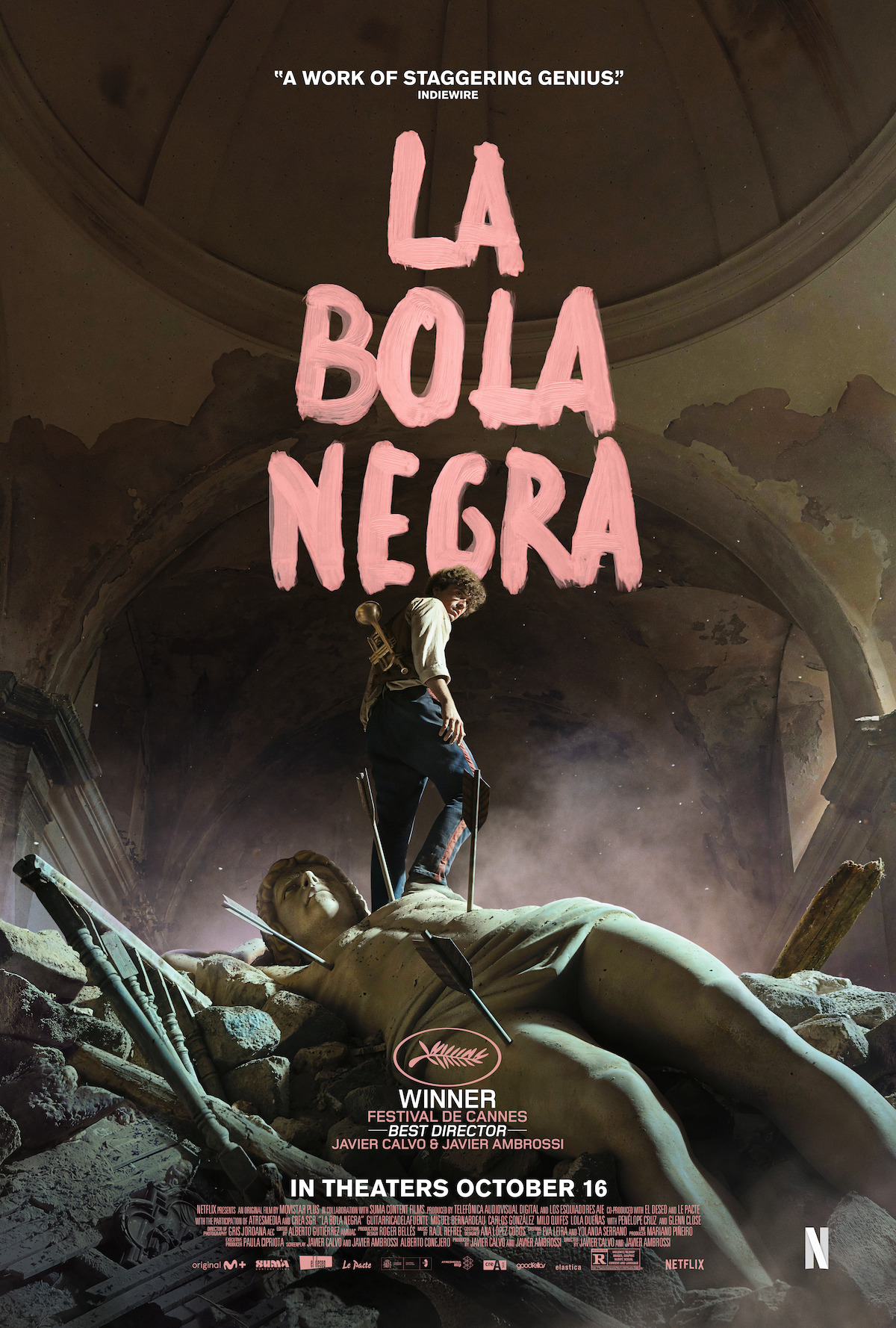
Netflix has confirmed that La Bola Negra will begin streaming in the United States and Canada on December 2, 2026.
Before then, the movie will receive a U.S. theatrical release beginning October 16.
The theatrical rollout gives audiences an opportunity to experience the film’s expansive historical canvas on the big screen before its streaming debut.
Netflix currently categorizes the movie as a Spanish LGBTQ+ drama, period piece, romance and social-issue film.
Those categories reflect just how difficult La Bola Negra is to reduce to a single genre.
It is simultaneously a historical epic, a queer drama, a romance, a family mystery and an exploration of artistic inheritance.
An Epic About the Things History Tries to Erase
At the center of all that ambition are three men separated by decades.
Carlos wants to belong.
Sebastián finds connection where political conflict says there should be none.
Alberto discovers that something buried in his family’s history has been waiting generations to be heard.
Their experiences unfold in different times, but La Bola Negra gradually brings them together through the traces one generation leaves for the next.
That is ultimately what Calvo and Ambrossi appear most interested in examining.
History does not disappear simply because people stop speaking about it.
Objects remain.
Art remains.
Families carry memories they may not fully understand.
And stories that once had to remain hidden can eventually find people willing to tell them.
After winning Best Director at Cannes, La Bola Negra is now heading toward a much wider audience — carrying Federico García Lorca’s unfinished legacy into a new story about desire, silence, freedom and the people who refused to disappear from history.
La Bola Negra opens in select U.S. theaters on October 16 and streams on Netflix in the U.S. and Canada from December 2, 2026.