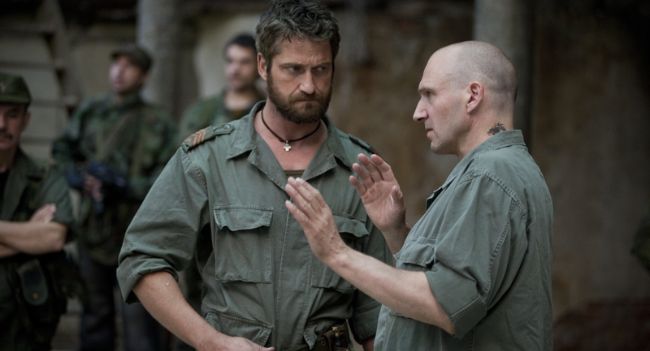
Coriolanus: The Bold Shakespeare Adaptation With Ralph Fiennes And Gerard Butler
A Shakespeare adaptation that transforms an ancient Roman power struggle into a brutal modern war drama is drawing renewed attention on BBC iPlayer.
Released in 2012, Coriolanus is directed by and stars Ralph Fiennes, who brings Shakespeare’s tragedy into a contemporary setting filled with guns, military conflict and political unrest. The film has earned a 92% Tomatometer score from 153 critics on Rotten Tomatoes, although its 58% audience score shows that its unusual approach has divided viewers.

Shakespeare Meets Modern Warfare
At the centre of the film is Caius Martius, a celebrated and feared Roman general played by Fiennes.
Martius has built his reputation through military victories, particularly against Rome’s enemies, but his contempt for ordinary citizens makes him deeply unpopular when he enters the political world.
After a victory over the Volscians, Martius receives the name Coriolanus and is encouraged to pursue the powerful position of consul. But his refusal to hide his disdain for the public ultimately turns political support against him.
A revolt follows, and Coriolanus is banished from Rome. Rather than accept his exile, he turns to the one person who may be able to help him take revenge: his former sworn enemy, Tullus Aufidius, played by Gerard Butler. Together, they prepare to march against Rome.
A Radical Contemporary Setting

What makes Fiennes’ adaptation particularly distinctive is the decision to keep much of Shakespeare’s original language while moving the action into a recognisably modern world.
The film’s Rome is presented as a contemporary city caught in civil unrest, with soldiers carrying modern firearms and military operations replacing the traditional imagery associated with Shakespearean drama.
The production was filmed largely in Belgrade, Serbia, using the city’s surroundings to create the fictional modern-day setting. Serbian Special Forces also appeared as Coriolanus’s troops, adding to the film’s grounded military atmosphere.
Rather than treating the original play as something that belongs exclusively to the stage, Fiennes places its themes of political division, power, loyalty and revenge in a world that feels much closer to contemporary warfare.
An All-Star Cast

Fiennes leads an impressive ensemble.
Gerard Butler plays Aufidius, Coriolanus’s former enemy and eventual ally, while Vanessa Redgrave portrays Volumnia, Coriolanus’s formidable mother.
The cast also includes Brian Cox as Menenius, Jessica Chastain as Virgilia, James Nesbitt as Sicinius and John Kani as General Cominius.
The performances are a major part of the film’s impact. Fiennes brings an intense physicality to a character whose military strength is matched by his inability to compromise, while the supporting cast gives the political and family conflicts considerable weight.
Critics Embraced Its Ambition
The film received strong reviews when it was released.
Rotten Tomatoes currently gives Coriolanus a 92% Tomatometer score based on 153 reviews, with the critics’ consensus describing it as visually striking and effective in showing how Shakespeare can remain relevant in a modern context.
Critics have particularly praised the way the contemporary setting works alongside Shakespeare’s language rather than simply replacing it.
RTÉ described the film as a bold and ambitious directorial debut, highlighting its gritty depiction of modern warfare and the strength of Fiennes’ central performance.
The film was also recognised during awards season, with Fiennes receiving a BAFTA nomination for Outstanding Debut by a British Writer, Director or Producer.
Why Some Viewers Found It Difficult
Despite the critical response, the audience reaction has been considerably more divided.
The current 58% Popcornmeter score on Rotten Tomatoes reflects one of the film’s biggest challenges: Shakespeare’s original dialogue remains largely intact.
For viewers unfamiliar with Coriolanus, the combination of Elizabethan language and a modern war setting can initially feel unusual. The story may look like a contemporary military thriller, but its characters still speak in Shakespeare’s original style.
That contrast can make the film demanding, but it is also central to what makes the adaptation different from a conventional historical or war movie.
A Shakespeare Tragedy With The Feel Of A War Film
At its heart, Coriolanus remains a story about power and pride.
Its central character is an exceptional soldier who struggles to function within a political system that requires compromise and public approval. His exile transforms personal resentment into a campaign of revenge, while his relationships with his mother, wife and former enemy eventually become crucial to the fate of Rome.
Fiennes’ decision to combine that Shakespearean tragedy with the visual language of contemporary warfare gives the story a distinctly modern edge.
For viewers willing to settle into its unusual combination of classical dialogue and modern combat, the film offers something considerably different from a conventional war drama.
*Coriolanus* is currently available to watch on BBC iPlayer for viewers with a TV licence, according to the original report.