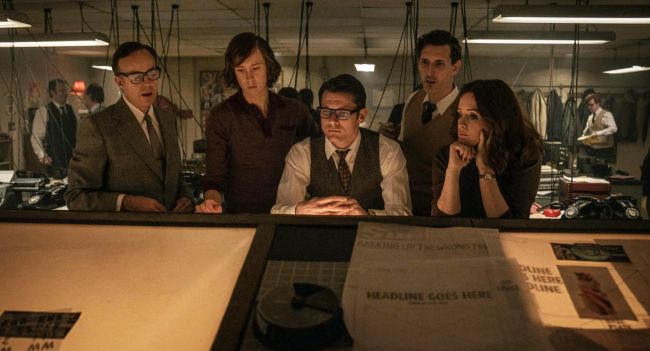
Danny Boyle’s Ink Unveils First Teaser After Venice Premiere, With Netflix Release Set for January
Danny Boyle is turning one of the most consequential chapters in British newspaper history into a fast-moving new drama in Ink, starring Jack O’Connell as editor Larry Lamb and Guy Pearce as Rupert Murdoch.
Netflix released the film’s first teaser as Ink made its world premiere on September 2 as the opening film of the 83rd Venice International Film Festival, where it is screening in competition. The 116-minute drama will open in select theaters on December 11, 2026, before arriving on Netflix in the United States and Latin America on January 8, 2027.
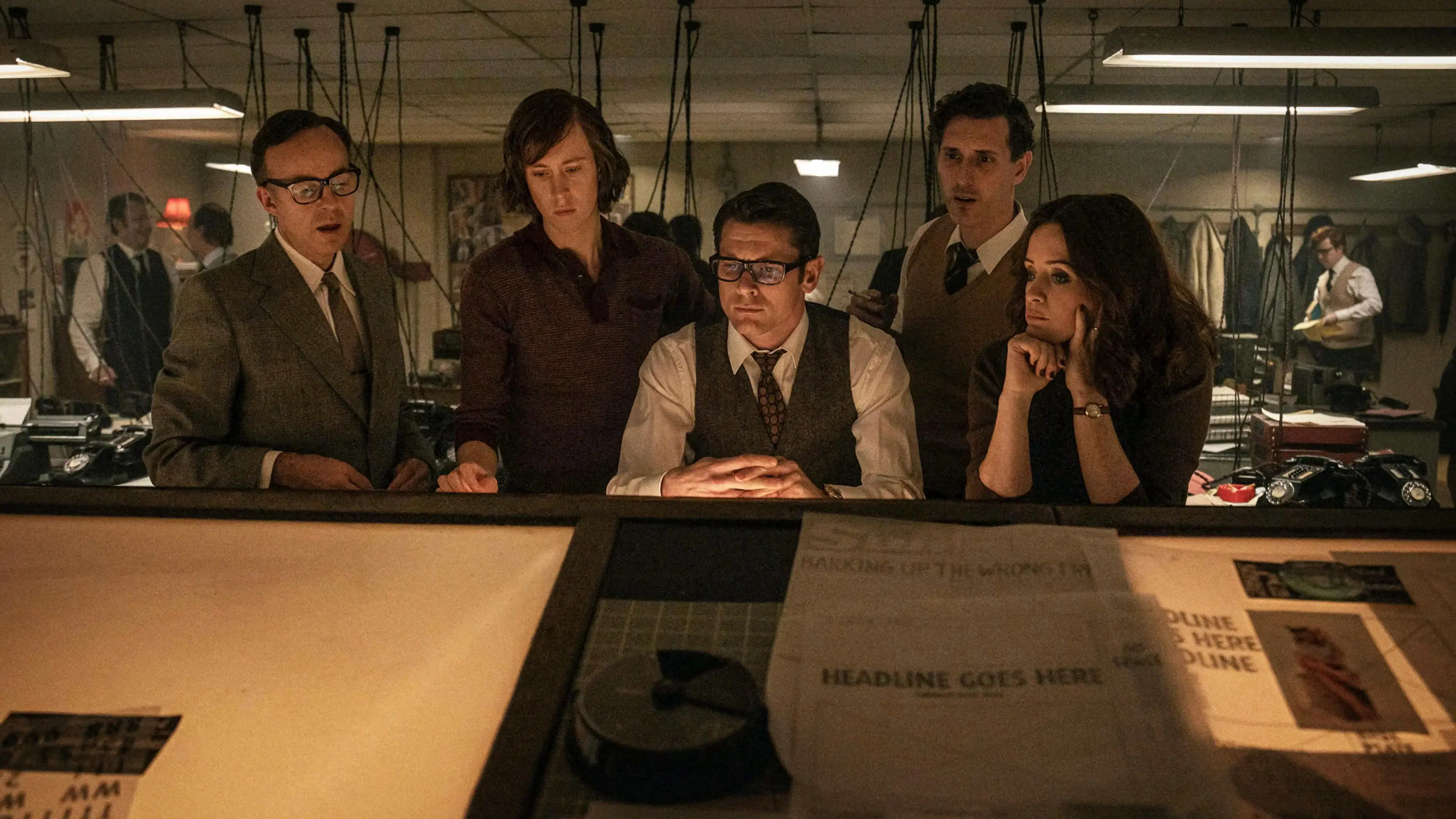
Ink Goes Inside the Reinvention of The Sun
Adapted from James Graham’s acclaimed stage play, Ink takes audiences back to 1969 and Rupert Murdoch’s acquisition of the struggling British newspaper The Sun.
Murdoch, played by Pearce, entrusts the paper to Larry Lamb, portrayed by O’Connell. Together with an unconventional team, Lamb sets out to create a radically different kind of newspaper — one designed around understanding what ordinary readers actually want.
Their goal is not modest. They want to challenge The Daily Mirror, then a dominant force in Britain’s newspaper market, and turn The Sun into a mass-market rival capable of reshaping Fleet Street.
The strategy ultimately helped transform The Sun into Britain’s best-selling tabloid, but Ink is interested in more than the mechanics of building a successful newspaper. The story examines the choices behind that transformation and the consequences of creating a new model of popular journalism.
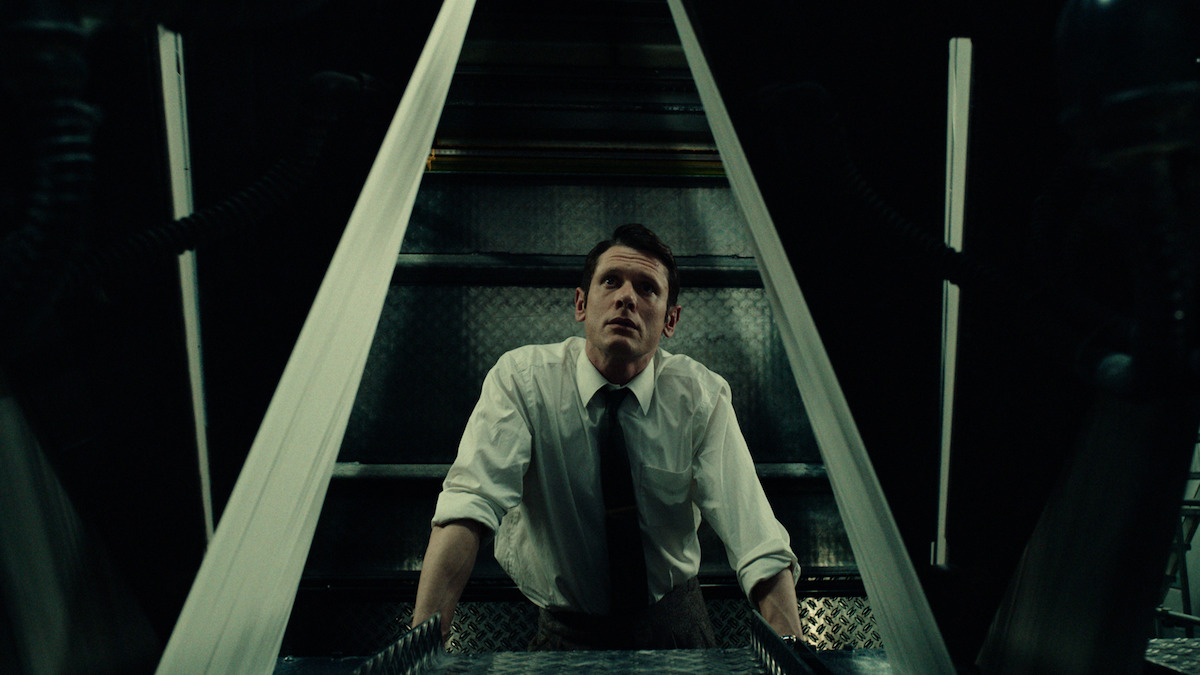
Jack O’Connell and Guy Pearce Lead the Film
Jack O’Connell takes the central role of Larry Lamb, the editor charged with turning Murdoch’s ambitions into reality.
Guy Pearce plays Murdoch, while Claire Foy joins them in a major supporting role. Netflix identifies her character as Jules Davies.
The teaser captures the restless energy surrounding the newspaper’s reinvention: deadlines, printing presses, editorial battles and the relentless pursuit of stories capable of grabbing readers’ attention.
Rather than presenting the newsroom as a polished institution, Boyle throws viewers into a chaotic workplace populated by ambitious journalists and outsiders trying to build something that does not yet exist.
That approach fits Netflix’s description of Ink as an “explosive cinematic rollercoaster” about a collection of visionaries and misfits whose idea for a new kind of news would eventually alter the media landscape.

A Story About the Birth of Modern Tabloid Journalism
Behind the momentum of the trailer lies a much larger question about journalism itself.
The film explores the period when The Sun was being remade into a newspaper focused heavily on mass appeal, scandal and attention-grabbing stories. That transformation did more than increase circulation; it helped establish a model of tabloid journalism whose influence would extend far beyond Britain.
Boyle said at Venice that he did not want to approach Murdoch simply as a villain. Instead, the director was interested in the disruption he represented when he entered a British establishment that Boyle described as rigid and resistant to change.
The film therefore examines both sides of that revolution: the excitement of challenging an entrenched system and the more troubling consequences of the media culture that followed.
That makes Ink a historical drama with unmistakably contemporary implications. Its questions about audience demand, journalistic responsibility and the power of media owners remain highly relevant decades after the events depicted.

James Graham Adapts His Own Stage Play
Ink began as a stage play by British playwright and screenwriter James Graham, whose credits include Dear England, Sherwood and Brexit: The Uncivil War.
Graham adapted his own work for the screen, allowing the film to retain the central relationship between Murdoch and Lamb while expanding the story beyond the physical limitations of the theater.
The original production dramatized the transformation of The Sun and the aggressive circulation battle that followed. It became an acclaimed stage success, transferring from London to Broadway and earning major awards recognition.
Netflix describes the source material as Tony-winning, while the Venice Film Festival describes it as Tony-nominated and notes Graham’s multiple Olivier Awards.
For the film, Graham remains closely involved not only as screenwriter but also as an executive producer.
Danny Boyle Returns to a World of Speed, Ambition and Reinvention
Boyle brings an especially energetic filmmaking history to the material.
The Academy Award-winning director is known for Trainspotting, Slumdog Millionaire, 127 Hours, Steve Jobs and 28 Years Later. His films frequently revolve around people being pushed through volatile environments where ambition, pressure and personal choices collide.
Ink gives him a newsroom as his latest pressure cooker.
The production also reunites Boyle with producer Tessa Ross following their work together on Slumdog Millionaire. Tracey Seaward and Michael Ellenberg are also producers.
Behind the camera, Boyle is joined by cinematographer Alwin H. Küchler, editor Fin Oates and composer Daniel Pemberton. Carson McColl and Gareth Pugh are credited with the film’s production and costume design.

Venice Chose Ink to Open Its 83rd Festival
The film received a major launch by being selected as the opening-night title of the 83rd Venice International Film Festival.
Its world premiere took place on September 2 in the Sala Grande at the Palazzo del Cinema on the Lido di Venezia, with Ink competing in the festival’s main Venezia 83 competition.
Festival director Alberto Barbera described the film as an account of Murdoch’s purchase of The Sun and his decision to hand the newspaper to Lamb, whose leadership transformed it into Britain’s best-selling tabloid at the expense of The Mirror.
The Venice selection also marks Boyle’s first participation at the festival.
The timing gives Ink a prominent international platform months before its theatrical and streaming releases.
The Film Looks Beyond Murdoch Himself
Although Murdoch is one of the most recognizable figures in the story, the drama is not solely a biography of the media mogul.
The focus also falls heavily on Lamb and the newsroom team responsible for turning an ambitious idea into a functioning newspaper.
Boyle has framed the story as partly about collective responsibility — not simply what powerful media figures chose to publish, but why audiences responded to it and what that demand encouraged newspapers to become.
That perspective gives Ink a more complicated target than a straightforward rise-and-fall drama.
The journalists want readers.
Readers want entertainment.
Owners want circulation.
And once those forces begin reinforcing one another, the definition of news itself starts to change.
It is that transformation that sits at the center of the film.
Guy Pearce Says Murdoch Has Heard About His Casting
Pearce revealed during the Venice Film Festival that Rupert Murdoch has not seen the movie, although he has apparently heard about the casting.
According to Pearce, Murdoch’s daughter Elisabeth told him her father was pleased that the Australian actor had been chosen to portray him.
Graham also said Murdoch had seen the original stage play several times and particularly enjoyed aspects depicting the traditional process of physically producing a newspaper.
Boyle, meanwhile, stressed that his film attempts to capture the contradictions of Murdoch’s arrival in Britain rather than reducing him to a simple caricature.
From the Printing Press to Netflix
The first teaser arrives at an appropriate moment for a film fascinated by how information reaches an audience.
Ink looks back at a time when newspapers fought over circulation figures, front pages and the physical machinery of Fleet Street. Yet the story now arrives in an era dominated by streaming, social media, algorithms and an entirely different battle for attention.
That contrast gives Boyle and Graham’s film an additional layer of relevance.
The events belong to 1969, but the underlying competition — finding out what audiences want and discovering how far a media organization will go to give it to them — has hardly disappeared.
If anything, it has become even more central to modern media.
When Will Ink Be Released?
Ink will begin its select theatrical run on December 11, 2026.
Netflix will then release the film on January 8, 2027, in the United States and Latin America.
The film stars Jack O’Connell as Larry Lamb, Guy Pearce as Rupert Murdoch and Claire Foy as Jules Davies, with Danny Boyle directing from James Graham’s screenplay.
After opening the Venice Film Festival, the first teaser offers audiences an early glimpse of a story about much more than the rise of one newspaper.
It is about the moment a group of outsiders decided that the old rules of news could be rewritten — and created a model that would leave its mark on the media world for generations.