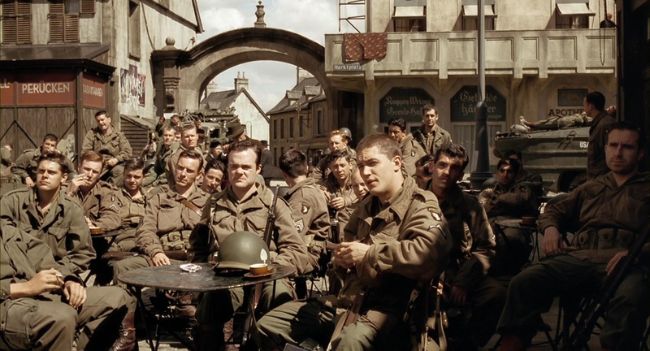
Steven Spielberg and Tom Hanks’ $250 Million WWII Epic Is the Ideal Next Watch for Band of Brothers Fans
More than two decades after Band of Brothers premiered on HBO, the acclaimed miniseries remains a defining achievement in television’s portrayal of World War II. Produced by Steven Spielberg and Tom Hanks, the series set a high bar for historical drama by combining large-scale battle sequences with intimate stories of courage, friendship and sacrifice.
The success of that production led to The Pacific, which explored the brutal fighting between American forces and Japanese troops across the Pacific theater. Now, Masters of the Air completes the trio by taking viewers into the skies above Europe, following the American bomber crews who faced some of the war’s most dangerous missions.
Starring Austin Butler and Callum Turner, the nine-episode Apple TV miniseries reportedly carried a production budget of $250 million — roughly twice the reported cost of Band of Brothers. Its enormous scale supports a story of aerial warfare, but the drama’s central focus remains the people who risked their lives on every flight.
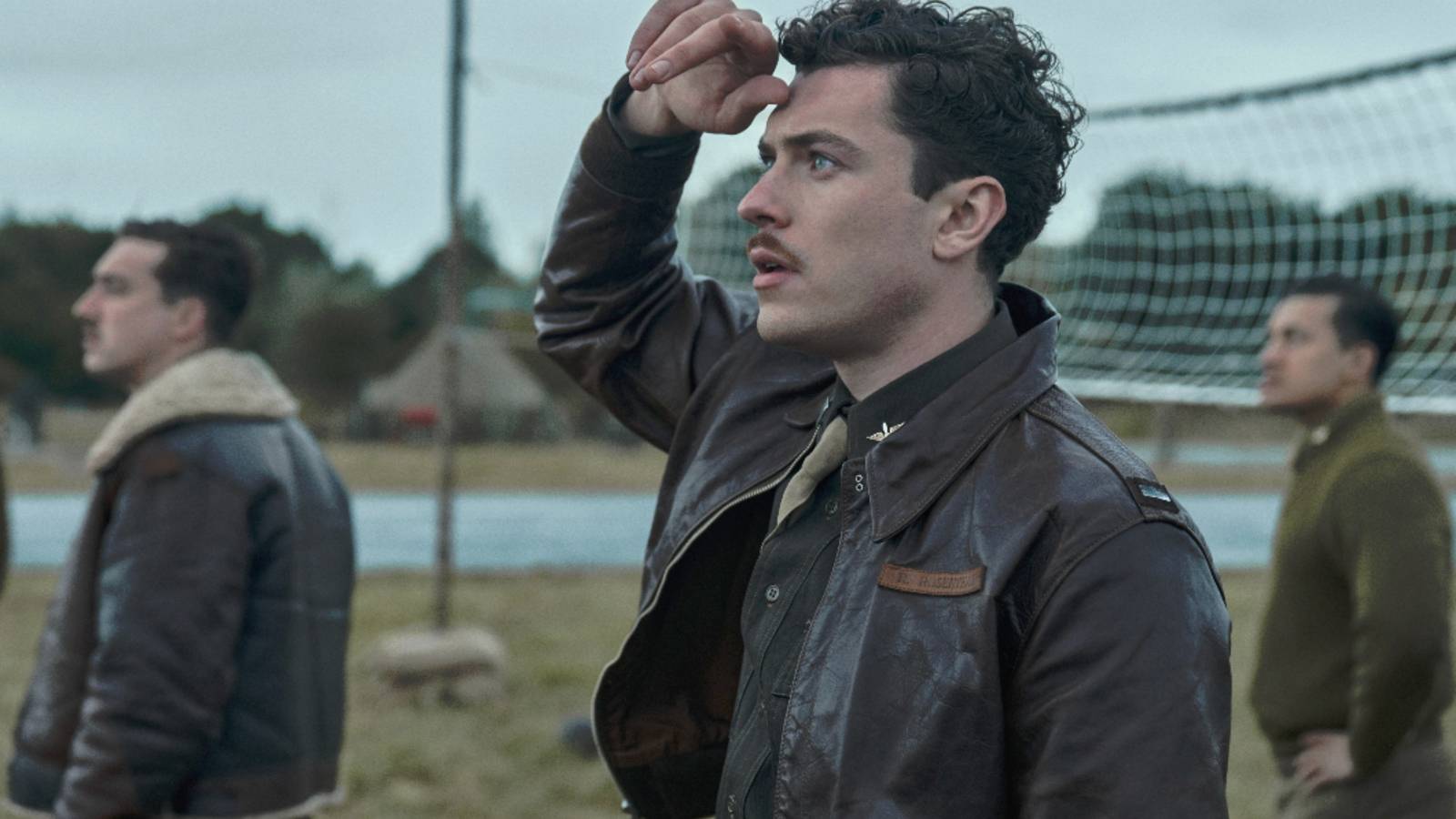
Inside the Story of the “Bloody 100th”
Based on Donald L. Miller’s 2007 book, Masters of the Air premiered on Apple TV on January 26, 2024. The series follows the 100th Bomb Group of the United States Eighth Air Force, a unit that earned the grim nickname “Bloody 100th” after suffering devastating losses during World War II.
Austin Butler plays Major Gale Cleven, known as Buck, while Callum Turner portrays Major John Egan, nicknamed Bucky. Both characters are based on real American airmen who took part in hazardous bombing operations over German-occupied Europe.
As the airmen undertake increasingly dangerous missions, they face the physical risks of combat alongside the psychological strain of never knowing whether they will make it back to base. The series depicts the fear and uncertainty surrounding each flight, showing how the pressure of war affects the men both individually and collectively.
The aerial combat provides much of the spectacle, but the emotional core lies in the bonds formed among the crews. Their friendships, private struggles and shared sacrifices give the series its human dimension, ensuring that the story extends beyond the machinery and destruction of war.
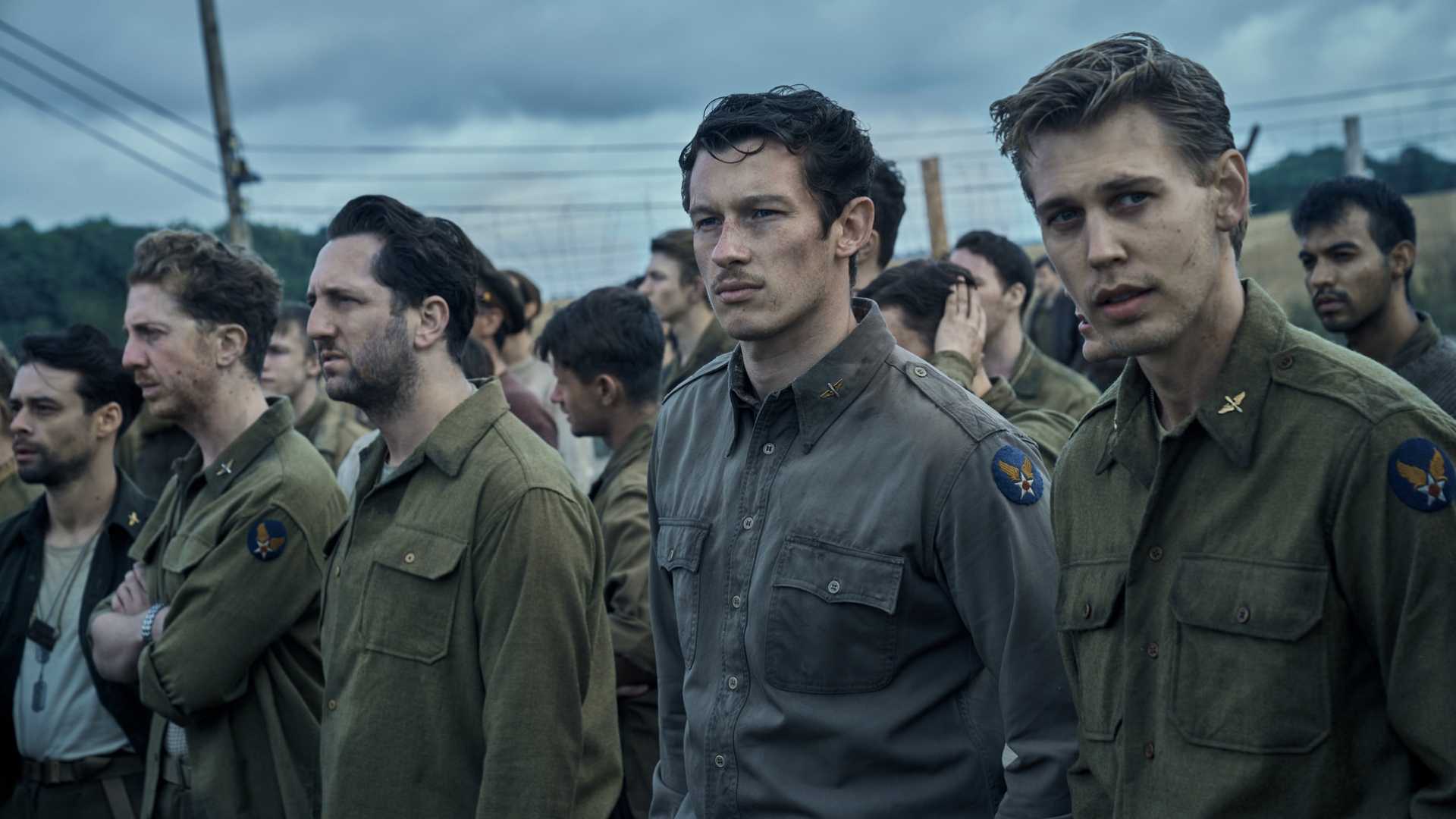
How Masters of the Air Completes Spielberg and Hanks’ WWII Trilogy
Although Band of Brothers, The Pacific and Masters of the Air tell separate stories, they share a common purpose: exploring the experiences of American service members fighting in different environments during World War II.
The original Band of Brothers, released in 2001, follows Easy Company of the 506th Parachute Infantry Regiment through the European campaign. Its ten episodes earned widespread critical acclaim, including the Emmy Award for Outstanding Miniseries.
Nearly a decade later, Spielberg and Hanks revisited the war with The Pacific, shifting the focus from European battlefields to the island campaigns fought by American Marines.
Masters of the Air completes this thematic journey by examining the conflict through the experiences of bomber crews. Together, the three productions cover the war from the perspectives of soldiers on land, Marines fighting across the Pacific and airmen conducting bombing missions over Europe.
Their settings and combat sequences differ, but all three place personal relationships, duty and the human cost of warfare at the centre of the story.
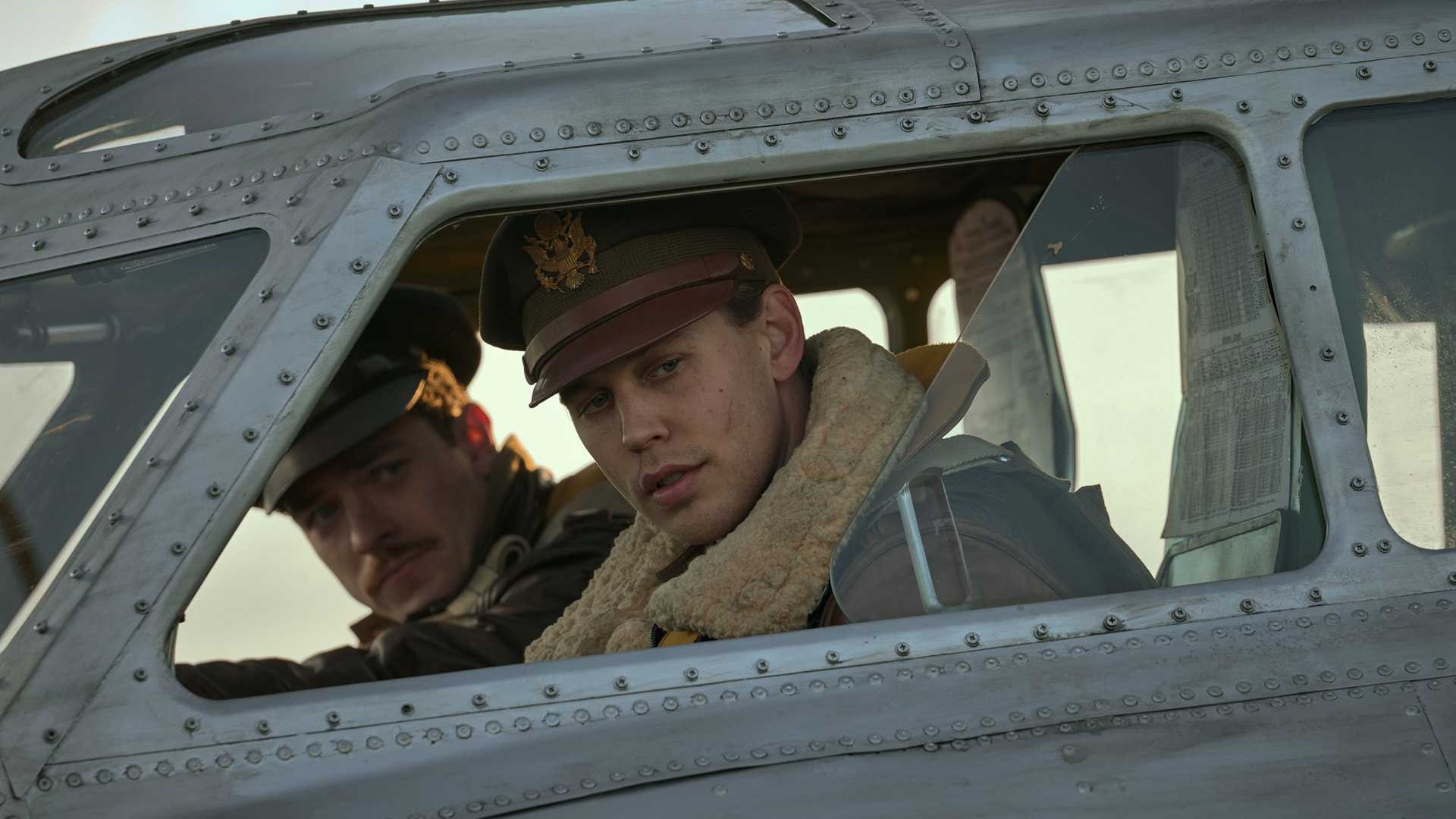
n Production Recreates the Dangers of Aerial Warfare
The reported $250 million budget places Masters of the Air on a much larger financial scale than its predecessor.
Band of Brothers was reportedly made for $125 million, an extraordinary sum for a television miniseries at the time. Across its ten episodes, that worked out to approximately $12.5 million per episode.
Masters of the Air, by comparison, reportedly cost around $27.8 million per episode across nine instalments.
Much of the production’s ambition is evident in its depiction of bombing missions over Nazi-occupied Europe. Detailed aircraft sequences, extensive visual effects and large-scale combat scenes recreate the dangers faced by American airmen operating at extreme altitudes, where freezing temperatures, limited oxygen and enemy fire made every mission potentially fatal.
The aerial battles also give the series a distinctive visual identity. While Band of Brothers concentrated on ground combat and The Pacific portrayed the brutal fighting across island battlefields, this production explores the unique challenges of warfare in the air.
Yet its scale is only part of the story. The quieter moments, centred on the men’s relationships and the psychological consequences of repeated missions, remain essential to the drama.

An Acclaimed Cast and Experienced Directors
Beyond Austin Butler and Callum Turner, the miniseries features a broad ensemble portraying members of the 100th Bomb Group. The cast includes Sawyer Spielberg, Steven Spielberg’s son, as Lieutenant Roy Frank Claytor.
The production also brought together an accomplished group of directors, including Cary Joji Fukunaga, known for True Detective; Anna Boden and Ryan Fleck, the directing team behind Captain Marvel; and Dee Rees, whose credits include Mudbound. Tim Van Patten also directed episodes.
Their combined experience helped shape the series’ cinematic approach, balancing complex action sequences with character-driven storytelling.
Although the drama draws on real people and historical events, some operations and incidents have been condensed or dramatized for the screen. The story includes elements connected to the 100th Bomb Group’s early missions, the Münster raid and the experiences of the Tuskegee Airmen.
These dramatic choices help translate a complicated wartime history into a cohesive television narrative, while keeping the experiences of the airmen at its centre.
How Does It Compare With Band of Brothers?
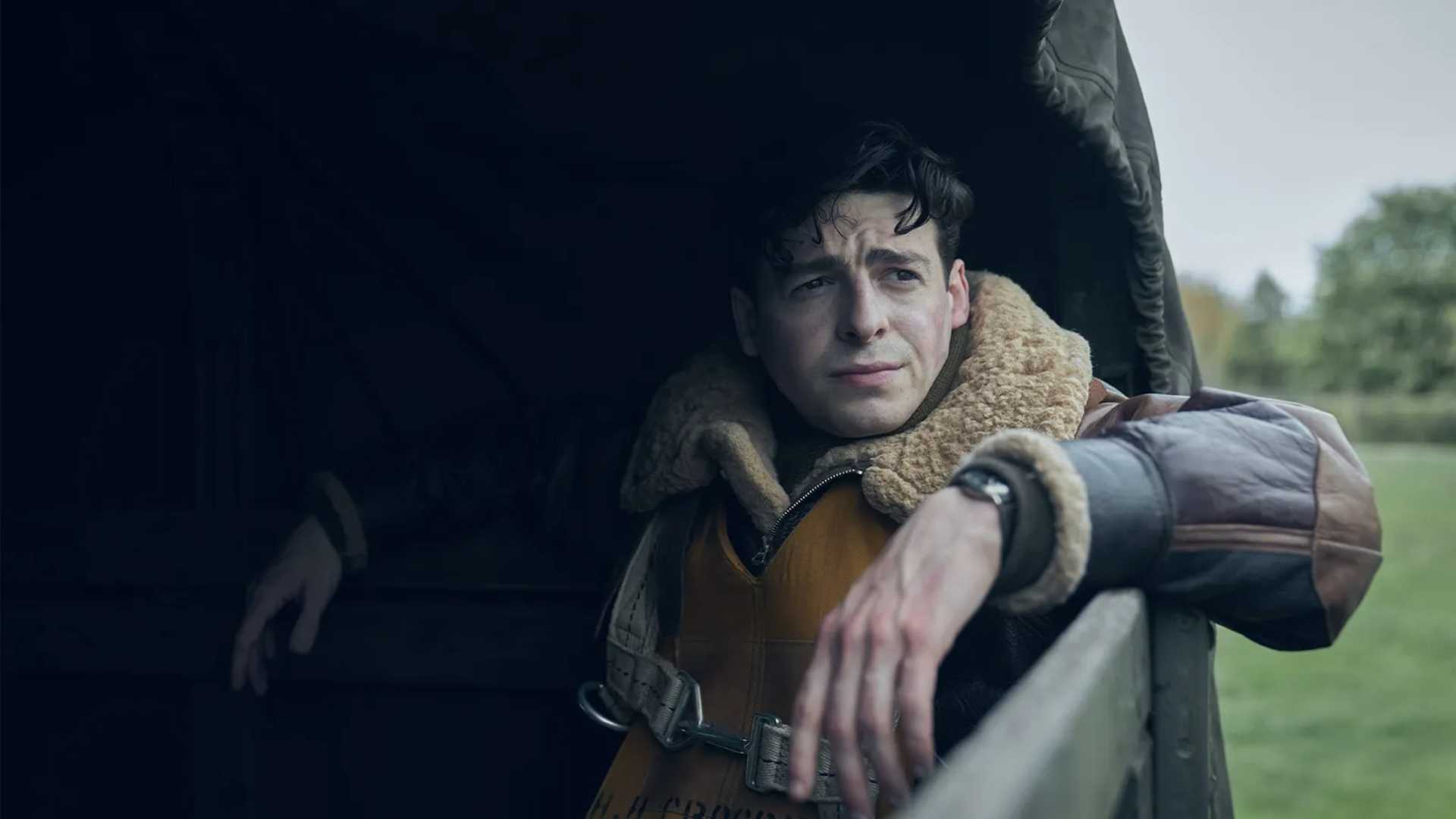
Following the success of Band of Brothers, any subsequent production from Spielberg and Hanks faced considerable expectations. The original series remains highly regarded, holding a 94% critics’ score on Rotten Tomatoes.
Masters of the Air has earned an 85% critics’ score on the same platform. Critics have praised its visual ambition, production design and portrayal of the dangers endured by bomber crews during World War II. The personal connections between the central characters have also helped give the series emotional depth.
Although its critical reception has not quite reached the same level as Band of Brothers, the series offers a substantial addition to the pair’s collection of wartime dramas. Its aerial perspective broadens the scope of their earlier work, examining a different group of American service members and the particular hardships they faced.
For viewers who appreciated the historical detail, camaraderie and emotional intensity of Band of Brothers and The Pacific, the nine-episode Masters of the Air offers another compelling account of World War II.
Now available on Apple TV+, the miniseries brings together large-scale aerial action and deeply personal storytelling to explore the courage, losses and lasting consequences experienced by the men of the Bloody 100th.