The Man With the Iron Heart: A Dark, Ambitious WWII Drama Split Between a Nazi Rise and a Resistance Mission
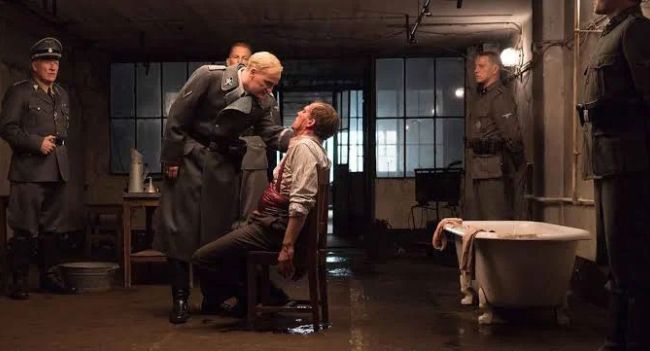
Few World War II films approach the assassination of Reinhard Heydrich quite like Cédric Jimenez’s The Man With the Iron Heart. Instead of concentrating solely on the Czechoslovak resistance fighters sent to kill one of the Nazi regime’s most powerful figures, the film spends its first half following Heydrich himself — from a disgraced former military officer in 1929 to a key architect of Nazi terror.
The French-produced drama stars Jason Clarke as Heydrich, Rosamund Pike as his wife Lina, Jack O’Connell as Slovak resistance fighter Jan and Jack Reynor as his Czech colleague Jozef. Mia Wasikowska also appears in a supporting role.
Written by Jimenez, Audrey Diwan and David Farr, the screenplay is based on Laurent Binet’s 2012 bestseller. The film’s subject had already inspired several screen versions, including Fritz Lang and Douglas Sirk’s films released in 1943 and, more recently, Sean Ellis’ Anthropoid.
Jimenez takes a markedly different route. The story is divided into two roughly equal sections: the first traces Heydrich’s rise inside the Nazi regime, while the second follows the resistance fighters preparing the assassination.
The result is visually accomplished and frequently disturbing, although the unusual structure ultimately makes the film feel more like two connected movies than one seamless narrative.

Heydrich’s rise begins in 1929
The film opens with a brief glimpse of the events immediately preceding Heydrich’s assassination before abruptly moving back to 1929 in the German port city of Kiel.
Heydrich is then a disgraced officer who has been court-martialed and dismissed from the army over his relations with a woman. His future wife, Lina, is already in his life, and it is she who encourages him to join the Nazi Party.
That decision becomes the turning point in Heydrich’s career.
His involvement with the party eventually leads him to Heinrich Himmler, played by Stephen Graham, who recruits him to head the Nazi intelligence organization, the SD.
From there, Jimenez charts the transformation of a failed military officer into one of the most feared men in Nazi Germany.
For almost 50 minutes, the film remains almost entirely within the Nazi world. There is no conventional protagonist for the audience to follow and no straightforward problem to solve. The brief flash-forward at the beginning provides some initial suspense, but its effect gradually fades as the narrative returns to Heydrich’s rise.
Rather than avoiding that discomfort, Jimenez makes it central to the film’s design.
A disturbing portrait of the man behind the title
The film repeatedly places Heydrich’s domestic life beside the increasingly brutal world he helps create.
Scenes with Lina and their children can initially feel intimate and even tender. Those moments are then juxtaposed with Heydrich’s involvement in increasingly violent events as the Nazi Party consolidates power and Germany moves toward war.
Editor Chris Dickens helps create the contrast through abrupt cuts and fragmented montage. The court-martial sequence is a particularly striking example, with the proceedings intercut with Heydrich’s violent reaction afterward.
The effect is less about explaining his character than gradually revealing the danger beneath his controlled exterior.
One of the clearest examples comes during a party at the Heydrich home. Lina is told that Hitler has given her husband the nickname “the man with the iron heart.” In the background, Heydrich is holding a baby.
The image captures the contradiction at the center of the film: a seemingly composed family man existing alongside an individual becoming increasingly associated with mass violence.
Clarke plays Heydrich with a deliberately restrained menace. His performance gives the Nazi official an imposing presence, but the film never attempts to make him sympathetic.
Lina is more complicated than she first appears
If Heydrich initially seems defined by the contrast between his calm exterior and brutal actions, Lina is given considerably more emotional complexity.
She begins as an enthusiastic supporter of National Socialism, genuinely convinced that the movement can restore Germany. She also helps Heydrich recover from the collapse of his military career and encourages the decision that ultimately brings him into the Nazi hierarchy.
But the marriage changes as Heydrich’s power grows.
He becomes increasingly absent from home, while Lina is left to take care of their children. The successful career she helped him build gradually leaves her feeling isolated and neglected.
That personal disappointment becomes an important thread running through the story. The film does not make Lina’s feelings about the atrocities committed by the Nazi regime its primary focus; instead, it concentrates on the deterioration of her relationship with her husband.
Pike initially gives Lina the icy determination associated with her performance in Gone Girl, before gradually allowing that hardness to soften as her frustration with Heydrich becomes more pronounced.
By the end, she has arguably become the film’s most fully developed character.
From political movement to systematic killing
Beyond Heydrich’s personal story, the first half offers a chilling depiction of the Nazi Party’s transformation.
The movement develops from a disorganized collection of angry extremists into an increasingly efficient and ruthless machine capable of waging war and carrying out systematic killings.
As the violence expands, Nazi leaders including Heydrich begin seeking increasingly organized methods of mass murder, ultimately leading toward the Final Solution.
The film’s decision to present this progression without a conventional hero trying to stop it makes the escalation particularly unsettling. One horrifying development follows another, creating the impression of a machine gaining momentum with little chance of being stopped.
Only after almost an hour does the perspective shift toward the people attempting to strike back.

The resistance enters the story
Slovak resistance fighter Jan, played by O’Connell, and his Czech colleague Jozef, played by Reynor, are parachuted into the Czechoslovak countryside before making their way to Prague.
Members of the Resistance hide the two men as they prepare for their mission: the assassination of Heydrich.
This section places the film on much more familiar World War II territory, following resistance members operating behind enemy lines and preparing for an attack against a senior Nazi official.
But compared with Anthropoid, Jimenez provides considerably less background about the Czechoslovak government-in-exile and the wider support network behind the operation.
The difference is also evident in the characterization.
Jan, Jozef, their resistance contacts and the women they encounter are generally sketched rather than deeply explored. Their roles in the story are clear, but they are not given the same psychological detail afforded to Heydrich and Lina.

The imbalance becomes more obvious in the second half
That contrast is particularly noticeable with the female characters connected to the resistance.
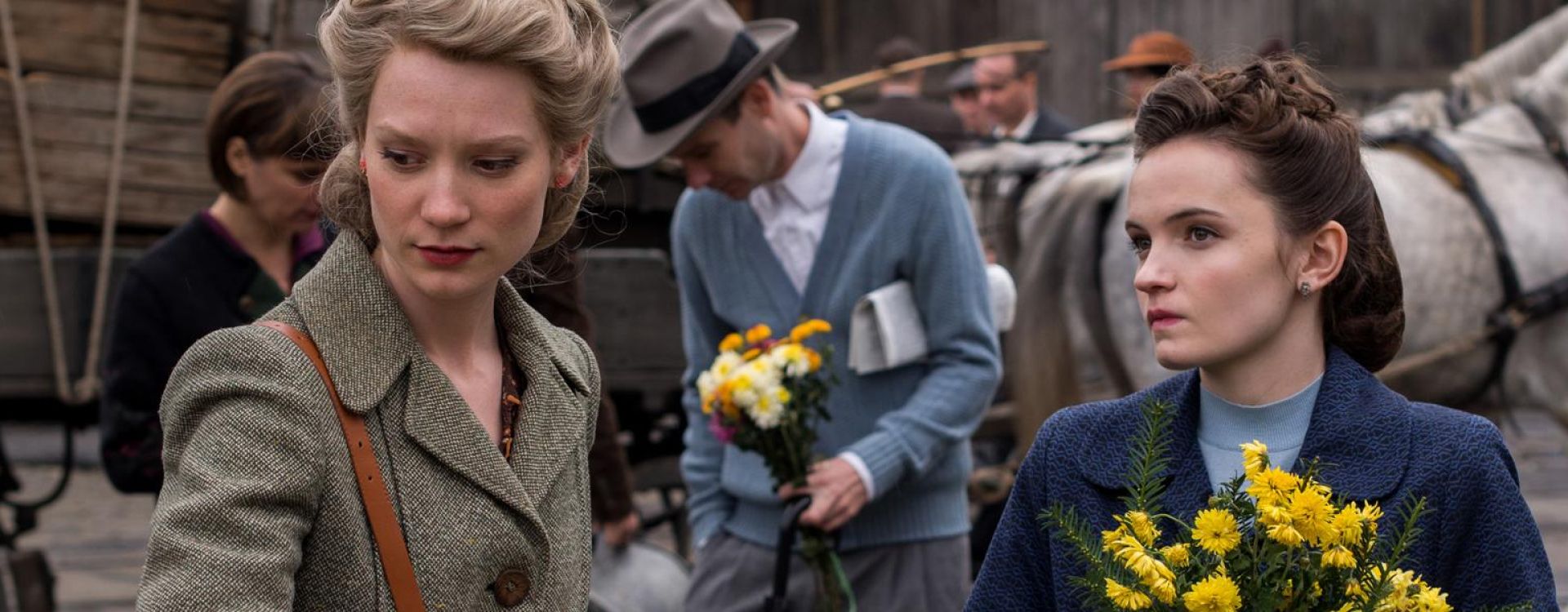
Wasikowska, despite her presence in the cast, receives relatively little material. Her character is primarily defined through her relationship with Jan, including scenes in which she kisses him, washes his hair and dances in slow motion.
The result is an unusual imbalance: the wife of the film’s Nazi antagonist becomes more three-dimensional than several of the characters fighting against him.
That would not necessarily be a problem if the second half maintained the intensity of the first. Instead, the film’s momentum becomes less consistent.
The opening section builds almost continuously toward greater anxiety as Heydrich’s influence expands. Once the resistance storyline takes over, the film moves between tense action sequences and quieter passages that allow much of that earlier pressure to dissipate.
The rhythm consequently becomes uneven as the story approaches its conclusion.
The assassination delivers the film’s biggest action sequence
The narrative eventually reaches the assassination attempt and its aftermath, culminating in a shootout and the flooding of a church where members of the resistance are trapped.
Jimenez stages the sequence with considerable technical confidence. The action is energetic, visually controlled and clearly demonstrates his ability to handle large-scale set pieces.
Yet the climax does not achieve quite the same dramatic impact as Anthropoid, which dramatized the same historical episode the previous year.
That comparison also highlights the fundamental challenge created by Jimenez’s structure. The film spends so much time establishing Heydrich’s rise that the resistance story has less opportunity to develop the characters and relationships needed to sustain the same emotional weight.
What initially looks like a bold two-part narrative therefore begins to feel like two separate films connected by the same historical event.
Jimenez’s direction remains a major strength
The screenplay and structure may be uneven, but Jimenez’s visual filmmaking is consistently confident.
He gets considerable production value from the material, while cinematographer Laurent Tangy relies heavily on handheld camerawork to place viewers close to the action.
The technique reinforces the film’s broader idea of experiencing the history from the inside. That is particularly evident during the first half, when Jimenez frequently keeps the audience close to Heydrich’s perspective.
It is an uncomfortable choice, but it gives the film a distinctive visual and narrative identity.
Guillaume Roussel’s score also contributes to the atmosphere. Its restless, pounding quality works effectively through much of the film, although the music becomes noticeably more sentimental during the finale.
Jimenez’s ability to direct both actors and action is perhaps the clearest reason the film remains compelling despite its structural shortcomings.
An ambitious film with an uneven second half
The Man With the Iron Heart does not always succeed as a unified thriller, but its most effective moments are striking.
The first half is the film’s strongest section, using Heydrich’s rise to examine how Nazi power evolved into a system capable of organized mass killing. By refusing to filter this section through a traditional hero, Jimenez creates an unusually uncomfortable perspective on one of the darkest periods of modern history.
The resistance storyline is less developed. Jan and Jozef lack the depth given to Heydrich and Lina, while the pacing becomes increasingly inconsistent as the film moves toward the assassination.
Still, the filmmaking itself is difficult to dismiss. The production design, cinematography, action sequences and performances give the drama a strong visual presence.
Pike ultimately emerges as the film’s unexpected emotional center, bringing greater complexity to Lina as her marriage deteriorates. Clarke, meanwhile, gives Heydrich the controlled menace required by the role, while O’Connell and Reynor bring warmth to characters who are not afforded enough development.
The film closes on a notably lighter moment: Jan and Jozef’s first encounter with each other on the back of a truck.
Ultimately, The Man With the Iron Heart is most memorable not simply for depicting Heydrich’s assassination, but for the decision to spend so much time examining the man before the resistance story begins. Its unusual perspective gives the film some of its most disturbing and memorable moments, even as its two-part structure prevents the entire drama from maintaining the same force from beginning to end.
Production Details
Production company: Legende Films
Cast: Jason Clarke, Rosamund Pike, Jack O’Connell, Jack Reynor, Mia Wasikowska, Stephen Graham, Celine Sallette, Gilles Lellouche
Director: Cedric Jimenez
Screenplay: David Farr, Audrey Diwan, Cedric Jimenez, based on the book by Laurent Binet
Producers: Ilan Goldman, Daniel Crown
Director of photography: Laurent Tangy
Production designer: Jean-Philippe Moreaux
Costume designer: Olivier Beriot
Editor: Chris Dickens
Music: Guillaume Roussel
Casting: Francine Meisler, Reg Poerscout-Edgerton
Sales: FilmNation
Language: English
Running time: 120 minutes
Rating: No rating