La Bola Negra: Three Generations, One Family Secret in Netflix’s New Spanish Epic
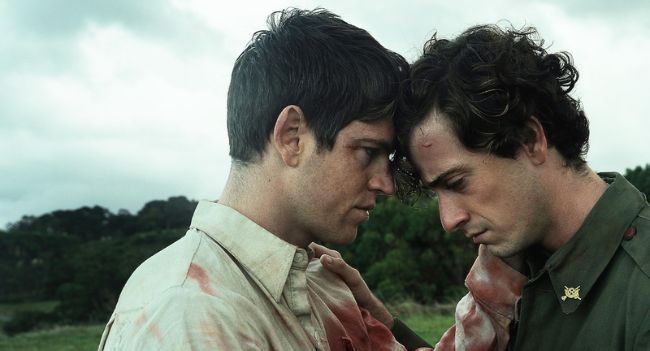
A family secret stretches across generations in La Bola Negra, the ambitious new Spanish film from Javier Calvo and Javier Ambrossi. The newly released trailer introduces three men living in three very different periods of Spanish history, gradually revealing how their lives are connected by memory, inheritance and the secrets passed down through a family.
Spain’s official selection for the Academy Award for Best International Feature, La Bola Negra explores what remains from the past — from personal memories and family histories to art, objects and the traces left behind by previous generations.
“With this film, the central question is what we do with our past, with our inheritance, with the objects and art that remain, with the traces history leaves behind,” Calvo says.
Three Men, Three Different Eras
The film unfolds across 1932, 1937 and 2017, with each timeline introducing a different central character.
The first follows Carlos, played by Milo Quifes, a young man attempting to gain membership at an exclusive social club.
The second centers on Sebastián, portrayed by Spanish musician Guitarricadelafuente, a soldier serving in the fascist army during the Spanish Civil War.
The third brings the story into the present day, where Alberto, played by Carlos González, works as a contemporary historian trying to uncover a secret hidden within his family’s past.
Although separated by decades, the three men are connected by more than their family history. Their stories gradually begin to shed light on one another, creating a narrative about three generations of gay men whose experiences resonate across time.
To bring the different eras to life, Calvo and Ambrossi — widely known as Los Javis — assembled a cast combining actors, musicians and first-time performers.

From La piedra oscura to the Big Screen
The film’s origins can be traced to La piedra oscura, a 2013 play by Spanish playwright Alberto Conejero.
Calvo and Ambrossi had originally seen the play about a decade earlier. But revisiting it with a film adaptation in mind led them toward an entirely new structure.
“We had seen the play 10 years earlier, but rereading it with cinema in mind changed everything,” Ambrossi says. “Suddenly, in one night, the structure came to us: three timelines. It felt instinctive.”
That three-part structure ultimately became the foundation of La Bola Negra, allowing the filmmakers to connect individual stories separated by generations while examining how the past continues to influence the present.
Why Guitarricadelafuente Was Chosen
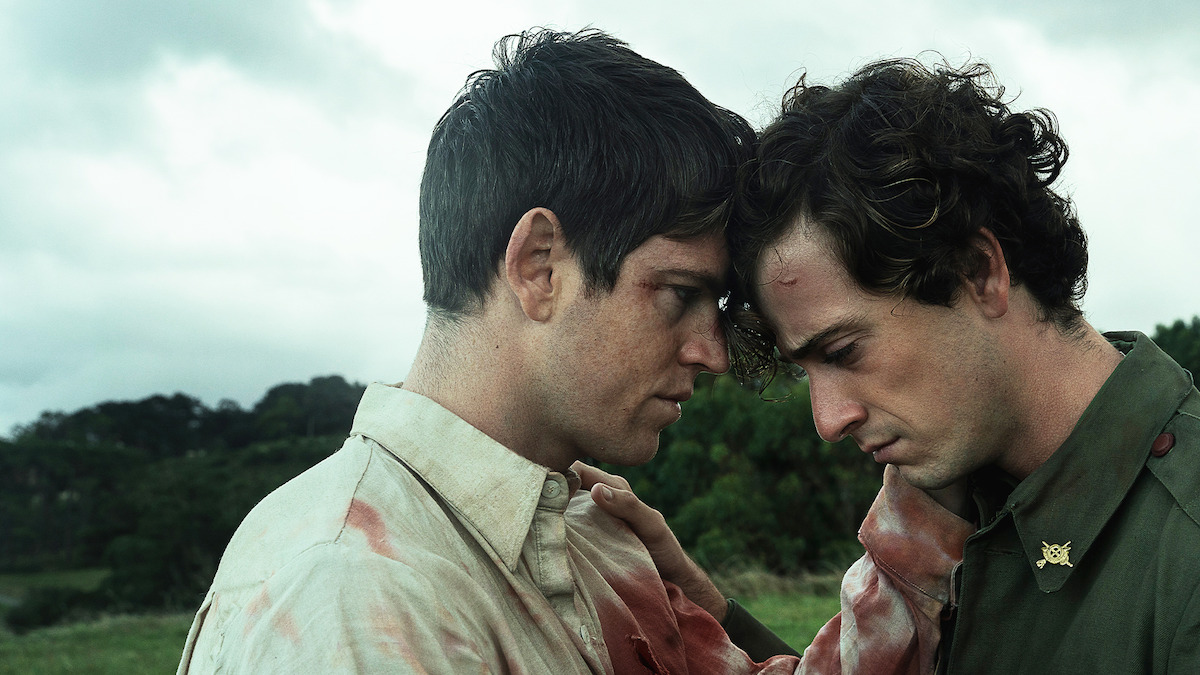
Guitarricadelafuente occupies a particularly important place in the project, both on screen and through its music.
Calvo and Ambrossi were already fans of the Spanish musician’s work before approaching him about playing Sebastián. They believed his ability to communicate emotion through music could translate naturally into acting.
“We were already big fans of Guitarrica’s work,” Calvo says. “With the sensitivity he brings onstage and his beautiful songs and performances, we knew he could do it, that he could act.”
Guitarricadelafuente initially admitted that he did not know how to approach acting, but the filmmakers encouraged him to take on the role.
His creative contribution goes beyond his performance. He also wrote original music for La Bola Negra, including “La Nieve,” the ballad featured throughout the new trailer.
For the musician, the goal was not simply to create a song that explained what was happening on screen. Instead, he wanted the music to share the same emotional foundation as the characters.
“I didn’t want the song to feel like something placed over the film to explain the scene,” Guitarricadelafuente says. “I wanted it to come from the same emotional place as the characters.”
A Story Connected to Federico García Lorca
La Bola Negra draws from two significant literary sources: Conejero’s La piedra oscura and La bola negra, an unfinished manuscript by celebrated Spanish playwright Federico García Lorca (1898–1936).
For Ambrossi, the connection to Lorca is particularly meaningful because the film could introduce his work to audiences who may not otherwise encounter it.
“Spain has an extraordinary cultural legacy, but we don’t always carry it forward,” Ambrossi says. “What moved me is the idea that many people might discover Lorca through this film. That’s beautiful. Art can act as a bridge between generations.”
The filmmakers use that cultural inheritance as part of a much larger story about what survives from one generation to the next — and what happens when long-buried histories are finally brought back into the light.

La Bola Negra Makes History at TIFF
The film has already achieved a major milestone ahead of its theatrical release.
La Bola Negra recently won the People’s Choice Award at the Toronto International Film Festival, becoming the first Netflix film to take the festival’s top prize.
The recognition adds to the film’s significance as it brings together contemporary Spanish filmmaking with elements drawn from the country’s literary and cultural heritage.
Rather than focusing on a single period, Calvo and Ambrossi use three different moments in history to show how the experiences of one generation can echo through another.

When Will La Bola Negra Be Released?
La Bola Negra will begin its theatrical run in the United States and Canada on Oct. 16, 2026, opening first in New York and Los Angeles before expanding to additional cities over the following weeks.
The full list of theatrical markets will be announced through Netflix.
Following its cinema release, the film will arrive on Netflix on Dec. 2, 2026.
With three timelines, three generations and a mystery rooted in a family’s past, La Bola Negra brings together personal history, Spanish cultural heritage and the unfinished stories that can survive long after their original authors and characters are gone.