Lead Children: Netflix’s Polish Drama About a Doctor Fighting a Lead Poisoning Crisis
In 1970s Upper Silesia, a young pediatrician begins noticing something deeply troubling among the children living near a major smelting plant. What initially appears to be a series of unexplained illnesses gradually reveals a much larger public health crisis — one that powerful authorities have little interest in exposing.
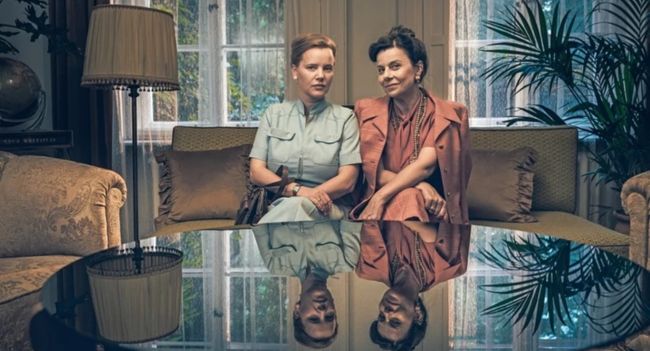
That real-life story is at the centre of Lead Children (Ołowiane dzieci), Netflix’s six-part Polish drama directed by Maciej Pieprzyca and written by Jakub Korolczuk. The series premiered on Netflix on February 11, 2026, and stars Joanna Kulig as Dr. Jolanta Wadowska-Król.
Inspired by the life of the real Wadowska-Król and Michał Jędryka’s book of the same title, the drama revisits one of the most troubling environmental and public-health stories of communist-era Silesia.
A Medical Mystery Hidden In Industrial Silesia
The story is set in Upper Silesia during the 1970s, amid the heavily industrialised landscape of the region.
At its centre is Jolanta Wadowska-Król, a young doctor who begins investigating worrying health problems among children living close to the Szopienice smelter in Katowice.
The symptoms initially appear difficult to explain. But as Wadowska-Król examines more children, a disturbing pattern begins to emerge: they are suffering from lead poisoning caused by exposure to heavy-metal contamination.
Netflix describes the series as the story of a doctor who risks both her career and personal safety after discovering that children living near the smelting plant are being affected by lead poisoning.
The historical record behind the drama is equally striking. In the 1970s, Wadowska-Król began investigating lead exposure among children living around the Szopienice smelter. Her work eventually helped lead to treatment for thousands of children and contributed to the demolition of homes closest to the plant’s chimney.
When Telling The Truth Becomes A Risk
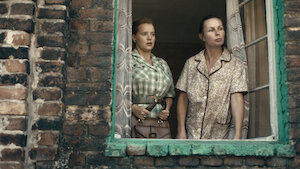
The discovery puts Wadowska-Król in direct conflict with a system determined to avoid an uncomfortable scandal.
As she attempts to draw attention to the scale of the problem, she encounters resistance from authorities and pressure designed to prevent the issue from becoming public.
The series turns that conflict into its central source of tension. Jolanta is trying to protect sick children, but the more she investigates, the greater the personal consequences become.
Netflix’s episode descriptions show how the pressure escalates. As Jolanta realises the scale of the epidemic, she searches for allies, only to discover that not everyone around her can be trusted. After sending her family away, she enters the smelting plant, where Hubert Niedziela sets a trap for her. Later, she attempts to get children away from the plant while authorities intensify their efforts to stop her.
Joanna Kulig Leads A Story Based On A Real Doctor
Joanna Kulig takes the central role of Jolanta Wadowska-Król, portraying a doctor whose medical investigation gradually becomes a fight against institutional resistance.
She is joined by Agata Kulesza as Professor Berger, Kinga Preis as Wiesia Wilczek, Michał Żurawski as Hubert Niedziela, Marian Dziędziel as Jerzy Ziętek, Zbigniew Zamachowski as Zdzisław Grudzień and Sebastian Pawlak as Zbyszek Król.
The story also places particular emphasis on the political environment surrounding the crisis.
Michał Żurawski’s Hubert Niedziela is an SB officer tasked with containing the scandal, while Zdzisław Grudzień represents the political forces determined to preserve their influence in Silesia. Jerzy Ziętek, played by Marian Dziędziel, is presented as a figure caught between political interests and concern for the local community.
The Real History Behind The Drama
The events portrayed in Lead Children are rooted in the experience of children living around the Szopienice smelter in Katowice.
According to research published by the University of Silesia, the contamination affected children in the area in large numbers. Lead poisoning was traditionally understood as an occupational disease associated with industrial workers, making its presence among local children particularly alarming.
In 1974, Wadowska-Król was already dealing with thousands of medical records belonging to children from areas around the smelter. Many had blood-lead levels significantly above acceptable limits.
Her efforts eventually became an important part of the region’s history. The University of Silesia awarded her an honorary doctorate in 2021 in recognition of her research and dedication to children affected by lead exposure.
The history also illustrates how difficult it was to address environmental contamination in communist-era Silesia. The Institute of National Remembrance has documented the authorities’ interest in the situation surrounding the Szopienice plant, including a secret investigation known as “Plumbum,” launched amid concerns over lead production and reports concerning the health of children in the district.
Six Episodes Of Medical, Political And Personal Tension
Rather than presenting the story as a conventional crime investigation, Lead Children builds its drama around the collision between medicine, family and political power.
The six episodes gradually increase the pressure on Jolanta as the authorities become more determined to contain the situation.
The series moves from the discovery of unexplained illnesses to the wider implications of the epidemic, while Jolanta’s attempts to protect the children increasingly place her own family and career at risk.
That structure gives the story a slow-burning quality. The danger comes not from a conventional villain or mystery, but from the consequences of confronting a system that has reasons to keep the truth buried.
A Story About Courage And Responsibility

Maciej Pieprzyca, known for exploring Silesian identity and social issues, directs the series with a strong focus on the atmosphere of 1970s Upper Silesia. Netflix says the production recreates locations and details from the era, with filming taking place in Katowice, Ruda Śląska, Świętochłowice, Zabrze, Gliwice, Bytom and Warsaw.
The result is a historical drama that connects an environmental disaster with a very personal struggle.
At its heart is one doctor’s decision to keep investigating when staying silent would be easier. Her story is not simply about identifying a medical cause; it is about what happens when evidence threatens powerful interests and protecting vulnerable people requires someone to challenge the system around them.
Lead Children ultimately turns a little-known chapter of Silesian history into a six-part drama about responsibility, persistence and the human cost of industrial pollution.
And because the story is inspired by the real work of Jolanta Wadowska-Król, the events portrayed on screen carry a weight that extends far beyond the drama itself.