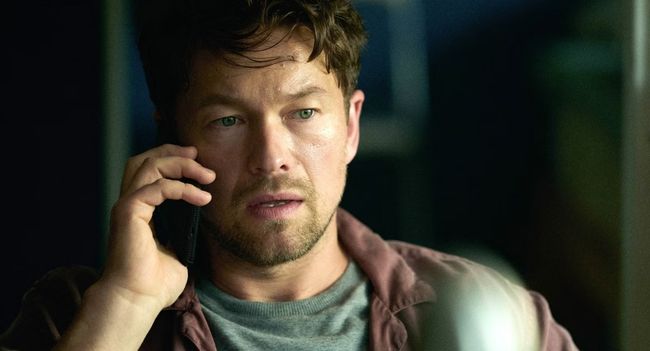
Netflix’s Five-Episode Blood Sacrifice Turns a Police Manhunt Into a Dark Family Drama — and Its Nordic Noir Mystery Is Already a Global Hit
A terrified emergency call sends two police officers to an apparently empty summer house in the Stockholm archipelago. By the following day, both officers are dead — the beginning of a disturbing series of murders aimed directly at the police.
That chilling setup drives Blood Sacrifice (Blodsoffer), Netflix’s five-part Swedish crime thriller from Lupin and Hijack creator George Kay. But underneath the serial-killer investigation is something more personal: the fractured relationship between detective Thomas Berg and Alfred, the retired police officer he happens to call his father.
Released on August 20, 2026, the series quickly became an international streaming success, reaching No. 1 on Netflix’s global non-English TV chart with seven million views in its first four days.
Critical reaction has also been strong. At the time of writing, Rotten Tomatoes lists Season 1 at 89% from nine critic reviews, an increase from the 86% score reported shortly after its release.
A Distress Call Becomes a Deadly Trap
Blood Sacrifice wastes little time establishing its central nightmare.
It is summer in Stockholm when emergency services receive a call from a woman apparently being attacked. The location is traced to a vacation home in the archipelago, and two officers are dispatched.
When they arrive, however, the house appears empty.
The officers are subsequently found brutally murdered, and neither the woman who supposedly made the call nor her attacker can be located. The deaths become part of an increasingly alarming pattern in which police officers themselves are the targets.
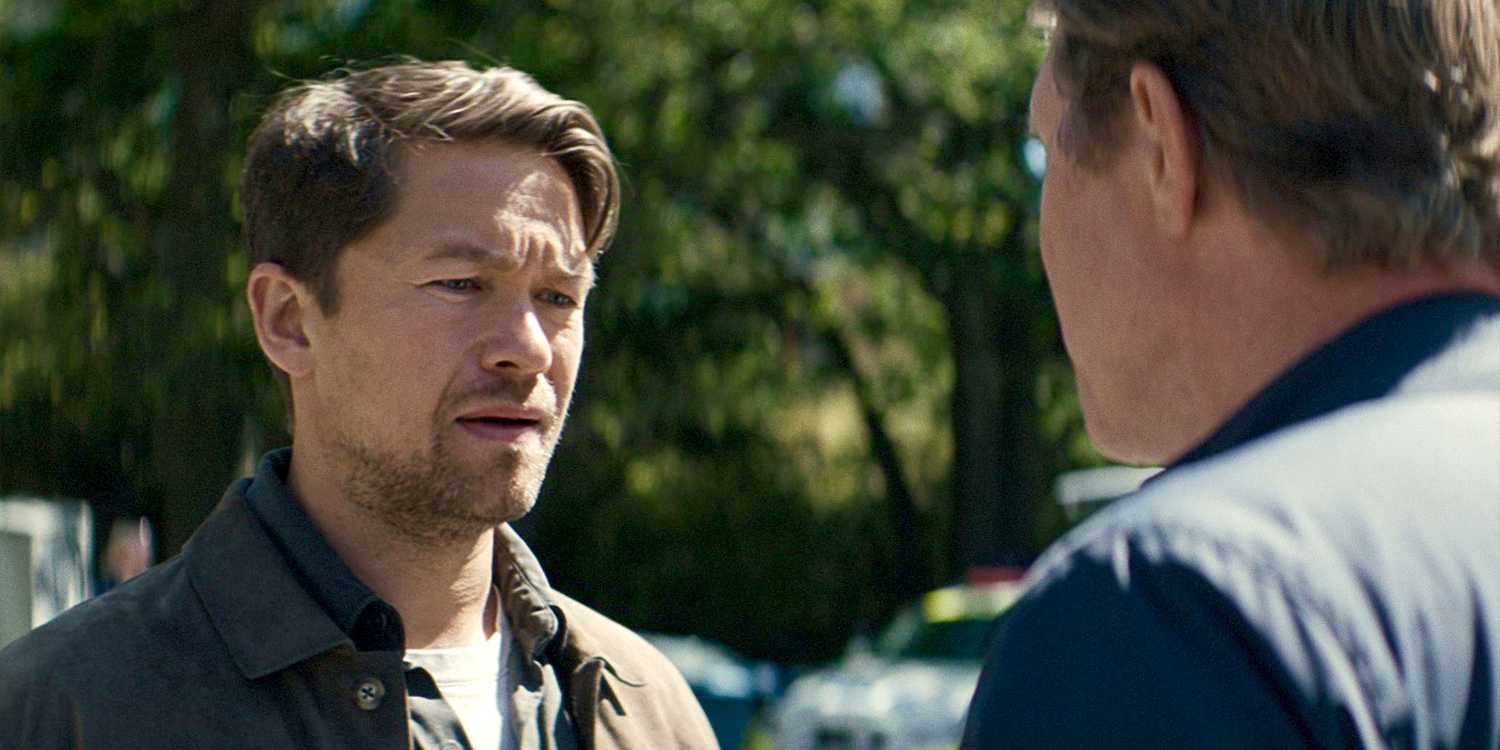
The timing becomes one of the investigation’s most disturbing clues.
Another distress call arrives at precisely 1:15 a.m., sending an armed police unit toward another potential trap. The recurring calls gradually turn the clock itself into a source of tension as Thomas and his colleagues attempt to understand who is orchestrating the attacks and why.
With only five episodes — running 48, 49, 44, 50 and 58 minutes respectively — the story has little room for unnecessary detours.
Instead, each revelation pushes the investigation closer to an uncomfortable possibility: understanding the killer may require the police to examine themselves.
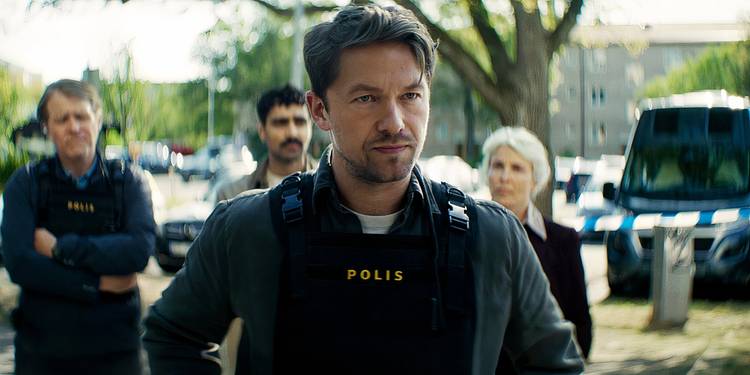
The Police Are Hunting Someone Who Understands Their World
The decision to make police officers the targets gives Blood Sacrifice an unusual perspective for a procedural.
These aren’t detectives investigating violence from a safe distance. The people responding to emergency calls are potential victims, and every new attack intensifies the pressure within the department.
As the investigation develops, the drama begins examining more than the identity of the murderer.
Institutional failures, professional rivalries, buried trauma and difficult moral decisions all become entangled with the hunt. The question isn’t simply whether Thomas can catch the killer, but what the investigation might expose about the organization he has devoted his life to.
The approach fits naturally within Nordic noir, where murder mysteries frequently become vehicles for examining wider social and institutional problems.
Here, however, the critique remains closely connected to the characters.
The police aren’t presented as one uniform group. They are individuals responding differently to the emotional and professional demands of the job.
Thomas Berg Isn’t the Typical Brilliant TV Detective
Jakob Oftebro leads the series as Thomas Berg, and one of the drama’s more interesting decisions is refusing to turn him into another near-superhuman investigator.
Thomas makes questionable decisions. He misses things. His judgment isn’t always perfect.
Most importantly, his professional identity cannot be separated from his relationship with his father.
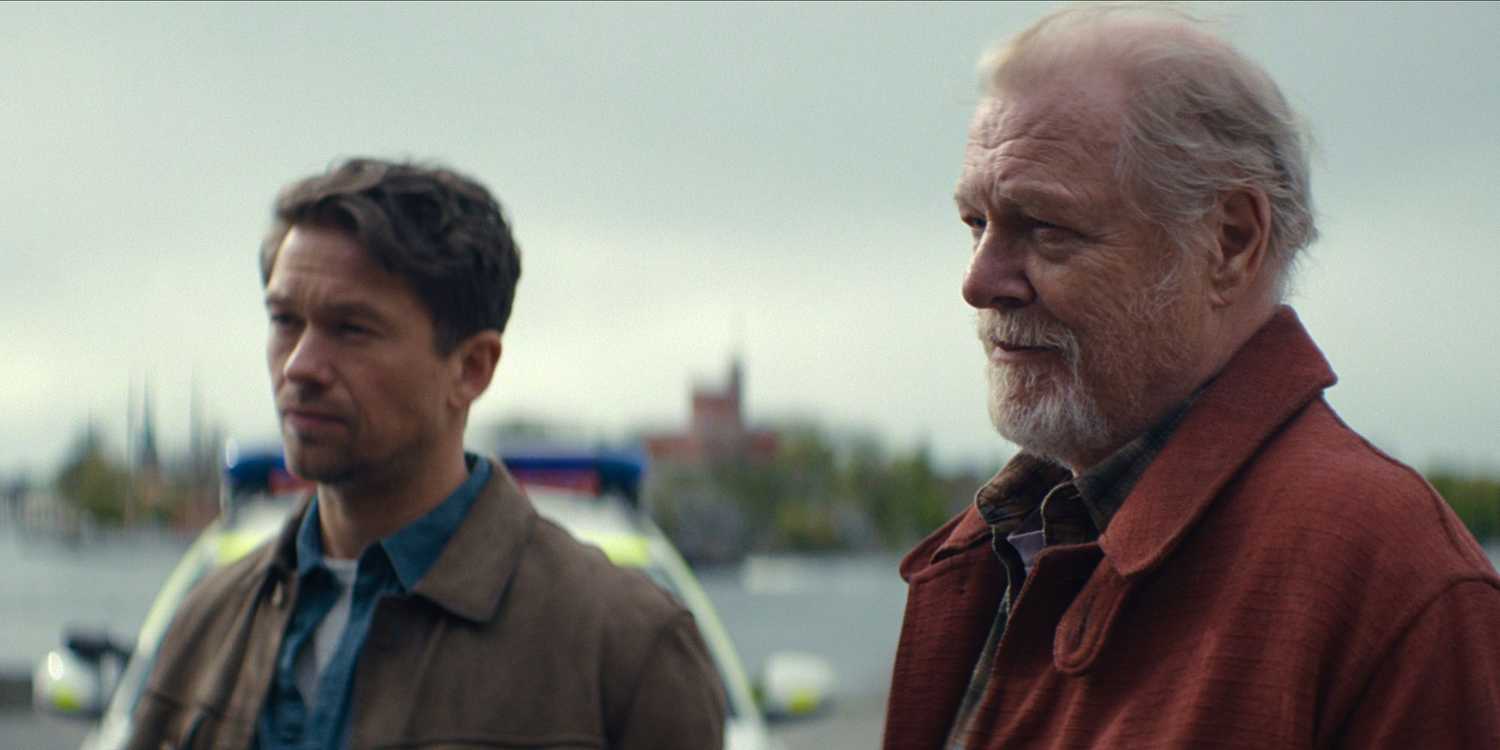
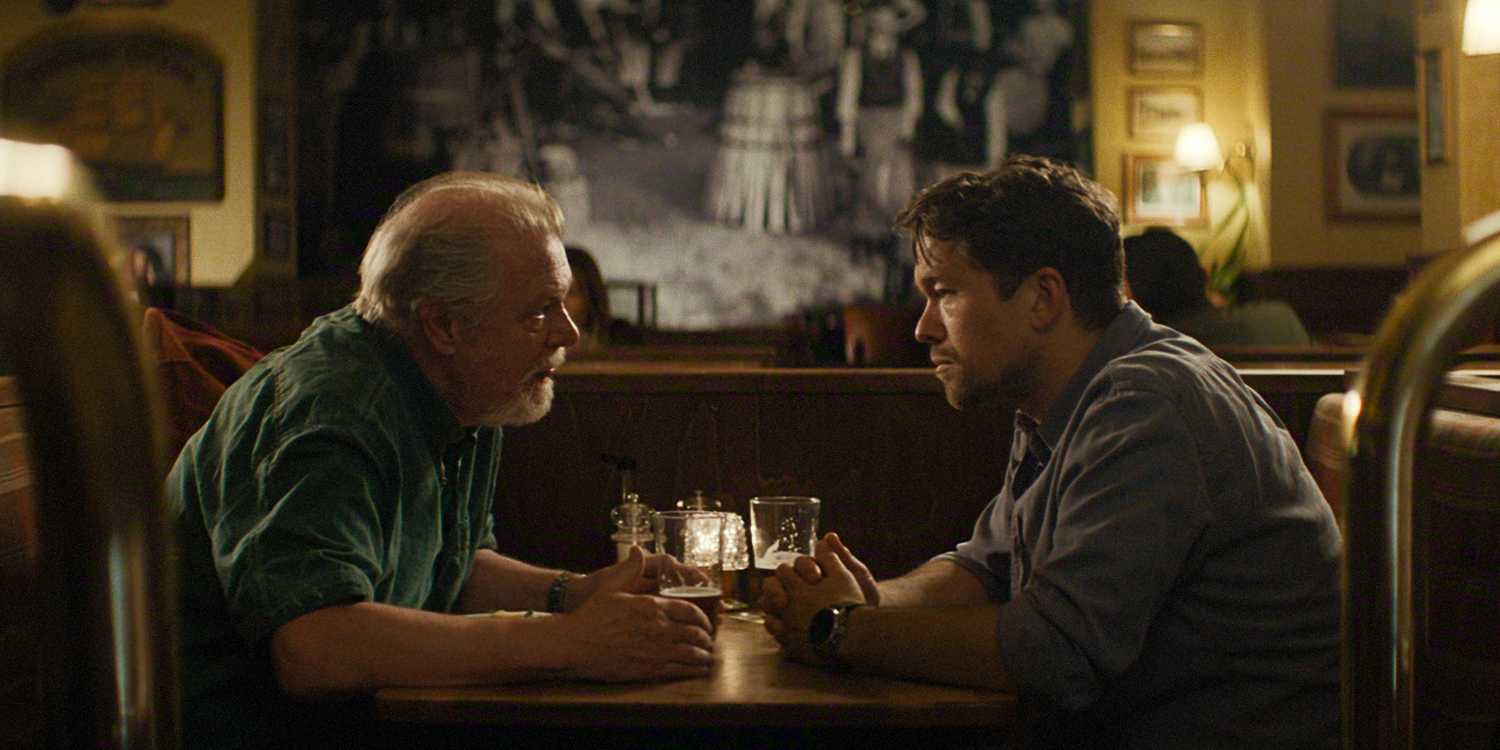
When the murders become increasingly difficult to understand, Thomas reluctantly seeks assistance from Alfred, the former detective from whom he has become estranged. Netflix describes their partnership as an “uneasy alliance,” with years of resentment standing between them even as they attempt to stop the killer.
That relationship transforms what could have been a straightforward serial-killer procedural into something considerably more personal.
Thomas isn’t merely trying to solve a case.
He is working beside the man whose approval and support have remained complicated parts of his life.
Peter Andersson’s Alfred Gives the Mystery Its Emotional Core
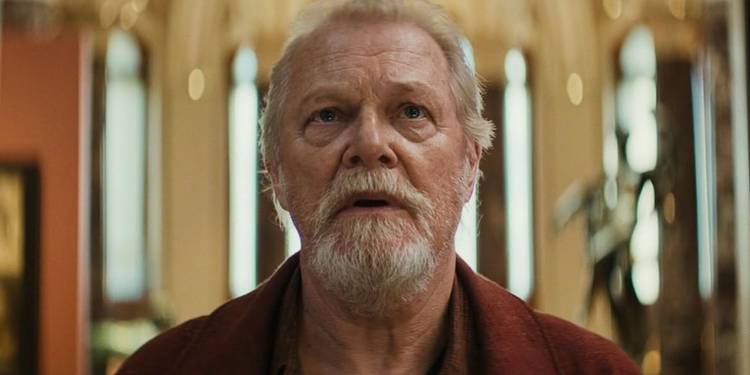
Peter Andersson plays Alfred, Thomas’s retired detective father.
Alfred has been away from active police work for years, but his knowledge becomes increasingly valuable once his son turns to him for help.
The two men represent different generations of policing, but their conflict runs much deeper than professional disagreements.
There is history between them that neither has properly resolved.
Creator George Kay has described the series as fundamentally a love story between an estranged father and son, wrapped inside a dark Scandi-noir crime drama.
That description explains why Blood Sacrifice spends so much time on their interactions rather than treating Alfred simply as an experienced detective brought in to provide clues.
Every conversation carries emotional baggage.
Old resentment sits alongside reluctant respect, and the investigation forces father and son into the kind of sustained contact they have spent years avoiding.
Andersson also brought an interesting personal connection to the role. The actor said that playing a detective felt particularly close to him because his own son is a police officer.
Their Broken Relationship Is as Important as the Killer
The series gradually reveals how deeply Thomas and Alfred’s relationship shapes both men.
Alfred spends part of his retirement absorbed in an elaborate model railway, including a miniature representation connected to a childhood memory involving himself and Thomas.
For Alfred, the memory carries meaning.
For Thomas, their shared history looks very different.
That disconnect becomes representative of their relationship: father and son can remember the same family differently because each experienced it from a different position.
Their investigation therefore becomes an imperfect attempt at reconciliation.
They aren’t suddenly transformed into a harmonious father-son detective team. The resentment remains, and Thomas’s need for his father’s recognition continues complicating their interactions.
During one particularly heated confrontation, Thomas accuses Alfred of wanting his son to resemble him — but never become successful enough to eclipse him.
That conflict gives the investigation a melancholic undercurrent that would be absent if the series focused exclusively on catching the murderer.
The Supporting Detectives Make the Police Station Feel More Complicated
The drama also builds out its police world through a supporting ensemble that includes Electra Hallman, Alexander Abdallah, Henrik Norlén, Lisette T. Pagler, Magnus Krepper, Irina Björklund, Anders Mossling and Anna Maria Käll.
Alexander Abdallah plays John-Jo Persson, an investigator preparing to leave the profession, while Henrik Norlén portrays the experienced Max Abrahamsson.
Their stories help reinforce the series’ interest in what police work demands from the people doing it.
Career ambition, loyalty and personal sacrifice repeatedly collide.
Thomas himself contributes to that environment. His decisions as a leader aren’t always presented as unquestionably correct, and the series doesn’t automatically reward the officers who sacrifice the most of their private lives for the job.
Instead, Blood Sacrifice repeatedly asks what advancement within such an institution actually requires — and what gets lost along the way.
Five Episodes Keep the Mystery Moving
One of Blood Sacrifice’s greatest advantages is its length.
There are only five episodes, and none reaches an hour.
Episode 1 runs 48 minutes and establishes the murders and Thomas’s reluctant return to Alfred.
Episode 2 lasts 49 minutes and introduces another 1:15 a.m. distress call.
The 44-minute third installment pushes Thomas toward an ethical dilemma as the investigation begins pointing toward an increasingly troubling possibility.
Episode 4 runs 50 minutes and sees Alfred embark on a dangerous mission of his own while Thomas moves deeper into morally uncertain territory.
The 58-minute finale then connects a grisly discovery to events from two years earlier as the hunt reaches its conclusion.
That compact structure means the series can be watched in a little over four hours.
It also prevents the central mystery from being stretched across eight or ten episodes simply because streaming dramas often demand longer seasons.
George Kay Brings His Thriller Experience to Stockholm
The series comes from British screenwriter George Kay, whose previous work includes Lupin and Hijack.
Kristoffer Nyholm, whose credits include The Killing and Taboo, directs all five episodes. The production was filmed on location in Stockholm and the Stockholm archipelago.
Kay created and wrote the series, with Aron Levander and Emilie Robson also credited as episode writers and Levander handling the Swedish adaptation. B-Reel Films and Observatory Pictures produced the drama in association with New Pictures.
The combination is particularly suited to the material.
Kay brings experience constructing tightly controlled thrillers, while Nyholm has extensive history with the atmospheric Scandinavian crime genre.
The result is recognizably Nordic noir without relying exclusively on bleak landscapes or graphic violence to create tension.
Critics Have Responded to More Than the Murder Mystery
The critical response suggests that Blood Sacrifice‘s character work has helped it stand apart from a crowded field of streaming police thrillers.
Rotten Tomatoes currently records an 89% Tomatometer score from nine reviews, although its audience Popcornmeter is considerably lower at 42% from fewer than 50 ratings. Those numbers remain early and could change as more reviews arrive.
Variety described the series as more than a conventional murder mystery, pointing toward its combination of violence and deeper ideas, while other reviews have highlighted its examination of the people behind police institutions.
Not every response has been enthusiastic.
What’s on Netflix gave the series 2.5 out of 5, arguing that the drama doesn’t fully capitalize on the potential of its premise despite its creator, cast and Scandinavian setting.
That division is worth noting because Blood Sacrifice isn’t simply selling itself as a relentless serial-killer chase.
Much of its appeal depends on whether viewers become invested in Thomas and Alfred.
A Nordic Noir Where the Family Drama Matters
Strip away the emergency calls, police murders and serial-killer investigation, and Blood Sacrifice ultimately has a surprisingly simple emotional foundation.
It is about a son who needs something from his father.
Thomas and Alfred may be investigating a murderer together, but the case forces them to address resentments that existed long before the first officer was killed.
That gives the series a character-driven foundation beneath its darker premise.
The murders provide urgency. The investigation supplies the mystery. But Thomas and Alfred give the story its emotional stakes.
It’s also what keeps Blood Sacrifice from presenting its protagonist as another infallible television detective. Thomas doesn’t need to be the cleverest person in every room for the series to work. His mistakes, insecurities and complicated need for his father’s approval are part of what makes him interesting.
And the larger police institution receives similar treatment.
There are no simple divisions between flawless officers and obvious villains. Ambition, trauma, loyalty, ego and institutional self-preservation overlap throughout the investigation.
Blood Sacrifice Has Already Become an International Breakout
The five-episode format also appears to have worked in the show’s favor with Netflix audiences.
After premiering on August 20, Blood Sacrifice recorded seven million views during its first four days and climbed to No. 1 on Netflix’s global chart for non-English television.
That is a significant start for a Swedish-language police drama arriving late in the summer.
It also makes the series particularly easy to recommend to viewers looking for a short crime binge rather than another sprawling multi-season commitment.
Five episodes.
One murderer targeting police officers.
A recurring emergency call that could lead responders straight into a trap.
And at the center of everything, an estranged father and son who must decide whether they can trust one another long enough to survive the investigation.
With its compact storytelling, strong performances and willingness to make its detectives as complicated as the crime they’re trying to solve, Blood Sacrifice offers something more layered than its brutal premise initially suggests.
All five episodes of *Blood Sacrifice* on Netflix are streaming now.