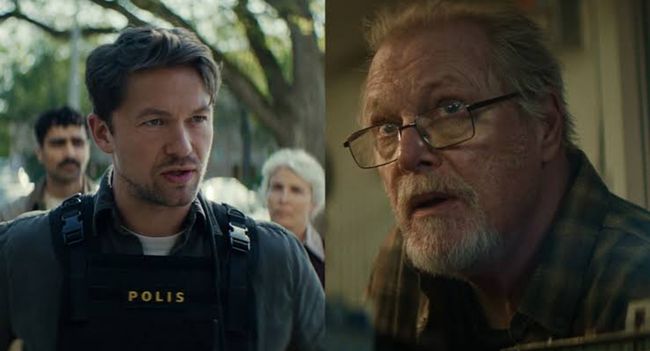
Netflix’s New Five-Part Serial-Killer Thriller Rockets to No. 1 With 7 Million Views in Just Four Days
Netflix has another international crime hit on its hands.
Swedish thriller Blood Sacrifice needed only four days to climb to No. 1 on Netflix’s global non-English TV chart, pulling in 7 million views and 29.3 million viewing hours during the week of August 17–23. The series only premiered on August 20, making the size of its debut particularly striking.
Created by Lupin and Hijack writer George Kay, the five-part Nordic noir follows a detective investigating a string of brutal murders targeting police officers. But the case soon becomes more complicated than a conventional serial-killer hunt, forcing him to work alongside the person he is least comfortable asking for help: his estranged father, a former detective.
With all five episodes available to stream, Blood Sacrifice has quickly emerged as one of Netflix’s most binge-friendly new crime dramas.
Blood Sacrifice Reaches No. 1 After Only Four Days
Netflix’s official figures show just how quickly the Swedish series found an audience.
Between August 17 and August 23, Blood Sacrifice: Season 1 generated 7 million views from 29.3 million hours watched, placing it firmly at No. 1 among Netflix’s non-English television titles worldwide. Its total runtime is four hours and 11 minutes.
The series finished comfortably ahead of the competition in terms of views.
Our Sticky Love took second place with 3.7 million views and 43.3 million hours watched, while Umthetho came third with 3.5 million views. Spooky in Love followed with 2.7 million, and Moria completed the top five with 2.2 million views.
The important difference is that Blood Sacrifice had been available for only four days when Netflix closed that weekly reporting window.
That gave George Kay’s new thriller less than a full week to establish a commanding lead.
A Distress Call Leads Two Police Officers Into a Deadly Trap
The story opens during the deceptively bright summer months around Stockholm.
Emergency services receive a call reporting trouble at a home in Värmdö. Officers David Rolander and Helene Bengtsson are dispatched to the property, but the woman who supposedly placed the call cannot be found.
By the following day, both officers are dead.
Their murders trigger an investigation led by Detective Thomas Berg, played by Jakob Oftebro. Almost immediately, Thomas notices something disturbing: the killings appear to share similarities with an earlier case in nearby Söderhamn, where another police officer, Marina Jonsson, was murdered.
That connection should provide investigators with a major breakthrough.
Instead, it creates an even bigger problem.
The man suspected of committing the earlier killing is already in custody.
If he really was responsible for the Söderhamn murder, he could not have carried out the new attacks. Thomas is therefore forced to consider a far more uncomfortable possibility — that police may have imprisoned the wrong man in the original investigation.
Thomas Berg Has to Question a Case Police Thought Was Already Solved
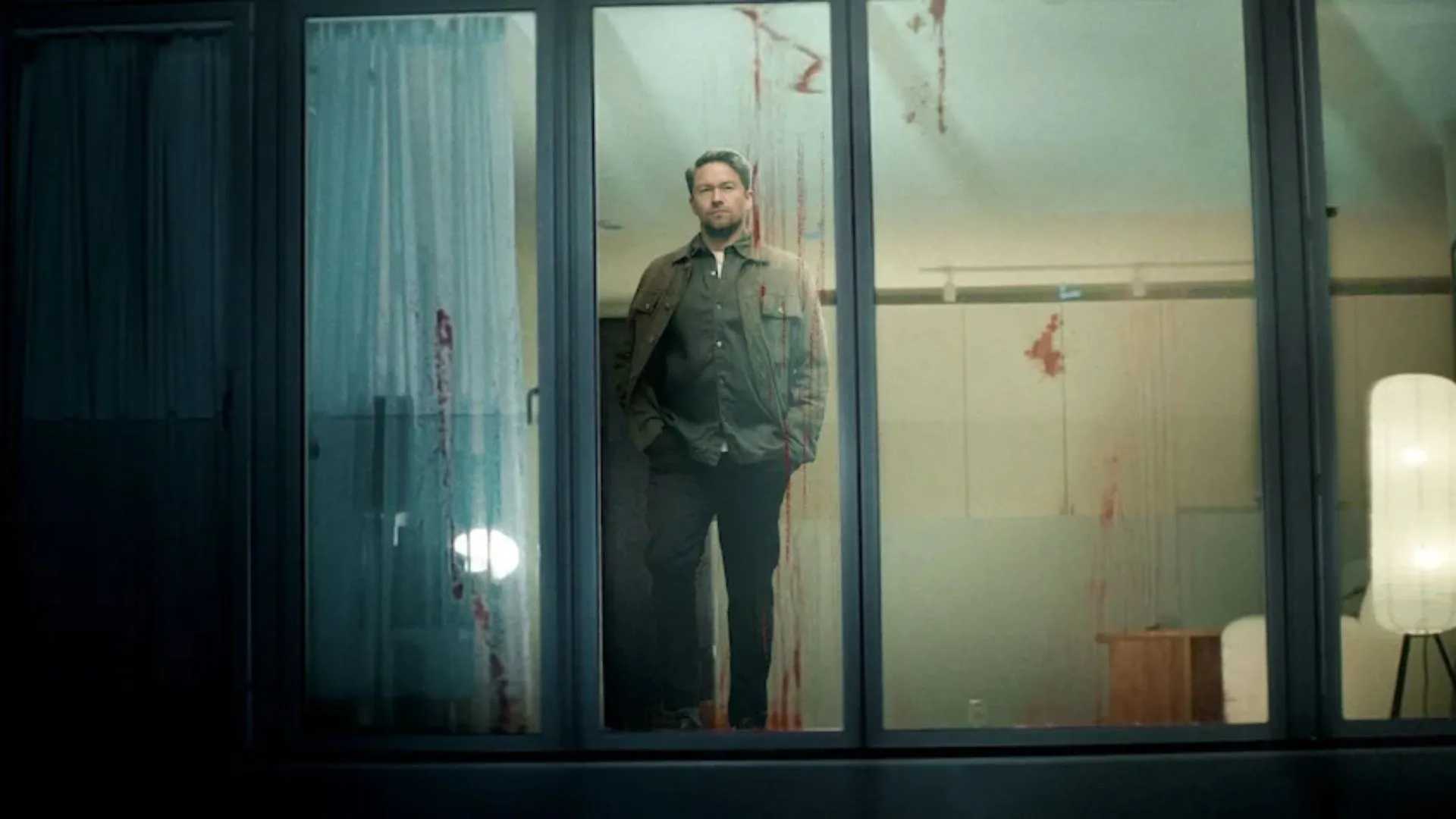
Reopening the connection between the murders carries serious consequences.
Thomas is warned to handle the investigation carefully because challenging the Söderhamn case could put his own department in conflict with the detectives who originally investigated it.
Yet the similarities are too significant to ignore.
As another distress call threatens to produce more victims, Thomas begins dealing with the possibility that someone is deliberately hunting police officers and using emergency calls to lure them into carefully constructed traps.
The investigation becomes a race not only to identify the killer, but also to understand whether mistakes made in the past have allowed the real perpetrator to remain free.
That uncertainty gives Blood Sacrifice its central hook.
Rather than simply asking who committed the latest murders, the series forces its detectives to question whether something they believed had already been solved was ever solved at all.
The Investigation Forces Thomas Back to His Estranged Father
Thomas eventually realizes that he needs someone who can approach the evidence differently.
Unfortunately, the person he believes could help is also someone he has spent years avoiding.
Alfred Berg, played by Peter Andersson, is Thomas’s estranged father and a former police detective. Their relationship is fractured long before the murders begin, and bringing Alfred into the investigation means reopening years of resentment between them.
Netflix describes the pair as being forced into an uneasy alliance as the attacks on police officers continue.
For Thomas, asking for his father’s help is not simply a professional decision.
It means admitting that Alfred’s old-school instincts and experience may be exactly what the investigation needs, even if Thomas has no desire to repair their personal relationship.
That tension becomes one of the defining elements of the series.
The Father-Son Relationship Gives the Thriller Its Emotional Core
Serial-killer dramas often rely on familiar ingredients: grisly crime scenes, misleading clues, mounting pressure from superiors and an antagonist who appears to stay ahead of investigators.
Blood Sacrifice has all of those elements.
But the relationship between Thomas and Alfred prevents the story from functioning solely as another police procedural.
Their personal history affects almost every stage of the investigation. Thomas needs Alfred’s mind, but accepting his assistance means spending time with a father from whom he has become emotionally distant.
Alfred, meanwhile, brings decades of police experience to the case without suddenly becoming an easy or uncomplicated presence in his son’s life.
The investigation repeatedly places them in situations where professional cooperation and family resentment become impossible to separate.
Even the actors highlighted that element ahead of release.
Oftebro described the drama as an “intense, emotional journey,” while Andersson said he was attracted to the combination of crime thriller and family drama.
Five Episodes Keep the Story Moving Fast
Another major part of Blood Sacrifice’s appeal is its compact structure.
Netflix has divided the season into just five episodes, running between 44 and 58 minutes each.
Episode one introduces the first double murder and Thomas’s reluctant reunion with Alfred.
By episode two, another emergency call sends an armed police unit into danger while pressure on Thomas intensifies.
The third episode introduces a troubling development involving the suspect and pushes Thomas toward an ethical dilemma. Episode four sees Alfred pursue a dangerous theory of his own, while Thomas moves deeper into morally questionable territory.
The finale then connects a gruesome discovery to events from two years earlier as the investigation closes in on the killer.
At a little over four hours in total, the entire story can easily be watched over a weekend — or in one extended sitting.
That short runtime may help explain why the thriller generated such a large number of completed views so quickly.
Jakob Oftebro Leads the Cast as Thomas Berg
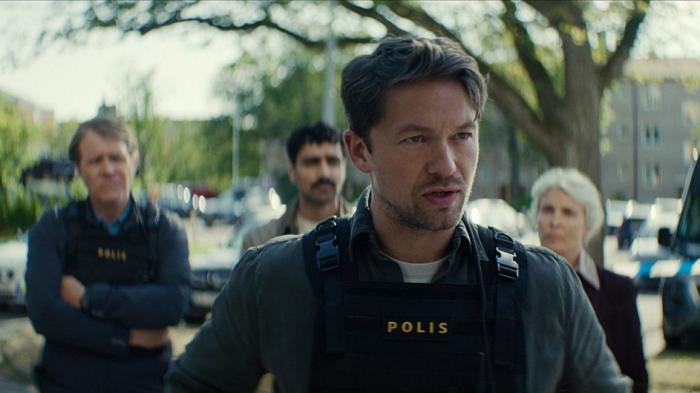
Norwegian actor Jakob Oftebro takes the central role as Thomas, the detective responsible for holding together an investigation that becomes increasingly personal.
Oftebro, whose previous credits include Hamilton and Stenbeck, plays Thomas as a man being pulled in several directions at once.
He has officers being murdered.
He has superiors demanding progress.
He has an old investigation that may have gone catastrophically wrong.
And then he has Alfred.
Thomas must decide how far he is prepared to trust his estranged father while also determining how far he himself is willing to push the boundaries of police procedure to prevent another killing.
That conflict means Blood Sacrifice is not simply asking its lead actor to chase clues from one episode to the next.
Thomas’s judgment — both professional and personal — is continually tested.
Peter Andersson Makes Alfred More Than a Standard Retired Detective
Peter Andersson plays Alfred Berg, the former police officer whose knowledge becomes crucial to his son’s investigation.
Andersson is familiar to international audiences from titles including The Girl with the Dragon Tattoo and Beck.
In Blood Sacrifice, Alfred functions as more than the familiar crime-drama character who remembers the clue everyone else has forgotten.
His involvement creates complications of its own.
Thomas may value his father’s experience, but the pair have unresolved issues that cannot simply be put aside because a killer is on the loose.
Their uneasy dynamic means even conversations about evidence can carry emotional tension.
That combination of investigation and family conflict is one reason the series stands slightly apart from a straightforward serial-killer procedural.
The Supporting Cast Expands the Investigation

Oftebro and Andersson lead an ensemble that also includes Electra Hallman as investigator Natalie Eklund, Alexander Abdallah as John-Jo Persson and Henrik Norlén as Max Abrahamsson.
Lisette T. Pagler plays Thomas’s wife Charlotte Berg, while Irina Björklund appears as Rebecca Björklund, one of Thomas’s superiors. Anders Mossling plays his boss Lucas Lind.
The wider cast also includes Magnus Krepper, Anna-Maria Käll and others.
The series was filmed in Stockholm and the Stockholm archipelago, locations that play an important role in establishing its distinctive Nordic atmosphere.
Stockholm’s Endless Summer Light Gives the Thriller an Unusual Look
Many Scandinavian crime dramas are associated with darkness, snow and bleak winter landscapes.
Blood Sacrifice takes a different visual approach.
George Kay specifically wanted to use Stockholm during the Nordic summer, when darkness barely arrives at all.
“Setting this story in Stockholm, in that strange, haunting light of the Nordic summer, allowed us to build a crime thriller that feels uniquely Swedish and epic,” Kay said.
That contrast becomes part of the series’ identity.
The murders are deeply unsettling, but they unfold against bright skies, summer houses and the waterways of the Stockholm archipelago rather than conventional noir darkness.
The result is still recognizably Nordic noir, but with a visual atmosphere that separates it from many similar crime series.
Lupin Creator George Kay Is Behind the Mystery
One of the biggest names attached to Blood Sacrifice is creator and writer George Kay.
Kay is already well known to Netflix audiences through Lupin, while his credits also include the acclaimed thriller Hijack.
The Swedish series is directed by Kristoffer Nyholm, whose credits include The Killing and Taboo. Aron Levander and Emilie Robson are also credited as episode writers, with Levander handling the Swedish adaptation.
The production comes from B-Reel Films and Observatory Pictures in association with New Pictures.
Rather than stretching the premise across eight or 10 episodes, the creative team keeps everything contained within five installments.
That approach helps maintain the feeling that the killer could strike again at almost any moment.
Critics and Viewers Are Not Entirely in Agreement
The series’ enormous opening-week audience has not produced complete agreement about its quality.
As of August 29, Blood Sacrifice holds an 86% Tomatometer score on Rotten Tomatoes based on seven professional reviews. Its audience Popcornmeter is considerably lower, hovering around the low-40% range from fewer than 50 ratings. Because the audience sample remains small, that figure could continue to change as more viewers finish the season.
Critical reaction has nevertheless highlighted several of the elements that made the series appealing in the first place.
Reviews have praised the central mystery, the father-son pairing and the show’s willingness to explore more than the mechanics of solving a murder. Other critics have been less convinced by its pacing, supporting characters and resolution.
The mixed audience reaction clearly has not prevented people from pressing play.
Seven million views in four days demonstrate that curiosity around the premise has been substantial.
Nordic Noir Remains a Powerful Netflix Genre
Blood Sacrifice also arrives at a moment when international thrillers continue to perform strongly on Netflix.
Nordic noir has long found audiences outside Scandinavia thanks to its mixture of intricate investigations, bleak moral dilemmas and damaged protagonists.
Netflix’s global reach now allows a Swedish-language series to enter homes around the world on the same day.
That appears to have worked particularly well here.
The combination of a serial killer targeting police, an apparently flawed earlier investigation and the strained partnership between Thomas and Alfred gives Blood Sacrifice an immediate premise that requires little introduction.
Then the five-episode format removes one of the biggest barriers for viewers considering whether to start another crime series.
It is short enough to binge almost immediately.
Seven Million Views May Only Be the Beginning
The most impressive detail about Blood Sacrifice’s debut remains the speed with which it reached the top.
The 7 million views recorded by Netflix represent only four days of availability during its first reporting week.
A full seven-day period will provide a better indication of whether the thriller can sustain that momentum.
Its long-term performance will also depend on word of mouth, new competition and whether audiences recommend the series after reaching its final episode.
There is also no official announcement yet about a second season. Netflix currently presents the release as Season 1 rather than labeling it a limited series, but the streamer has not confirmed that Thomas and Alfred will return for another case.
For now, however, the numbers speak clearly.
A five-part Swedish serial-killer thriller with no reliance on a cast of international Hollywood superstars has climbed straight to the top of Netflix’s global non-English TV chart.
With two murdered police officers, a disturbing connection to an old case and an estranged father and son forced back together to find the killer, Blood Sacrifice has exactly the kind of tightly contained mystery that can turn one episode into five before viewers realize how late it has become.