Netflix’s Ambitious Historical Epic Marco Polo Deserves Another Chance After a Stunning Critical Turnaround
Netflix’s Marco Polo was canceled just as the lavish historical drama appeared to be finding its stride. After two seasons filled with political intrigue, military conflict and power struggles in the Mongol Empire, the series ended before its creators could complete the sweeping story they had planned. A decade after its premiere, its dramatic improvement in critical reception and unresolved narrative leave the door open to an intriguing question: could the series deserve a second life?
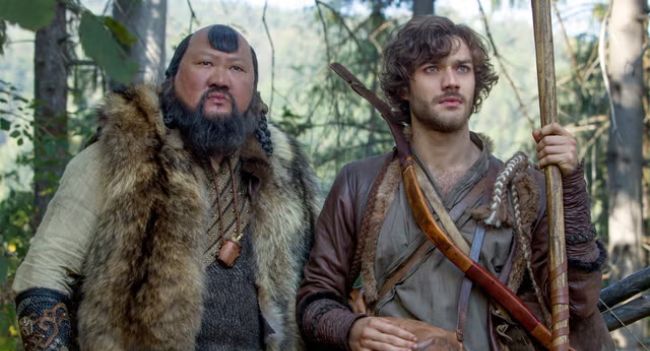
Created by John Fusco, the drama stars Lorenzo Richelmy as the legendary Venetian explorer Marco Polo and Benedict Wong as Kublai Khan, the formidable ruler of China’s Yuan dynasty. The series premiered on December 12, 2014, and ran for two seasons before Netflix announced its cancellation on December 12, 2016.
Although the production struggled to win over critics initially, its second season earned a perfect Rotten Tomatoes critics’ score. Combined with its unfinished storyline and the growing profiles of several cast members, that turnaround has helped keep the series an interesting candidate for revival.
Marco Polo Takes Viewers Into the World of Kublai Khan
Inspired by the historical explorer’s travels across Asia, the series follows a young Venetian merchant navigating the political tensions, rivalries and military ambitions of the Mongol Empire. Much of the story unfolds within Kublai Khan’s court, where competing interests and shifting alliances shape the struggle for power.
The real Marco Polo traveled through Asia between 1271 and 1295. His experiences were recorded in The Travels of Marco Polo, also known as Il Milione, a work that introduced many European readers to accounts of China, Persia, India and other Asian societies.
His descriptions offered a significant glimpse into the wealth, influence and reach of the Mongol Empire. Netflix’s adaptation takes creative liberties with the historical record, using Polo’s experiences at Kublai Khan’s court as the foundation for a drama built around political conspiracies, military campaigns and personal ambition.
Elaborate battle sequences, lavish production design and an international cast helped establish the series as an ambitious historical production. Yet its scale and visual spectacle were not enough to secure consistently positive reviews during its first season.

Season 2 Earned a Perfect Rotten Tomatoes Score
The contrast between Marco Polo’s two seasons was striking. Its first season received just 32% from critics on Rotten Tomatoes, with reviews pointing to uneven storytelling and underdeveloped characters. The second season, released in July 2016, reached 100% on the critics’ Tomatometer, reflecting a substantial improvement in its critical reception.
The later episodes benefited from more developed characters, tighter political storylines and a clearer sense of direction. After a difficult opening season, the series appeared to be making better use of its sprawling historical setting and complex web of rivalries.
However, that progress came too late to save the production. Netflix canceled the drama in December 2016, leaving its creative team unable to continue building on the second season’s momentum.
John Fusco Had Envisioned a Five-Season Story
For creator and showrunner John Fusco, the cancellation meant abandoning a much larger vision for the series.
In a 2020 interview with The Guardian, Fusco described the experience as crushing and acknowledged that the decision remained difficult to come to terms with. He had originally pitched Netflix a story designed to unfold across five seasons, with major historical events shaping its long-term direction.
The plans for a third season were already well advanced when the cancellation arrived. According to Fusco, the writing team had prepared approximately 10 hours of material for the next installment.
Fusco later explored another way to conclude the story, proposing a sequel film that could resolve the outstanding plotlines. That project never came to fruition, leaving the series without the conclusion its creators had intended.
The cancellation was especially frustrating given the groundwork already completed. Rather than bringing its larger historical narrative to a natural endpoint, Marco Polo stopped after two seasons, with significant storytelling potential left unexplored.
Benedict Wong and Michelle Yeoh Could Attract New Viewers
A revival could also benefit from the growing international recognition of its original cast.
Benedict Wong, who portrayed Kublai Khan, has become widely familiar to audiences through his role as Wong in the Marvel Cinematic Universe, including the Doctor Strange films.
Michelle Yeoh, another member of the Marco Polo cast, experienced a major career resurgence with her Academy Award-winning performance in Everything Everywhere All at Once. Her success has brought renewed attention to her work, potentially encouraging new viewers to discover some of her earlier projects.
Their increased visibility could help introduce the historical drama to audiences who may have overlooked it during its original run.
Nevertheless, reviving Marco Polo would come with substantial financial obstacles. The production was reportedly among Netflix’s most expensive projects, with estimates of its costs and associated losses reaching approximately $200 million. That figure has not been publicly confirmed by Netflix, but it illustrates the scale of the investment involved.
With such a costly production, a return would require more than renewed interest in the cast. Netflix would need to weigh the potential audience against the expense of recreating the series’ elaborate historical world.
Could the Success of Shōgun Strengthen the Case for a Revival?
The critical and awards success of FX and Hulu’s Shōgun offers another reason to reconsider the potential of historical dramas set in Asia.
Like Marco Polo, Shōgun places political maneuvering, competing loyalties and struggles for power at the center of its story. Both productions also rely on detailed period settings and complex relationships to bring historical worlds to life.
Shōgun demonstrated just how far this approach could go, winning 18 Emmy Awards in 2024, including Outstanding Drama Series.
Its success showed that audiences and critics could embrace ambitious historical storytelling centered on cultures and political systems beyond familiar Western settings. It does not guarantee that Marco Polo would achieve similar results, particularly given the differences in their production circumstances and financial demands. Still, it provides a compelling example of the possibilities available to the genre.
Why Marco Polo Still Has Potential
Nearly a decade after its cancellation, Marco Polo remains a particularly intriguing example of an ambitious series that ended before reaching its full potential.
Its second-season critical turnaround suggested that the show was improving, while Fusco’s original five-season plan left a much broader story waiting to be told. The increased profiles of Benedict Wong and Michelle Yeoh could also help the drama find a new audience.
The financial challenges are undeniable, and there is no confirmed revival in development. Yet the combination of unfinished storylines, a more positively received second season and renewed interest in historical epics makes Marco Polo a series worth reconsidering.
For viewers who felt the story ended too soon, a return could finally offer the opportunity to explore the historical world its creators originally envisioned.