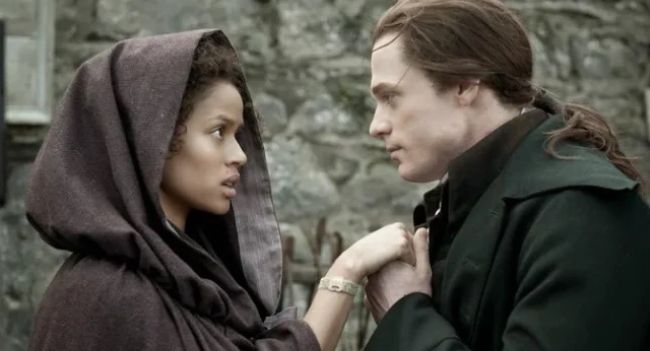
Belle: Gugu Mbatha-Raw Leads a Powerful Period Drama About Race, Love and Slavery
Amma Asante’s Belle turns an extraordinary 18th-century life into a richly staged period drama about race, class, gender and freedom. Inspired by the true story of Dido Elizabeth Belle, the film follows a mixed-race young woman raised within the household of Lord Mansfield while questions surrounding slavery, marriage and social status increasingly shape her world.
With Gugu Mbatha-Raw in the title role and Tom Wilkinson as Lord Mansfield, the 2013 film combines the conventions of a romantic costume drama with the history of Britain’s slave trade. Its central story unfolds between elegant country-house society and one of the most significant legal questions of the period, giving Belle a broader purpose beneath its polished exterior.
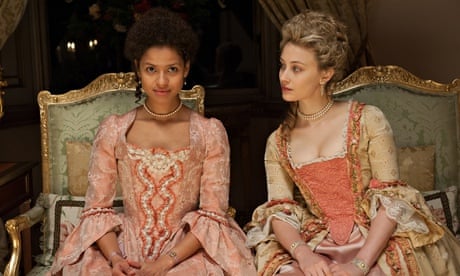
The Painting That Inspired Dido’s Story
The film takes its inspiration from the famous portrait of Dido Elizabeth Belle and her cousin, Lady Elizabeth Murray.
The unsigned painting depicts the two young women together, with Dido positioned slightly higher than her white cousin. That unusual composition has long attracted attention because it suggests a degree of equality that would have been striking in late-18th-century British society.
Screenwriter Misan Sagay uses the painting as a starting point, combining the historical record with fictional elements to imagine Dido’s life and relationships. The approach recalls Girl with a Pearl Earring, another film inspired by a mysterious painting and the limited historical information surrounding its subject.

Who Was Dido Elizabeth Belle?
Dido Elizabeth Belle was the illegitimate daughter of Royal Navy captain John Lindsay and Maria Belle, an African woman.
She was brought to England and raised at Kenwood House in north London by her great-uncle, William Murray, Earl of Mansfield. There, she grew up alongside her half-cousin, Lady Elizabeth Murray.
Her position within the household was unusual. Dido was treated as part of the family, but the social conventions of the period still placed limits on where she belonged.
The film builds much of its emotional conflict around that contradiction. Dido is too socially elevated to live alongside the servants, yet her race prevents her from being treated entirely like the white members of her family in formal society.
The real Dido’s life was also more complicated than the film can fully capture. Historical accounts indicate that she remained at Kenwood after Lady Mansfield’s death, helping to care for Lord Mansfield. He provided for her in his will, and she later married and left Kenwood. She died in 1800 in her early 40s.

Love, Marriage And Social Expectations
As Dido grows older, marriage becomes another source of pressure.
Her story is intertwined with that of Elizabeth, whose own position is constrained by the expectations of aristocratic society. While Dido possesses financial security, her race complicates her place within the marriage market. Elizabeth, meanwhile, has social standing but far less financial independence.
That contrast allows Belle to explore different forms of restriction facing women in the period.
Dido’s potential relationships also bring questions of class and prejudice to the surface. Among the men who enter her world is John Davinier, played by Sam Reid, a clergyman’s son and abolitionist figure who becomes her romantic interest.
The film uses their relationship to connect Dido’s personal search for independence with the wider political questions surrounding her family.
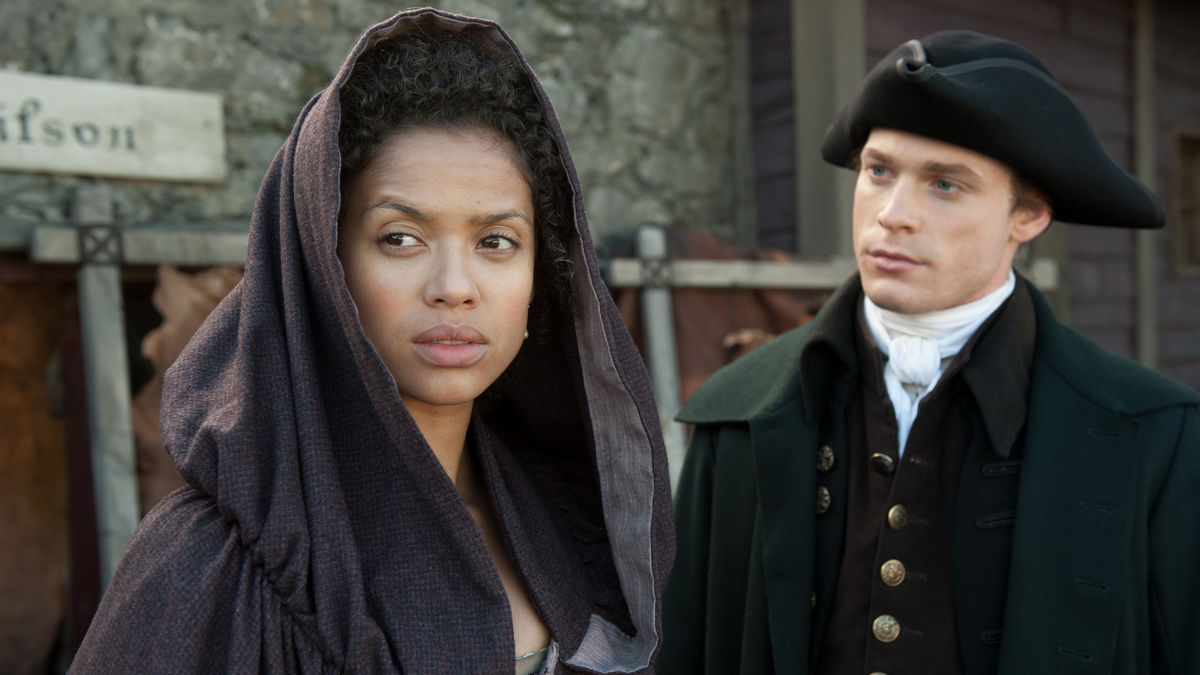
Lord Mansfield And The Zong Case
The most significant historical thread involves Lord Mansfield’s work as Lord Chief Justice.
Mansfield presided over important cases concerning slavery, including the 1772 Somerset case and the legal proceedings arising from the Zong tragedy.
The Zong case involved a slave ship whose crew threw enslaved people overboard, with the owners subsequently seeking insurance compensation. The case therefore brought questions about human lives, property and the legal status of enslaved people directly into the courtroom.
Belle connects this legal conflict to Dido’s own position within British society. As the case develops, the film increasingly brings together its two central strands: the private struggle of a young woman defining her identity and the public debate over slavery.
However, the film takes considerable dramatic liberties with Dido’s direct involvement in Mansfield’s legal decision. Contemporary evidence cannot establish that she played the pivotal role depicted on screen.

Gugu Mbatha-Raw Leads A Strong Cast
Gugu Mbatha-Raw anchors the film with a performance that captures Dido’s intelligence, uncertainty and growing independence.
Tom Wilkinson plays Lord Mansfield as a man caught between his personal feelings about slavery and the pressures surrounding the British establishment.
Penelope Wilton appears as Lady Mary Murray, while Sam Reid plays John Davinier. The cast also includes Sarah Gadon, Miranda Richardson, Tom Felton, James Norton, Matthew Goode and Emily Watson.
Asante’s background as an actor before moving into writing and directing also informs the film’s ensemble work. Her feature debut, A Way of Life, was released in 2004, and Belle marked another step in her development as a filmmaker.
A Period Romance With A Larger Purpose
Asante has described Belle as combining familiar Jane Austen-style elements — courtship, marriage prospects, social status and romantic longing — with the history of slavery and its eventual abolition.
That combination gives the film two distinct identities. On one level, it offers lavish costumes, country-house settings and romantic drama. On another, it uses Dido’s unusual position to examine how race, gender and class shaped a person’s freedom.
The film’s historical accuracy has been debated, particularly regarding Dido’s political views and her influence over Mansfield. But even critics who have questioned those creative choices have recognized the emotional strength of Mbatha-Raw’s performance and the film’s ability to bring questions of race and social inequality into a mainstream period drama.
A Story About Freedom
At the heart of Belle is the tension between privilege and restriction.
Dido has advantages that many women of her time did not: education, financial security and a place within an aristocratic household. Yet those privileges do not erase the prejudice surrounding her race or the limitations placed on women.
The film ultimately connects her personal struggle for independence with the much larger question of human freedom raised by the Zong case.
That balance between romance and history is what gives Belle its distinctive character. It looks like a traditional costume drama, but beneath the gowns, country houses and marriage plots lies a story about a woman trying to determine where she belongs — and how much freedom she can claim in a society determined to define her place for her.