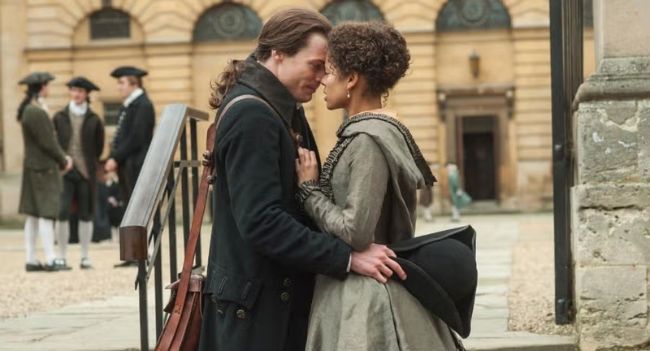
Belle: The Acclaimed Period Drama Jane Austen Fans Should Not Miss

If the elegance, romance and social tension of Jane Austen adaptations are your kind of period drama, Belle offers a compelling alternative — one that combines lavish Georgian settings with a story shaped by race, class, marriage and belonging.
Directed by Amma Asante and written by Misan Sagay, the 2013 British film stars Gugu Mbatha-Raw as Dido Elizabeth Belle, a mixed-race woman raised within the household of Lord Mansfield, one of the most powerful figures in 18th-century Britain.
The film is inspired by Dido’s real life, but it is firmly a work of historical fiction. The surviving evidence about her is limited, giving the filmmakers room to construct a dramatic story around the remarkable circumstances of her upbringing.
That blend of romance and history is part of what makes Belle stand out from more conventional costume dramas.
The Extraordinary Life Behind the Film
Dido Elizabeth Belle was the illegitimate daughter of Royal Navy officer Sir John Lindsay and an African woman named Maria Bell(e). Born in 1761, Dido was eventually placed in the care of her father’s great-uncle, William Murray, who would become the 1st Earl of Mansfield and Lord Chief Justice of England.
She spent much of her life at Kenwood House in Hampstead, London, where she was raised alongside her cousin Lady Elizabeth Murray.
Dido’s position within the household was unusual for the period. Evidence indicates that she was educated in reading, writing and music and was raised to move within aristocratic society. She also received an allowance and took responsibility for Kenwood’s dairy and poultry yard. English Heritage describes the circumstances as highly unusual for the era: Dido, a mixed-heritage child born to a formerly enslaved mother, was brought up within a powerful aristocratic family rather than as a servant.
Yet her position was not entirely equal to that of her white relatives.
A visitor to Kenwood in 1779 recorded that Dido did not formally dine with the family and its guests, although she joined the ladies afterwards for coffee. That detail illustrates the complicated place she occupied within the household — close to the Mansfield family while still subject to social distinctions because of her race and illegitimacy.
The Portrait That Inspired Belle

One of the most important surviving pieces of evidence about Dido is a striking portrait of her with Lady Elizabeth Murray.
Painted by David Martin while the two women were living at Kenwood, the portrait is unusual for 18th-century British art because it presents a Black woman and a white aristocratic woman together rather than depicting the Black subject as a servant.
The painting has become closely associated with Dido’s story and served as a major inspiration for the film. The original is now at Scone Palace in Scotland, while Kenwood House displays a photographic reproduction.
The image also captures the complexity of Dido’s status. Her expensive clothing and jewellery reflect her privileged upbringing, while elements of the composition distinguish her visually from Elizabeth.
That tension — belonging to an aristocratic world without ever being completely free of its racial boundaries — becomes one of the central ideas explored by the film.
Romance Meets Questions Of Race And Class
As Dido and Elizabeth grow older, marriage and social expectations become increasingly important.
The film uses their contrasting circumstances to explore what life could look like for women in Georgian society. Elizabeth can enter the marriage market according to conventional expectations, while Dido’s mixed-race heritage complicates how she is viewed by potential suitors and the wider social world.
This gives Belle more substance than a conventional period romance. Its elegant houses, elaborate costumes and formal gatherings provide the familiar pleasures of the genre, but underneath them is a story about prejudice, privilege and the restrictions placed on women by society.
The film also connects Dido’s personal story with the wider debate surrounding slavery in Britain, particularly through her relationship with Lord Mansfield.
Mansfield served as Lord Chief Justice from 1756 to 1788 and presided over important cases concerning slavery. In the 1772 Somerset case, he ruled that an enslaver could not forcibly remove an enslaved person from England. English Heritage notes that the decision was significant but did not abolish slavery or the slave trade.
Gugu Mbatha-Raw Leads A Strong Ensemble
.jpg?crop=8:5,smart&quality=75&auto=webp&width=1000)
Gugu Mbatha-Raw takes the central role of Dido, with Tom Wilkinson playing Lord Mansfield.
The ensemble also includes Miranda Richardson, Penelope Wilton, Sam Reid, Matthew Goode and Emily Watson. Tom Felton, widely known for playing Draco Malfoy in the Harry Potter films, appears as one of the men within Dido’s social circle.
Mbatha-Raw’s performance was particularly well received, with critics praising the emotional depth she brings to Dido.
The film has also maintained a strong critical and audience reputation. Rotten Tomatoes currently lists an 84% Tomatometer score, based on roughly 150 critic reviews, while its audience score is also in the positive range.
How Closely Does Belle Follow Real History?
The short answer is: only partly.
The foundations of Dido’s story are real. She was raised at Kenwood under Lord Mansfield’s care, lived alongside Lady Elizabeth Murray and was the subject of the remarkable portrait that inspired the film.
But the movie rearranges and fictionalises significant parts of her life to create its romantic and dramatic narrative.
Most notably, the film places Dido’s romance and the legal debate surrounding slavery much earlier than they occurred in reality. Dido did not marry John Davinier when she was a young woman as shown in the film. The real Dido married in 1793, when she was 32, and John Davinier was a French manservant rather than the English apprentice lawyer portrayed on screen.
The film also presents Dido’s social position at Kenwood as somewhat more equal than the surviving evidence suggests. Historical accounts indicate that, although Mansfield treated her with affection and she was educated as a lady, she still occupied a more complicated position within the household.
The connection between Dido and the famous Zong case is another example of dramatic licence. The film brings Dido into the story surrounding the legal debate, while the historical evidence does not place her directly at the centre of that case.
Even so, the film’s historical liberties do not erase the importance of its real-life foundation. Instead, Belle uses the limited surviving record to construct a character-driven story around a woman whose unusual upbringing offers a window into Georgian Britain’s complicated attitudes toward race and status.
A Period Drama With More Beneath The Surface
For fans of lavish costume dramas, Belle delivers many of the expected pleasures: grand estates, formal gatherings, elaborate clothing and a carefully recreated Georgian world.
But its appeal comes from the contrast between that beautiful setting and the difficult questions at the centre of Dido’s story.
The real Dido occupied a remarkable position. She was raised within one of Britain’s most prominent aristocratic households and educated in ways that were highly unusual for someone of her background, yet historical evidence also shows that she did not enjoy exactly the same social standing as her white relatives.
That contradiction gives the film its emotional and historical weight.
For viewers who enjoy Jane Austen-inspired stories but want a period drama that explores a different side of British history, Belle offers romance and visual elegance alongside a much broader story about identity, prejudice, privilege and the search for belonging.
Belle is scheduled to air on Film4 at 6:45pm on 23 September 2026, giving audiences another opportunity to revisit Amma Asante’s acclaimed period drama.