Resistance Review: The Wartime Story Behind Marcel Marceau’s Legacy
Before Marcel Marceau became one of the most famous mime artists in the world, he was Marcel Mangel, a young Jewish performer caught in the growing shadow of Nazi Germany. Resistance brings that largely unfamiliar chapter of his life to the screen, focusing on his involvement in efforts to protect Jewish children during the Holocaust.
Directed and written by Jonathan Jakubowicz, the 2020 historical drama stars Jesse Eisenberg as the young Marceau, alongside Ed Harris, Clémence Poésy, Matthias Schweighöfer, Géza Röhrig and Bella Ramsey.
The film draws on Marceau’s wartime experiences and the work of his cousin Georges Loinger, a major figure in the rescue of Jewish children. Loinger was credited with helping hundreds of children escape occupied France, while Marceau himself used his emerging performance skills to comfort children and assist in their escape.
What makes the story remarkable is that the man at its centre had not yet become the internationally celebrated artist audiences would eventually know as Marcel Marceau.

Before The Mime Became A Legend
The film opens in 1938, when Marcel is still pursuing performance rather than a career in resistance.
The son of a Jewish kosher butcher, Marcel is expected to follow his father into the family business. Instead, he spends his free time painting and performing Chaplin-inspired routines at a local cabaret.
Eisenberg portrays him as uncomfortable and somewhat awkward in ordinary situations, but transformed whenever he performs. That contrast becomes central to the story: the very skills Marcel develops as an entertainer eventually become useful in helping frightened children survive an environment of war and persecution.
The historical record supports the idea that Marceau used mime to calm Jewish children during dangerous journeys. His cousin Georges Loinger later recalled that the children felt safe around Marcel, who had already begun performing for them.
Resistance turns that ability into one of its central themes — the idea that laughter and performance can offer a moment of relief even when the surrounding reality is almost unbearable.

The Mission To Protect Jewish Children
The story expands when Marcel becomes involved with the effort led by his cousin Georges.
In the film, Georges works with the Save the Children Foundation under the cover of a scouting operation designed to move Jewish orphans away from the Nazis. The children are gathered at a castle before being moved towards safety.
Marcel soon realizes that his talent can serve a purpose far beyond entertainment. He performs for the children, helps keep them calm and uses his understanding of performance to make frightening circumstances more manageable.
That connection between art and survival is one of the film’s strongest ideas.
Marceau’s real wartime activities were similarly extraordinary. Historical accounts say he helped Jewish children cross into Switzerland and used mime to keep groups of children quiet while they were being moved through dangerous territory. He also disguised himself as a Boy Scout leader during one of these operations.
The film, however, expands and dramatizes several events for the screen, meaning Resistance should be viewed as a historical drama inspired by real events rather than a precise reconstruction of every incident.

The Klaus Barbie Confrontation
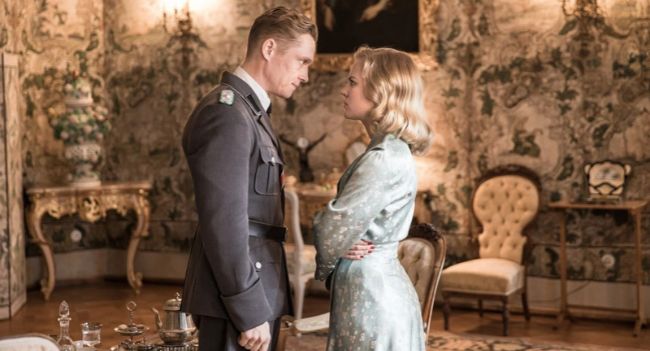
One of the film’s most tense sequences brings Marcel face to face with Klaus Barbie, the notorious Nazi officer played by Matthias Schweighöfer.
During a train journey, Marcel is travelling with children towards the border when Barbie becomes suspicious of him. Marcel’s Chaplin-inspired appearance becomes particularly dangerous when Barbie mistakes his moustache as an attempt to mock Adolf Hitler.
The encounter forces Marcel to rely on his instincts to prevent the situation from becoming even more dangerous.
The film later pushes his improvisational abilities even further during an elaborate attempt to rescue Georges from Nazi custody in a crowded public setting.
These sequences provide some of the film’s biggest bursts of tension, but they also highlight one of its weaknesses. At times, Resistance appears to bend the wartime narrative around the fact that its protagonist would eventually become a legendary mime.
Contemporary reviews noted that the film takes substantial dramatic liberties, including the fictionalized relationship between Marceau and Barbie. The Los Angeles Times reported that Jakubowicz acknowledged there was no evidence the two men actually interacted, despite Barbie’s role in the persecution of Jews in occupied France.
When The Drama Becomes More Formulaic
The real story behind Resistance is powerful enough to carry a film on its own, but the screenplay occasionally struggles to resist conventional biopic storytelling.
The romantic storyline involving Marcel and Emma, played by Clémence Poésy, is one example. Emma is portrayed as a courageous member of the Resistance, and her presence gives the film another emotional thread. Yet some of the romantic moments feel disconnected from the darker and more urgent events surrounding them.
A scene in which Marcel performs silently for Emma and presents her with a paper flower is particularly sentimental compared with the rest of the film.
The story does not really need that romance to make Marcel compelling. His work with the children and his growing involvement in the Resistance already provide the film with its strongest emotional foundation.
The same problem appears when Marcel’s mime skills are used as a dramatic device. His ability to communicate without words is naturally relevant to the story, but some sequences make the connection feel deliberately engineered rather than organic.
That criticism was also reflected in contemporary reviews, with The Guardian describing the film as well-intentioned but weighed down by familiar wartime-film conventions.
Jesse Eisenberg As Marcel Marceau
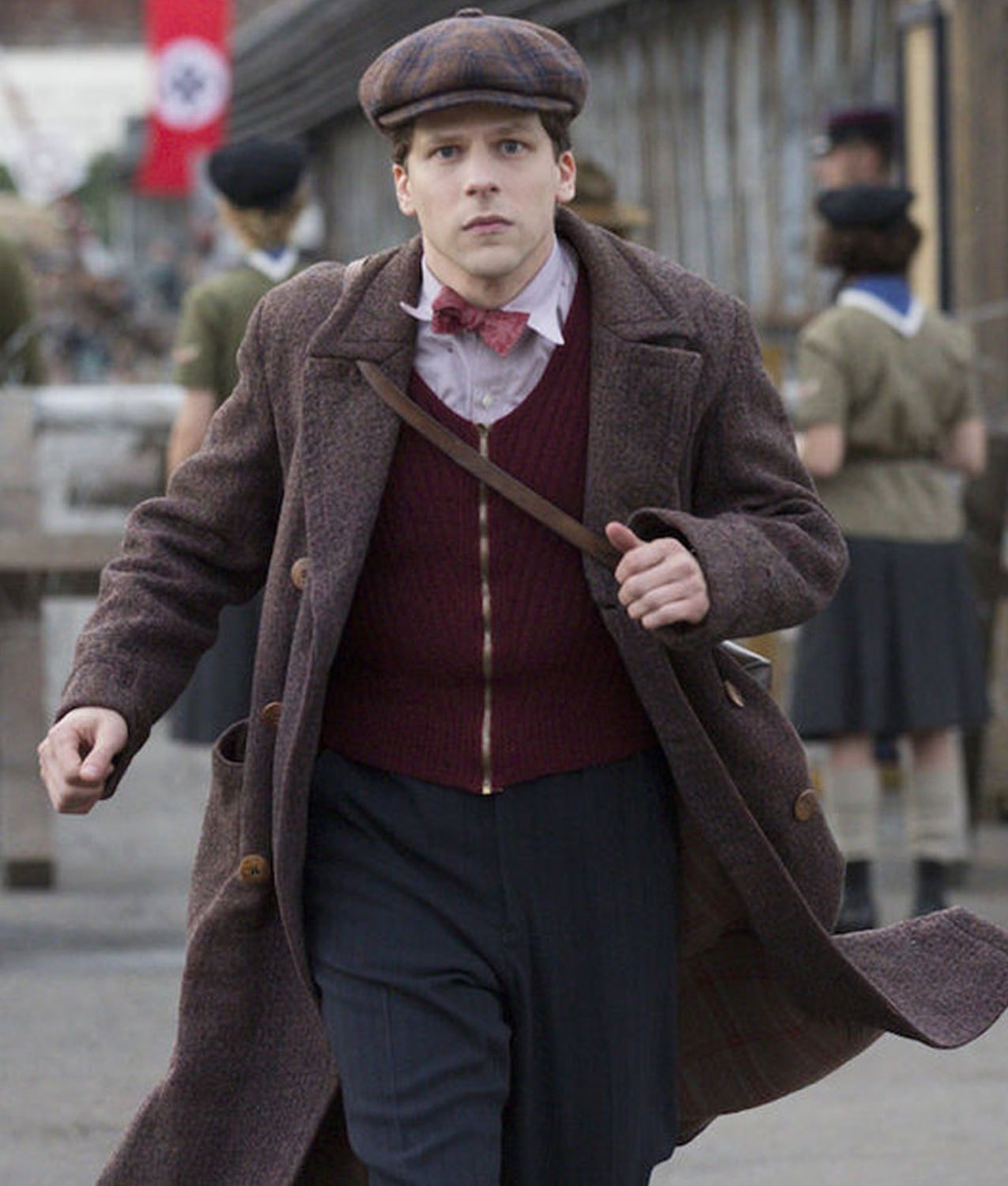
Eisenberg is one of the film’s most convincing elements.
He bears a resemblance to the young Marceau and captures the contrast between Marcel’s awkward personality and the confidence he displays when performing.
The actor also had to embody a character whose physical language would eventually become his defining artistic identity. When Marcel performs for the children, Eisenberg shifts into a more controlled and expressive physical style, showing why performance becomes such an important part of the character’s life.
Still, the film sometimes places too much emphasis on demonstrating that transformation.
Some of the mime sequences feel less natural when inserted into action scenes than they would in a performance setting. Rather than simply revealing who Marcel is, they can occasionally feel as though the screenplay is reminding the audience that this awkward young man will eventually become Marcel Marceau.
Even so, several critics found Eisenberg effective in the role. The Los Angeles Times noted his urgency, sympathy and grace, while also acknowledging that the actor was considerably older than Marceau had been during the period depicted.
The Patton Framing Device
The film also uses a framing story involving Ed Harris as General George S. Patton.
Set in 1945, the sequence has Patton introducing Marceau to American troops and inviting him to perform for them.
It gives the story a direct connection between Marcel’s wartime actions and the performer he would become after the war. But it can also feel somewhat unnecessary because the main story already carries considerable emotional weight.
The framing device does, however, have a basis in Marceau’s real life. Historical accounts note that he served as a liaison officer for Patton, and the film depicts his performance for American troops after the liberation of France.
Angelo Milli’s string-heavy score reinforces the film’s sombre atmosphere, helping maintain the sense of danger surrounding Marcel and the children.
A Story That Never Loses Sight Of The Darkness
Despite its moments of humour and hope, Resistance remains a dark wartime drama.
The central mission involves rescuing children, but the film does not shy away from the brutality of Nazi occupation. Violence, torture and executions are part of the story, making the film unsuitable for younger audiences despite the prominence of children among its characters.
One particularly disturbing sequence shows Klaus Barbie responding brutally after realizing that his men have been outmaneuvered by Marcel and the Resistance.
The violence serves a clear dramatic purpose. Marcel’s ability to create laughter for frightened children exists alongside a world capable of extraordinary cruelty.
That contrast gives the title Resistance its broader significance.
What Resistance Is Really About
The most affecting part of Resistance is not simply watching a future star discover his artistic identity.
It is seeing a young man confronted with circumstances that could have overwhelmed him, yet finding a way to use his talents to help others.
The historical Marcel Marceau did far more than entertain audiences after the war. During the Holocaust, his performance skills became part of the effort to protect Jewish children. Historical accounts credit him with helping save at least 70 Jewish children, while his cousin Georges Loinger was responsible for rescuing hundreds more.
That distinction matters because the film works best when Marcel is viewed not as the future celebrity, but as a young Jewish man trying to help people in immediate danger.
His later fame gives the story an intriguing ending, but it is not what makes his wartime experience extraordinary.
The most powerful idea at the heart of Resistance is that, amid violence and fear, Marcel found a way to create moments of calm and happiness for children who had every reason to be terrified.
Long before the world knew Marcel Marceau, there was Marcel Mangel — and that is the story this film is ultimately most interested in telling.