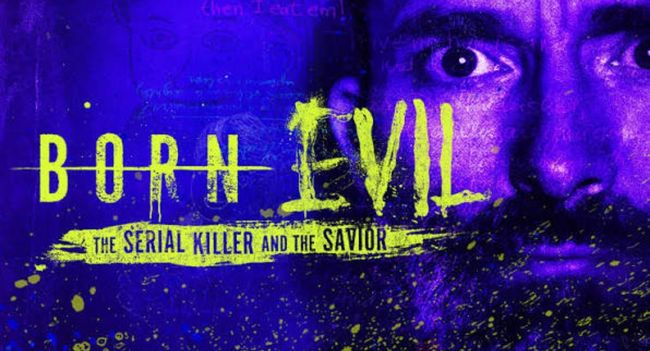
‘Most Disturbing’ True-Crime Docuseries Leaves Even Seasoned Fans Feeling Sick — Some Couldn’t Make It Past the Opening Minutes
Even viewers who regularly binge the darkest corners of true crime have admitted that Born Evil: The Serial Killer and the Savior proved difficult to stomach, with some saying they switched it off within minutes and others revealing they had to skip particularly disturbing scenes.
Originally released in September 2024, the five-part documentary series examines convicted killer Hadden Clark, his deeply troubled family history and the extraordinary relationship he developed with a prison cellmate whom Clark came to believe was Jesus Christ.
Now available to British viewers through HBO Max and NOW, the series has found a fresh audience — and the reaction has been intense.
A True-Crime Story That Begins With an Extraordinary Prison Relationship
At the heart of Born Evil is Hadden Clark and the crimes for which he was imprisoned, alongside his claims about other killings that investigators attempted to connect to unresolved cases.
But one of the strangest elements of the story concerns Clark’s relationship with fellow inmate Jack Truitt.
While behind bars, Clark became convinced that Truitt was Jesus Christ and his personal savior. That belief opened the door to a series of disturbing confessions, with Truitt becoming the recipient of information about Clark’s life and alleged crimes.
The documentary follows the consequences of those conversations as investigators examine whether Clark’s claims could provide answers in additional cold cases.
It also explores the wider Clark family, Clark’s traumatic childhood and a history of violence that forms an important part of the series’ attempt to understand the world from which he emerged.
Michael Bay Had Unusual Access to Hadden Clark
The name behind the documentary may surprise viewers.
Born Evil marked filmmaker Michael Bay’s first venture into true-crime documentary television.
Best known for large-scale Hollywood films including Bad Boys, Armageddon and the live-action Transformers movies, Bay served as an executive producer on the series and became directly involved in the investigation of Clark’s story.
Most significantly, Bay was granted unusual access to Clark himself.
The documentary incorporates private recorded conversations that Bay personally conducted with Clark, allowing viewers to hear from the convicted killer rather than relying exclusively on investigators, relatives and archival material.
According to reporting surrounding the documentary’s original release, Bay accumulated more than 14 hours of recorded prison conversations with Clark while developing the project.
That access became one of the defining features of the series.

The Five Episodes Dig Into the Clark Family and Unsolved Cases
Rather than treating Clark’s story as a straightforward chronological account of a single criminal investigation, Born Evil expands outward.
Across five episodes, it examines crimes linked to Clark, his family background, his prison confessions and investigators’ attempts to determine whether those claims might connect him to additional cases.
Clark’s brother Geoff also participates in the documentary, speaking publicly about the family.
Truitt’s testimony becomes another central element as the series explores how his unusual relationship with Clark developed and how the information Clark gave him eventually reached investigators.
The documentary’s official synopsis describes the story as an examination of the volatile Clark family, Hadden’s path toward violence and the confessions that prompted investigators to look again at possible cold-case connections.
The opening episode immediately establishes how unsettling that relationship became.
Clark begins sharing details about his life after becoming convinced his new cellmate is Jesus Christ.
From there, the investigation grows beyond the crimes already associated with him.

Clark’s Claims Come With an Important Question
One of the unsettling complications running through Born Evil is that Clark has claimed responsibility for considerably more violence than the crimes definitively attributed to him.
That means the documentary must navigate the difference between proven crimes, statements made by Clark and allegations investigators attempted to verify.
The series does not simply present every confession as established fact. Instead, much of its mystery comes from the attempt to determine whether any of Clark’s statements could lead investigators toward genuine answers in unresolved cases.
That distinction is particularly important given the extraordinary nature of some of the material explored throughout the five episodes.
The result is a documentary that isn’t only asking what Clark did.
It is also asking how much of what he says can be believed.

Some Viewers Found the Presentation Difficult to Watch
The programme warns audiences before the story begins that it contains material some viewers may find disturbing.
For certain true-crime fans, that warning proved particularly appropriate.
One viewer described it as the most disturbing true-crime documentary series they had encountered despite having watched a large amount of material from the genre.
Another said they were accustomed to true-crime documentaries but lasted only around three minutes before turning Born Evil off because they found it too creepy.
Others warned prospective viewers that the series contains seriously disturbing material.
The reaction wasn’t limited to the details of Clark’s crimes.
One viewer specifically said they had to skip through part of an interrogation sequence because they found what they were watching so upsetting that it left them feeling sick.
The Documentary’s Style Has Also Divided Viewers
Bay’s involvement gives Born Evil a noticeably different presentation from many conventional true-crime documentaries.
His background is in high-energy blockbuster filmmaking rather than traditional factual television, and some critics noticed that immediately.
One review praised the access to Clark’s journals and illustrations but criticized the production for emphasizing drama through techniques such as reenactments and rapid editing when the underlying story was already disturbing enough without additional embellishment.
Another review similarly argued that Bay’s filmmaking instincts created an uneasy fit with the rhythms of true-crime documentary storytelling, describing the result as disorienting rather than consistently effective.
That unconventional approach may help explain why reactions have been so polarized.
For some viewers, the style intensifies an already horrifying story.
For others, it makes extremely difficult subject matter even harder to process.
The Series Became a Major Audience Success
Whatever viewers thought about its presentation, Born Evil attracted considerable attention when it originally premiered.
The five-part series debuted on Investigation Discovery and Max in the United States on September 2, 2024.
During its first week, it drew 6.4 million viewers across Investigation Discovery, Max and discovery+, according to figures reported by TheWrap at the time.
That made Bay’s first true-crime documentary project a notable audience success despite the uncomfortable nature of its subject.
The programme’s appeal lies partly in the fact that Hadden Clark isn’t as familiar to mainstream audiences as many killers repeatedly covered by documentaries and dramatizations.
Instead of revisiting one of true crime’s most heavily documented cases, Born Evil introduces many viewers to a disturbing story they may know little about.
Jack Truitt Becomes Crucial to the Entire Story
Despite Clark being the subject of the series, Truitt’s role gives the documentary its unusual title and much of its narrative momentum.
Clark believed Truitt was Jesus.
Truitt allowed that belief to continue.
And Clark began confessing.
Those conversations eventually expanded beyond the crimes for which Clark was already known, prompting further attention from law enforcement and raising questions about other cases.
Later episodes follow investigators as they work with information emerging from the relationship, including efforts to search for bodies and clues connected to Clark’s claims.
That dynamic turns Born Evil into something stranger than a conventional serial-killer documentary.
It isn’t simply a retrospective examination of solved crimes.
It becomes an investigation into whether the words of an imprisoned murderer can still reveal truths about cases that have remained unanswered for years.
Why Born Evil Has Proved So Difficult to Shake
True-crime television is hardly short of disturbing stories, but Born Evil combines several elements that make it particularly uncomfortable.
There are Clark’s crimes.
There are his claims about other victims.
There is the history of violence surrounding his family.
And then there is his extraordinary conviction that the man sharing his prison cell was Jesus Christ — a belief that encouraged him to reveal information he might otherwise have kept hidden.
The documentary’s direct access to Clark adds another layer. Rather than keeping him at a historical distance, the recorded conversations allow his voice to become part of the series itself.
For viewers fascinated by criminal psychology and unresolved investigations, that makes Born Evil compelling.
For others, it makes the series simply too uncomfortable to continue watching.
And judging by the reactions of people who consider themselves seasoned true-crime fans, this may be one of those documentaries where the viewer-discretion warning deserves to be taken especially seriously.
Born Evil: The Serial Killer and the Savior is a five-part true-crime documentary series. In the UK, it is currently available through HBO Max and NOW.