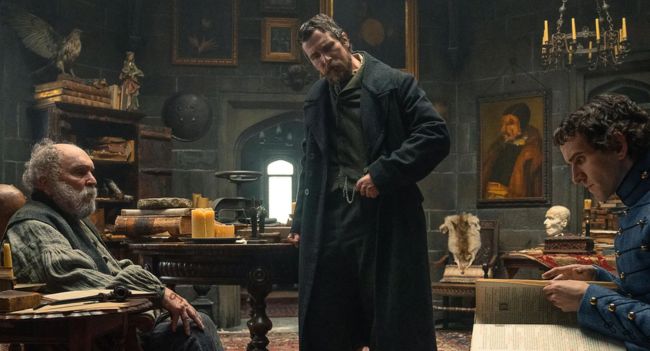
Netflix’s Gothic Mystery Thriller The Pale Blue Eye Delivers a Dark Detective Story With a Twist
A gruesome murder at a military academy. A young Edgar Allan Poe drawn into the investigation. And a detective whose pursuit of the truth eventually leads somewhere far more disturbing than expected.
That is the premise behind The Pale Blue Eye, the 2022 Netflix gothic mystery thriller starring Christian Bale, Harry Melling and Gillian Anderson. Based on Louis Bayard’s acclaimed 2006 novel, the film combines a slow-burning murder investigation with a bleak period setting and a final revelation designed to make viewers reconsider what they have seen.
A Murder Mystery Set at West Point

The story takes place at West Point Military Academy in 1830, where a cadet is discovered dead under horrifying circumstances. The situation becomes even more disturbing when investigators discover that his heart has been removed from his body.
The academy turns to Augustus Landor, a veteran detective played by Christian Bale, to quietly investigate the killing. But the cadets are reluctant to cooperate, leaving Landor struggling to make progress within a community bound by secrecy and loyalty.
His investigation takes an unexpected turn when he enlists Edgar Allan Poe, a young cadet with a sharp mind and a fascination with poetry and the macabre.
Although the real Poe did attend West Point for a brief period, his involvement in the murder investigation is entirely fictional. Bayard’s novel uses the historical figure as part of an imagined story about the young writer before he became one of America’s most celebrated literary figures.
Christian Bale Leads a Strong Ensemble

Bale brings a restrained intensity to Augustus Landor, a detective whose personal history gradually becomes increasingly important to the case.
Harry Melling plays the young Poe, portraying him as an eccentric and observant cadet who becomes deeply invested in the mystery. The film also features Gillian Anderson, Lucy Boynton, Charlotte Gainsbourg, Toby Jones, Timothy Spall, Simon McBurney and Robert Duvall.
The setting plays an equally important role. Snow-covered grounds, isolated buildings and the oppressive atmosphere of the military academy give the investigation a distinctly gothic quality, reinforcing the film’s sense of isolation and unease.
Rather than relying on constant action, The Pale Blue Eye takes a slower approach, allowing suspicion to build as Landor and Poe move from one unsettling clue to another.
The Mystery Goes Much Deeper Than It First Appears

At first, the investigation appears to center on the ritualistic murders and the disturbing removal of the victims’ hearts. As more clues emerge, Landor and Poe begin to uncover connections involving the wealthy Marquis family and occult practices.
The case eventually leads to a revelation involving Lea Marquis, who is seriously ill, and her brother Artemus. Their actions explain part of the grisly mystery — but they are not responsible for the murders themselves.
The film’s biggest twist arrives when Poe finally pieces together the truth about Landor.
Landor, who has appeared throughout the story as the detective trying to find the killer, is ultimately revealed to have murdered the cadets himself. His actions are connected to the death of his daughter, Mattie, who had taken her own life after being brutally attacked by West Point cadets.
That revelation transforms the entire investigation. The detective viewers have followed as their guide through the mystery was hiding a devastating personal motive all along.
Scott Cooper, who wrote and directed the film, deliberately planted clues throughout the story so that certain moments take on a different meaning once the ending is known. Christian Bale has also said the twist surprised him, while Harry Melling described the revelation as something that completely floored him.
A Fictional Poe Story With Historical Roots
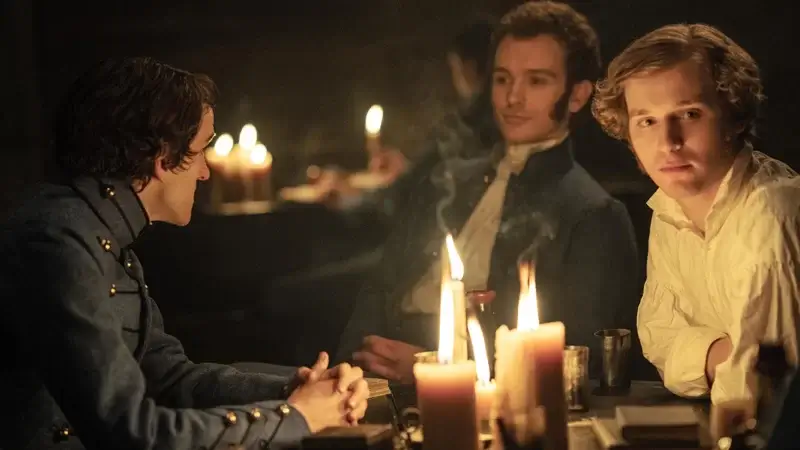
Despite using Edgar Allan Poe as a central character, The Pale Blue Eye is not a true story.
The film draws on the real writer’s time at West Point, but the murder investigation, Augustus Landor and Poe’s partnership with him come from Bayard’s historical-fiction novel.
The title itself is also connected to Poe’s work, with Bayard drawing inspiration from “The Tell-Tale Heart” and other elements of Poe’s writing when constructing the story.
The result is a story that uses a recognizable historical figure while creating an entirely fictional mystery around him.
A Slow-Burn Thriller for Fans of Atmospheric Mysteries
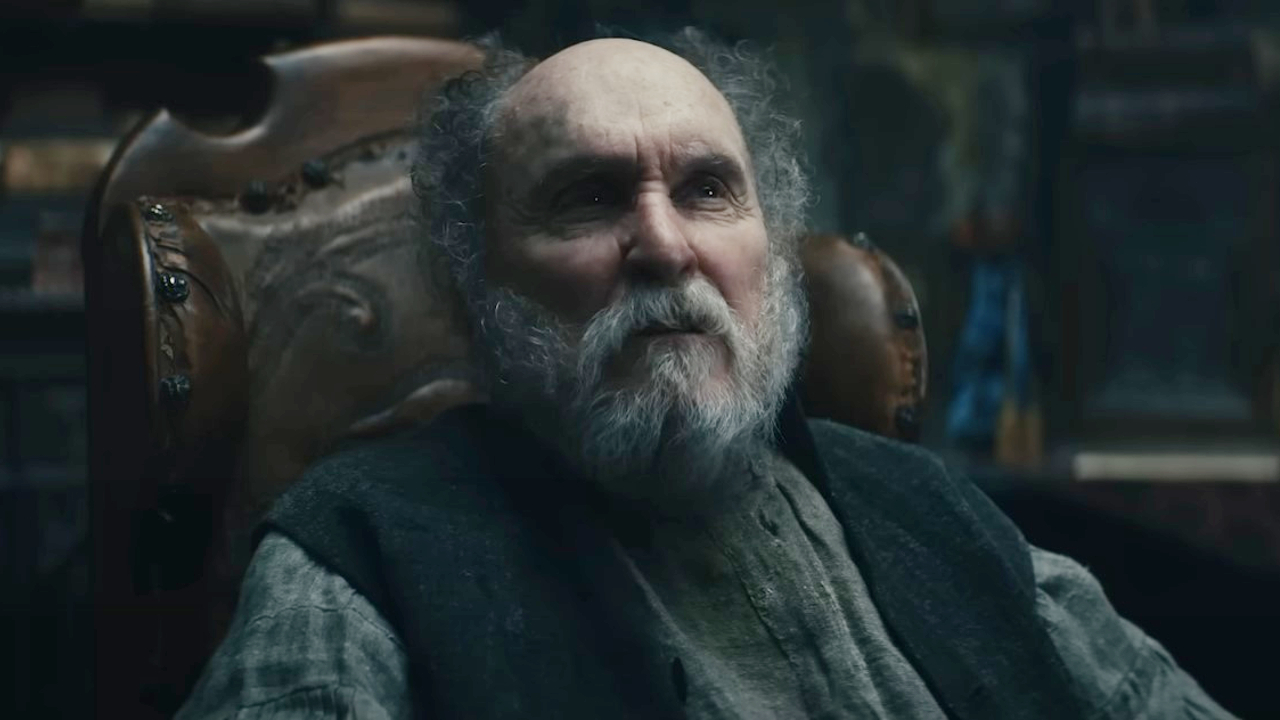
The Pale Blue Eye is not built around rapid twists or nonstop action. Its appeal lies in the atmosphere, the performances and the gradual unraveling of a mystery that becomes increasingly personal.
The film’s final revelations also give the story a different meaning on a second viewing, with details that initially seem incidental taking on greater significance once Landor’s secret is known.
For viewers looking for a dark period mystery with a strong ensemble cast, a gothic atmosphere and a carefully constructed final twist, The Pale Blue Eye remains a distinctive Netflix thriller.
The film is currently available to stream on Netflix.