Dragonfly Ending Explained: How Loneliness, Grief and a Broken Friendship Push Colleen Toward the Film’s Devastating Final Act
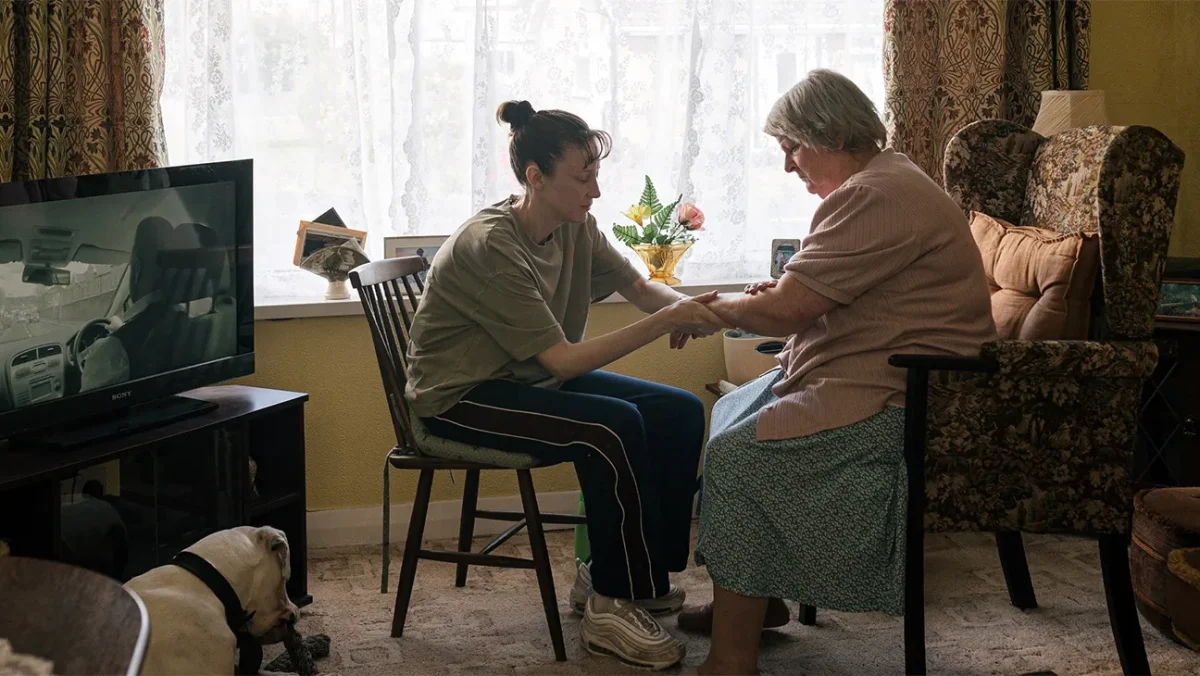
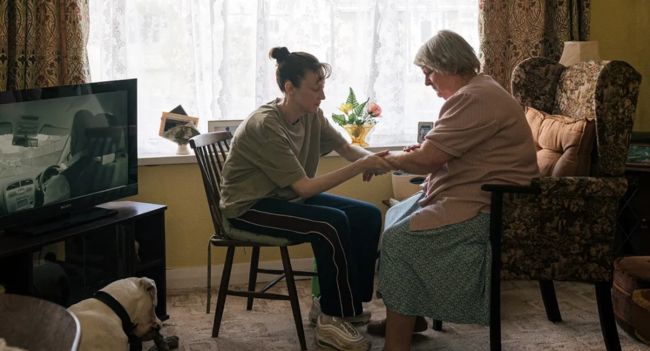
For most of Dragonfly, almost nothing seems extraordinary. Two lonely women live beside each other in modest suburban bungalows. One is elderly and increasingly dependent on other people; the other is younger, isolated and struggling to find any real purpose in her life. They begin sharing tea, errands and conversation.
Then something breaks.
Paul Andrew Williams’ 2025 psychological drama spends most of its 98-minute running time building an intimate relationship between Elsie, played by Brenda Blethyn, and Colleen, portrayed by Andrea Riseborough. Their friendship initially feels like a small act of resistance against loneliness and an inadequate care system. But beneath that companionship lies an increasingly fragile dependence, and when outside interference destroys something Colleen considers irreplaceable, the story veers toward tragedy.
Williams has described Dragonfly as a character-first film, explaining that he began with Elsie and Colleen rather than constructing the story around a predetermined ending. The characters were partly inspired by people from his own family and childhood, helping give their quiet routines an unusually naturalistic quality.
Spoilers for Dragonfly follow.
Two lonely women who need very different things
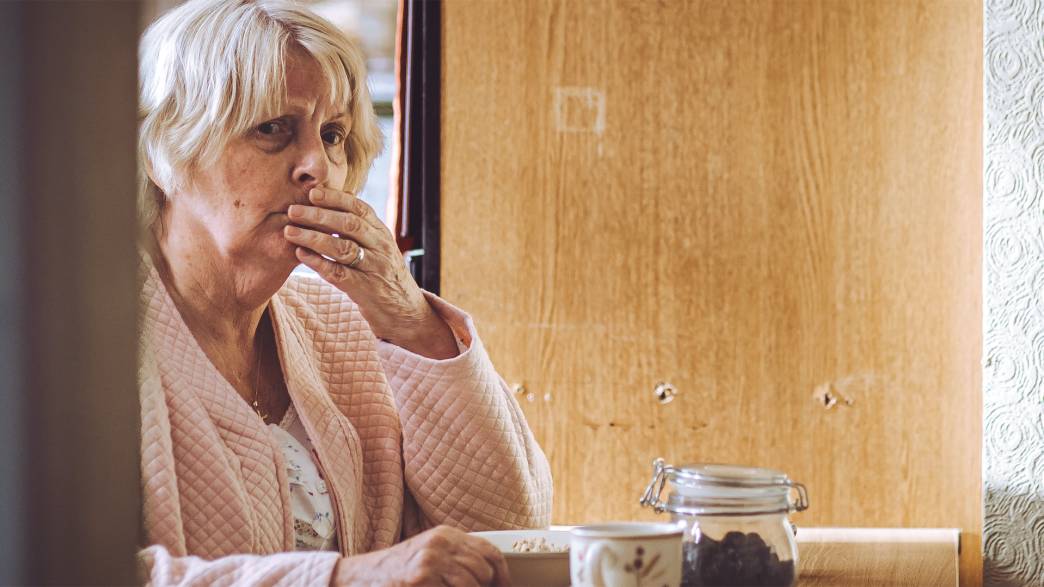
Elsie is an elderly widow determined to retain her independence.
After suffering a fall, she receives visits from professional carers arranged by her son John, played by Jason Watkins. The arrangement may keep her physically safe, but it does little to ease her isolation. The carers have limited time, move from appointment to appointment and cannot provide the companionship Elsie increasingly needs.
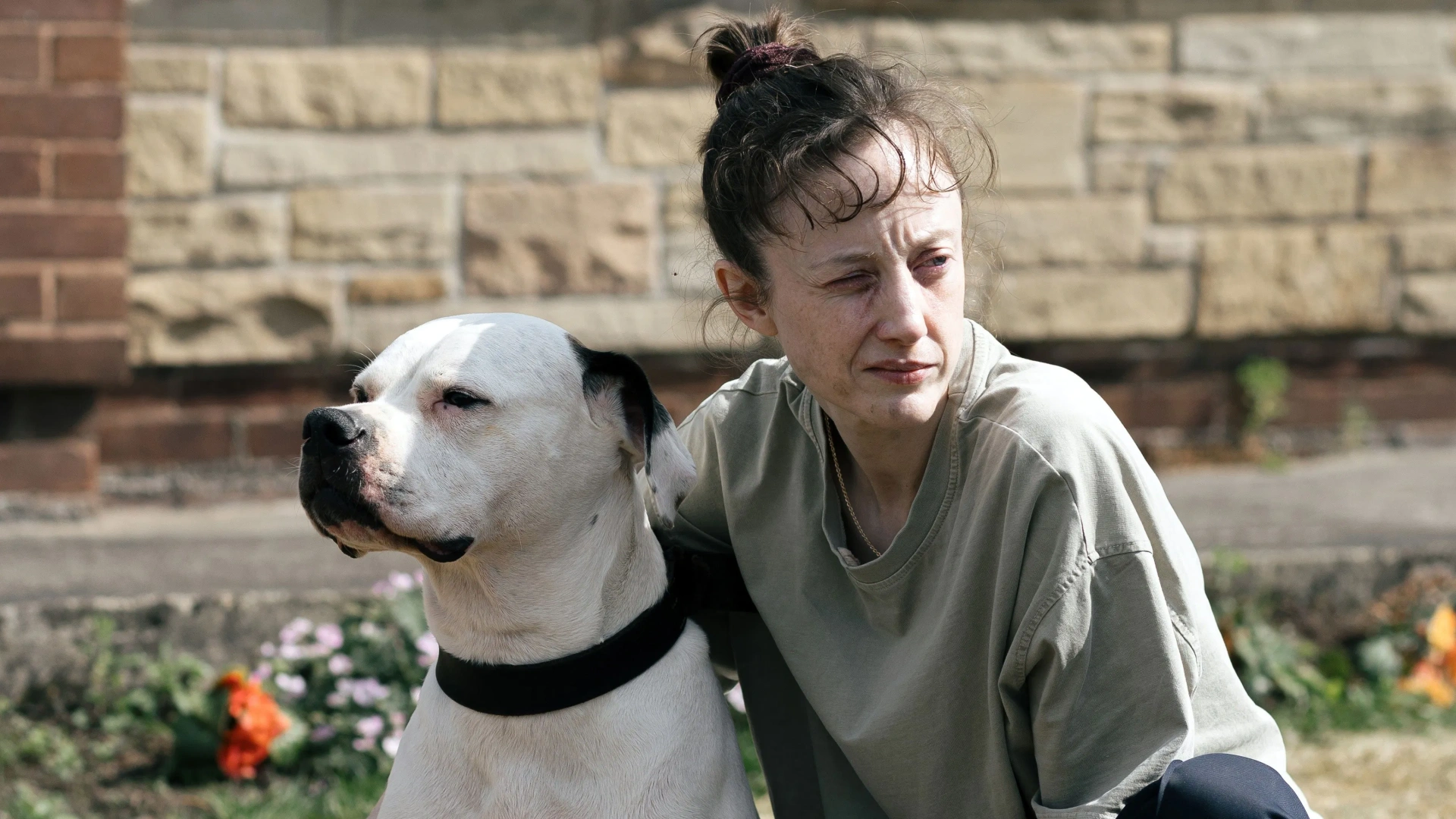
Colleen lives next door with her bull terrier, Sabre.
She is significantly younger than Elsie but appears just as disconnected from the world around her. She has no meaningful social network, struggles financially and spends much of her life alone with her dog.
That shared isolation gradually pulls the women together.
After noticing the impersonal nature of Elsie’s care, Colleen begins offering practical help. She goes shopping for her, spends time in the bungalow and eventually provides a two-way radio so they can remain in contact.
Critics have repeatedly identified that connection as the film’s emotional core. Time Out described the women as two isolated people finding a gentle connection, while noting that the relationship also feels alarmingly fragile from the beginning.
Why Colleen becomes so attached to Elsie
Colleen does not simply enjoy helping Elsie.
She appears to need to be needed.
Her life offers very little structure, security or emotional recognition. Caring for Elsie gives her all three. Suddenly she has someone waiting for her, someone grateful when she arrives and someone who accepts her without demanding that she explain herself.
For Elsie, the arrangement fills a different absence.
She wants independence but also craves genuine human contact. Her son cares about her, yet he is not consistently present. The professional carers perform necessary tasks, but their relationship with Elsie is necessarily limited by time and workload.
Colleen offers something neither can provide: companionship without a schedule.
Williams uses that relationship to examine what happens when kindness becomes entangled with emotional dependency. Tribeca’s description of the film similarly emphasizes its interest in alienation, connection and the possibility for both kindness and cruelty to emerge from people desperate not to be alone.
John sees danger where Elsie sees friendship

John becomes increasingly uneasy about Colleen.
From his perspective, a younger stranger has suddenly inserted herself into his vulnerable mother’s life without requesting payment. What Elsie interprets as generosity, John begins interpreting as suspicious.
His concern is not entirely irrational.
Elsie is elderly and vulnerable, and Colleen’s intense attachment to her creates legitimate questions about boundaries. But John’s suspicion is also complicated by guilt. Colleen is providing the companionship that he himself has not consistently provided.
The result is an uncomfortable triangle.
Elsie trusts Colleen. Colleen increasingly depends emotionally on Elsie. John increasingly believes he must protect his mother from Colleen.
The film deliberately refuses to give the viewer an easy answer about who is “right.” That ambiguity is central to its tension.
Sabre is much more than Colleen’s dog

The relationship changes irrevocably because of Sabre.
For Colleen, the dog is not merely a pet. Sabre is effectively her family and one of the only stable emotional relationships in her life before Elsie enters it.
John becomes concerned about the animal and reports it to the authorities.
The consequences are catastrophic.
Police arrive to remove Sabre. Colleen desperately resists, is arrested and later discovers the dog has been euthanized.
That moment destroys the emotional structure holding her life together.
Elsie realizes John was responsible for the report, while Colleen also understands where the intervention originated.
From John’s point of view, he may believe he has removed a potential danger.
From Colleen’s perspective, however, he has taken away the companion who gave her unconditional affection and then threatened the only other relationship that had begun giving her life meaning.
Why Sabre’s death becomes the breaking point
Colleen has spent much of the film appearing emotionally restrained.
Riseborough rarely plays her feelings openly. Instead, anger, embarrassment, vulnerability and loneliness sit underneath an almost deliberately blank exterior.
That restraint makes Sabre’s death even more significant.
Colleen has already been living with financial insecurity, social isolation and an almost complete absence of emotional support. Elsie and Sabre are essentially the two relationships holding her together.
One is suddenly gone.
And she believes John is attempting to take the other away as well.
The film therefore does not present what follows as a simple case of revenge arising from a single incident. The loss functions more like the final pressure placed on someone whose emotional stability has already become dangerously fragile.
Williams’ decision to build the movie around isolation is important here. He has said Colleen draws from people he encountered growing up, while Riseborough described the character as immediately and deeply familiar when she first read the screenplay.
What happens to John?

After losing Sabre, Colleen disappears from Elsie’s usual routine.
Elsie attempts to contact her but receives little response.
Eventually Colleen returns late at night, already visibly destabilized. Elsie remains compassionate toward her despite being frightened.
Meanwhile John heads toward his mother’s home.
The film ultimately implies that Colleen confronts and kills him.
Williams does not transform the sequence into a conventional revenge thriller. Instead, the violence feels abrupt and disturbing precisely because so much of the film has previously consisted of ordinary conversations, cups of tea and small domestic routines.
Several critics identified this drastic tonal change as one of the film’s most divisive choices. Time Out praised the performances and emotional realism but argued that the late shift toward violence risks overwhelming some of the social themes established earlier. Other reviews similarly described the final section as a dramatic move from intimate character study into psychological thriller.
Why does Colleen kill John?

The supplied ending analysis interprets Colleen’s decision primarily as an explosion of grief, betrayal and emotional dependence.
John had initially behaved politely toward her. That makes his later actions feel, from Colleen’s perspective, especially treacherous.
More importantly, she believes he is responsible for Sabre’s death.
Colleen cannot emotionally process John’s actions as a protective decision made by a worried son. She experiences them as the deliberate destruction of something she loved.
Her sense of betrayal becomes even deeper because she also believes John wants her removed from Elsie’s life.
So the confrontation is not simply about the dog.
John represents the possibility that Colleen will once again be completely alone.
That does not excuse what she does, and the film does not ask the audience to treat her violence as justified. Instead, it depicts a person whose grief, anger and psychological instability overwhelm whatever ability she has left to respond rationally.
Why Colleen’s relationship with Elsie makes the ending even more painful
Elsie is the one person whose opinion still matters to Colleen.
That creates another unbearable conflict.
Colleen wants revenge on John, yet hurting him inevitably means devastating Elsie — the same woman whose affection has given her a reason to keep moving through her days.
After the confrontation, Colleen returns to Elsie in visibly terrible condition.
Elsie gradually understands what has happened.
The supplied interpretation reads Colleen’s subsequent self-destructive actions as partly rooted in her inability to face Elsie after destroying the family of the only person who truly valued her.
That transforms the ending from a straightforward act of retaliation into something more psychologically complicated.
Colleen has destroyed the very relationship she was trying desperately to protect.
Elsie ultimately loses everyone
The final tragedy belongs almost as much to Elsie as to Colleen.
At the beginning of the film, Elsie’s greatest fear is losing control over her own life.
She does not want to become dependent on her son. She dislikes the impersonal rhythms of professional caregiving. She wants to stay in her home and continue living on her own terms.
Her friendship with Colleen briefly makes that possible.
But by the end, John is gone and Colleen is no longer there to support her.
Elsie is eventually placed in residential care.
The outcome is particularly cruel because it represents precisely what she had spent the film trying to avoid.
She survives, but survival comes with the loss of independence, companionship and the familiar world around her.
The meaning behind the title Dragonfly
The movie opens with a line from James Thurber’s The 13 Clocks: “Time is for dragonflies and angels. The former live too little and the latter live too long.”
The supplied interpretation connects Colleen with the dragonfly and Elsie with the angel.
Colleen’s life is emotionally compressed and unstable, while Elsie faces the opposite fate: continuing onward after nearly everyone important around her has disappeared.
The title therefore becomes less about literal lifespan than the different ways people experience time.
For Colleen, time feels empty until she becomes necessary to someone.
For Elsie, time increasingly becomes something she must endure.
The final image of Elsie in care gives that metaphor its bleakest expression.
Dragonfly is really about what happens when people stop being seen
The violence may dominate discussions of the ending, but the film spends considerably more time examining the conditions surrounding it.
Elsie is neglected by a care system that can meet practical needs without necessarily providing emotional connection.
Colleen exists on the margins of society, financially precarious and almost completely isolated.
John cares for his mother but struggles to understand what she actually needs.
Each character is trying, imperfectly, to manage responsibility, loneliness and fear.
That is why Williams’ film has been described as both social drama and psychological horror. The Guardian called it a haunting, genre-defying examination of lonely living, while Tribeca described it as a portrait of elder care, alienation and the human capacity for kindness and cruelty.
Andrea Riseborough and Brenda Blethyn are crucial to making that ambiguity work. Their performances resist obvious signals about how viewers should interpret either woman, allowing affection and unease to exist simultaneously.
Both actresses were jointly awarded Best Performance in an International Narrative Feature at the 2025 Tribeca Festival.
The final tragedy begins long before the final act
Colleen’s last actions may appear sudden, but Dragonfly spends nearly its entire running time quietly constructing the conditions that make the collapse possible.
A lonely woman finds someone who makes her feel useful.
An elderly woman finds someone who makes her feel seen.
A worried son believes that friendship may be dangerous.
And one intervention destroys the delicate emotional balance keeping all three connected.
The result is not simply a thriller about a friendship going wrong. It is a bleak story about loneliness becoming dependence, protection turning into interference and ordinary failures of communication accumulating until nobody understands what the other person is capable of doing.
By the time violence finally arrives, the film’s most unsettling idea has already become clear: Colleen and Elsie did genuinely care for each other.
And that is exactly why everything that follows hurts so much.