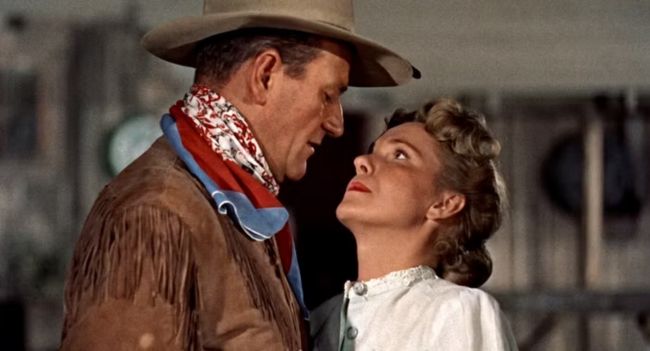
73 Years Later, John Wayne’s Most Memorable Line in Hondo Still Captures the Spirit of the Western
Few lines in John Wayne’s Westerns capture the changing American frontier as powerfully as a brief exchange near the end of his 1953 film Hondo. More than seven decades after its release, the film’s closing words remain a striking reflection on the Western genre: a world built around independence, tradition and the open frontier gradually giving way to modern civilisation.
The moment comes after the Apache retreat, hoping to regroup before another confrontation with the U.S. Cavalry. Watching them leave, Buffalo Baker, played by Ward Bond, remarks that this could mark the end of the tribe. Hondo Lane, Wayne’s character, responds with a quiet observation:
“Yeah. End of a way of life. Too bad, it’s a good way.”
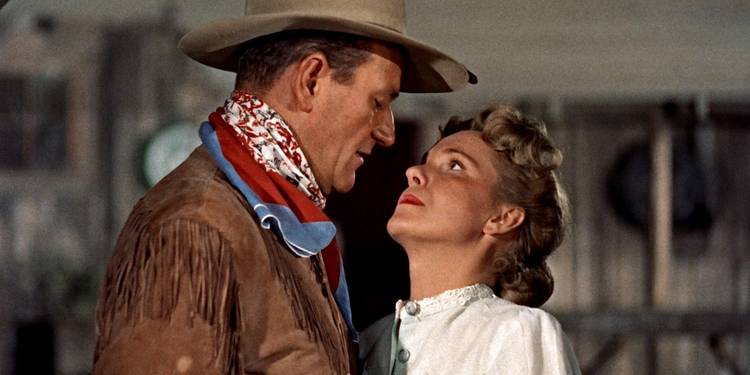
He then urges the wagons forward, and the journey continues. It is a short exchange, but its meaning reaches beyond the immediate events of the story. Hondo is acknowledging the disappearance of a culture and a way of living that he understands, even as the forces of change continue to advance.
That tension is central to the Western itself. The genre often looks back at the period when the American frontier was being transformed, placing its characters between the untamed world they know and the expanding society that threatens to replace it.
Hondo Finds the Western Genre at a Turning Point
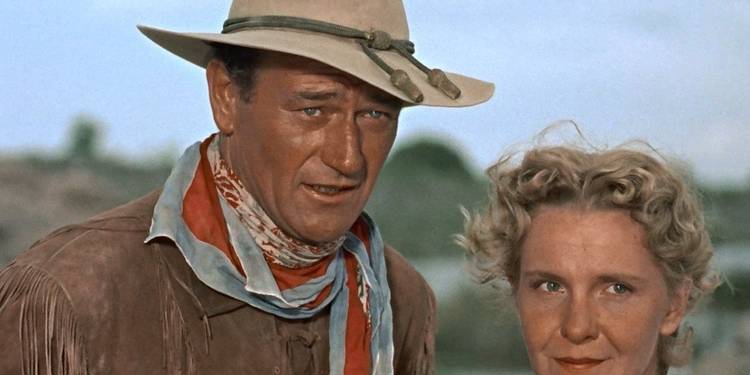
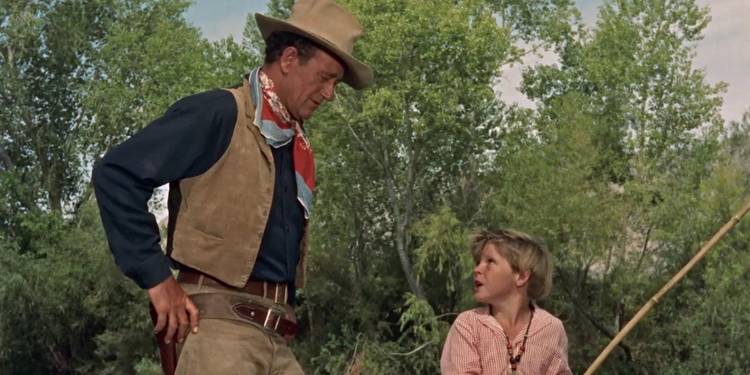
Directed by John Farrow and released in 1953, Hondo stars Wayne as Hondo Lane, a cavalry scout who encounters Angie Lowe, played by Geraldine Page, and her young son Johnny while travelling through Apache territory.
Based on Louis L’Amour’s story The Gift of Cochise, the film follows Hondo as he becomes involved in protecting the isolated family amid growing tensions between the Apache and the U.S. Army. Ward Bond plays Buffalo Baker, whose final exchange with Hondo gives the story one of its most reflective moments.
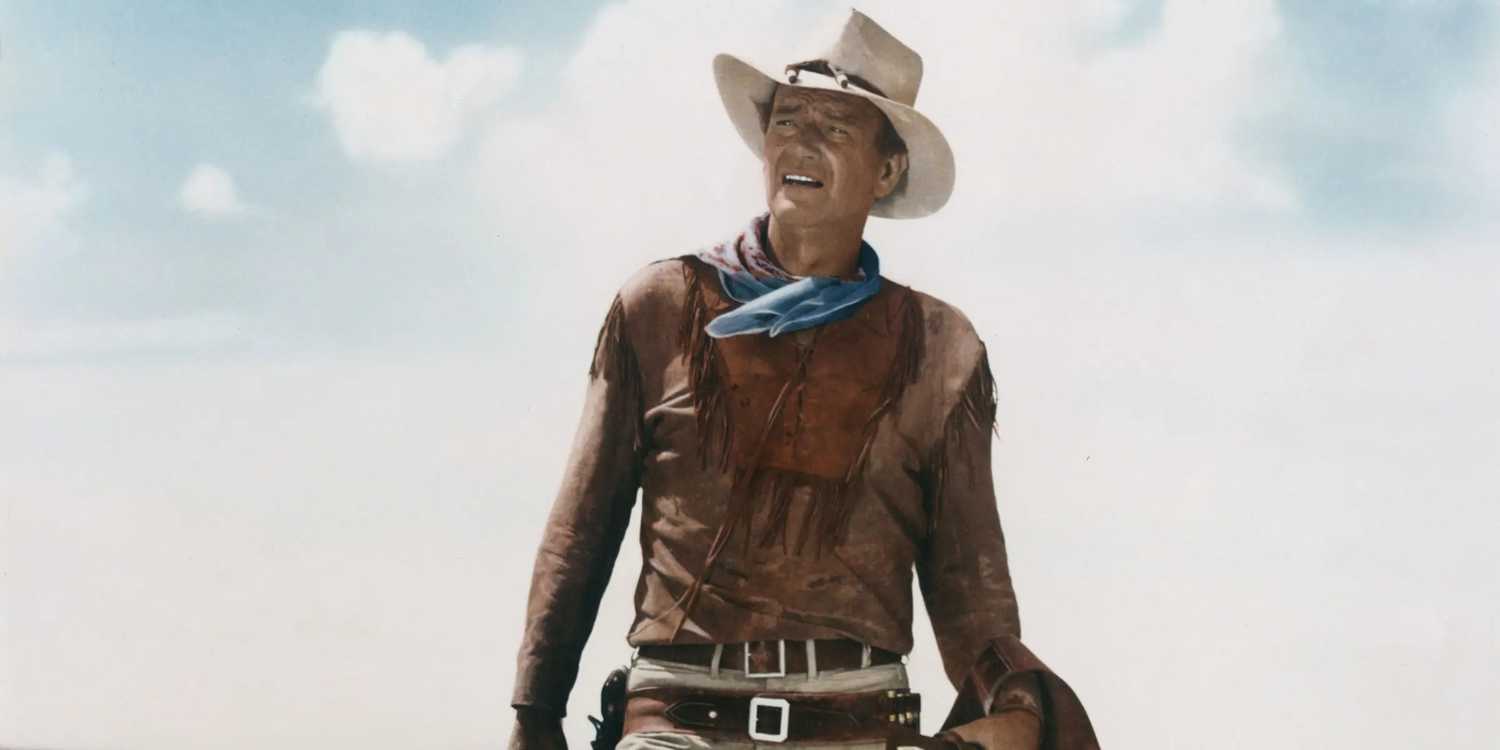
What makes the closing line especially meaningful is the position Hondo occupies between two worlds. He is a cavalry scout, but his connection to Apache life gives him an understanding of what is being lost. His words suggest that the end of the conflict will mean more than a military defeat: an entire way of life is approaching its disappearance.
For a genre so closely associated with the freedom and hardship of frontier existence, that idea carries particular weight. Many Western heroes are defined by their ability to survive beyond the reach of established society. Yet the arrival of law, industry and modern development increasingly leaves less room for the independent life they represent.
Hondo’s final observation captures that contradiction without turning the moment into a lengthy speech.
John Wayne Became the Face of the Western for a Reason
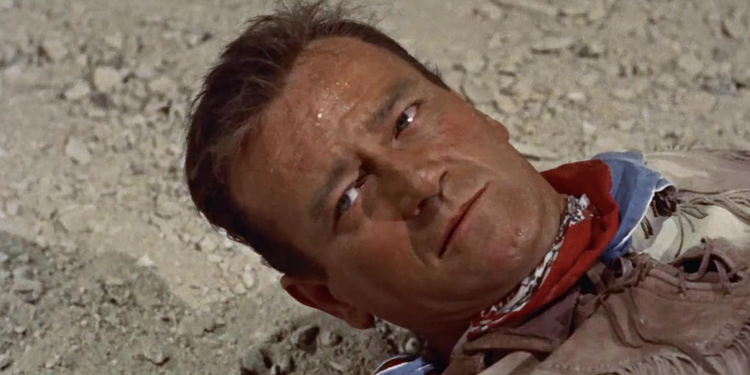
Wayne’s career became closely associated with the rise and evolution of the Western, making his role in Hondo particularly fitting. His screen persona often represented the rugged independence and self-reliance that audiences had come to associate with the American frontier.
The genre’s changing fortunes also coincided with the later years of his career. By the mid-1970s, traditional Westerns were beginning to lose some of their former dominance, as television and cinema audiences increasingly embraced other kinds of stories.
One important milestone came in 1975, when Gunsmoke ended its remarkable television run. The series had premiered on CBS on September 10, 1955, and continued until September 1, 1975, spanning 20 seasons. Wayne had played a part in its introduction: he appeared on screen to introduce the first episode and had originally been considered for the lead role of Marshal Matt Dillon. He ultimately declined because he did not want to commit to a long-term television contract, and James Arness took the part instead.
A year later, Wayne appeared in what would become his final film role, playing aging gunfighter J.B. Books in Don Siegel’s The Shootist (1976). The story follows a legendary gunman confronting his own mortality as the modern world encroaches on the town around him.
The film’s themes of an ageing hero and a disappearing frontier make it a fitting final chapter to Wayne’s screen career. Its central character faces the end of his own era, much as Hondo had reflected on the passing of another way of life more than two decades earlier.
Why the Western Has Never Completely Disappeared
Although the genre’s popularity has risen and fallen over the decades, the Western has never entirely vanished. Its enduring appeal comes partly from its ability to revisit a period of profound change in American history and explore questions that remain relevant: what happens when a familiar world disappears, how people respond to progress, and what is lost when one way of life gives way to another?
That is why Hondo’s final words still resonate. The film does not present the frontier as a world untouched by conflict or hardship. Instead, its closing moment acknowledges the complexity of watching a familiar culture disappear, even as the story moves forward.
The Western continues to offer filmmakers and audiences a way to examine the relationship between freedom and civilisation, tradition and progress, and the individual and the changing society around them. Wayne’s performance in Hondo brings those themes together in a few understated words.
For anyone interested in the genre’s history, the 1953 film remains a worthwhile watch – not only for its place in John Wayne’s celebrated Western career, but also for a final exchange that captures the melancholy at the heart of the frontier story.
Hondo is listed on Prime Video, where rental or purchase options may vary by region.