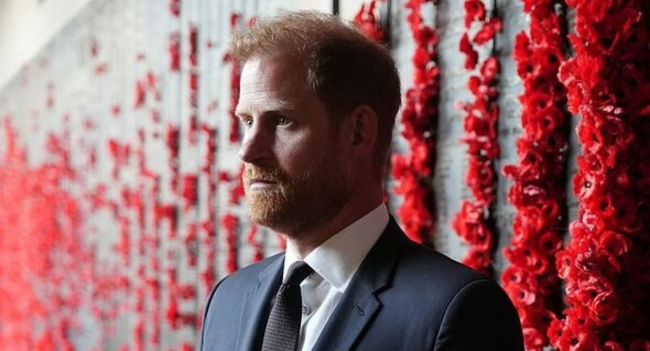
Prince Harry Barred From Remembrance Sunday Ceremony Despite 10 Years of Army Service as King Charles Stands Firm on Royal Rules

Prince Harry’s decade of military service has not secured him a place alongside the Royal Family at this year’s National Service of Remembrance, with the Duke of Sussex remaining excluded from the official ceremony at the Cenotaph.
Despite serving two tours of Afghanistan and maintaining a strong connection with military veterans, Harry is not permitted to participate in the national event because he is no longer a working member of the Royal Family.
The decision comes as King Charles leads the solemn service in Whitehall, joined by Queen Camilla, Prince William, Princess Kate and other senior working royals.
Former Buckingham Palace press secretary Dickie Arbiter has explained why Harry’s military background does not change his position, while also offering a striking assessment of the Duke’s decision to leave the Armed Forces.
Why Prince Harry Cannot Join the Royal Family at the Cenotaph

The National Service of Remembrance is one of the most important occasions in the royal calendar, bringing together senior members of the monarchy, politicians, military leaders and veterans to honour those who lost their lives in service.
King Charles leads the ceremony in his capacity as Head of the Armed Forces.
However, participation by members of the Royal Family is reserved for those carrying out official royal duties.
Harry stepped down as a senior working royal in 2020, meaning he no longer qualifies to join his relatives in an official capacity at the Cenotaph.
Dickie Arbiter, who previously served as Buckingham Palace press secretary, made clear that the distinction is central to the decision.
“That is a national event. It is for working royals to lead the country. He is not a working royal. And therefore, that is not an option, and he can forget about that.”
The same restriction applies to other major royal occasions, including Trooping the Colour, where Harry is no longer expected to participate as a working royal.
Former Palace Aide Calls Harry’s Army Departure His Greatest Mistake

Although Arbiter supports the distinction between working and non-working royals, he has also acknowledged the profound influence military life had on Harry.
In his book On Duty With the Royals: The Inside Story of the Modern Monarchy, Arbiter argues that serving in the Armed Forces provided the Duke with discipline, structure and a sense of purpose.
He writes that “the Armed Forces were the making of Prince Harry”, suggesting that military service helped shape his identity and offered an environment where achievement was based on merit.
Arbiter goes further, arguing that Harry should never have left the Army.
“Leaving the armed services was Harry’s greatest error… without that daily structure, he appeared somewhat rudderless, a man of action lost at sea.”
The comments underline Arbiter’s belief that Harry’s military career played a particularly important role in his personal development.
Despite that background, however, his years of service do not grant him an official place at the Cenotaph under the current royal arrangements.
Harry’s Return to Britain Has Not Changed His Royal Status
Harry and Meghan Markle recently returned to the United Kingdom with their two children, Archie and Lilibet.
The family arrived at the end of last month ahead of the new school year and are believed to be living in the Cotswolds.
Their relocation has prompted renewed attention to their relationship with the monarchy and whether their return might lead to a change in royal responsibilities.
However, Palace sources have stressed that the couple’s position remains unchanged.
Harry and Meghan are still considered non-working royals, despite now being back in Britain.
That arrangement dates to their decision to step away from official royal duties in 2020.
At the time, an agreement reached with the late Queen Elizabeth II established that the Sussexes could not retain a partial working role within the monarchy.
The couple subsequently moved to the United States and pursued commercial opportunities outside the Royal Family.
Harry also relinquished his honorary military appointments, including his position as Captain General of the Royal Marines.
The Cenotaph Wreath Request That Left Harry Saddened
Harry’s exclusion from the Remembrance Sunday ceremony is not a new source of disappointment.
In 2020, months after stepping back from royal duties, he requested that a wreath be laid on his behalf at the Cenotaph.
Despite his military service and personal commitment to honouring fallen service personnel, the request was refused.
According to the account, Queen Elizabeth II upheld the rule that such official tributes were reserved for senior working royals.
Harry was reportedly shocked and saddened by the decision.
The refusal highlighted the consequences of his departure from royal duties, particularly in an area of public service that remains personally important to him.
King Charles Maintains the Same Position
Six years after Harry’s departure from royal life, King Charles has not altered the arrangements governing his son’s participation in official Remembrance events.
Although Harry continues to support veteran communities and has a longstanding connection with the military, his status as a non-working royal remains the determining factor.
His return to Britain with Meghan and their children has not changed that position.
As senior royals gather at the Cenotaph to pay tribute to the fallen, the Duke and Duchess of Sussex are instead expected to observe Remembrance weekend privately.
For Harry, the distinction remains significant: his ten years in the British Army are an important part of his life, but they do not provide an exception to the rules established when he stepped away from official royal duties.