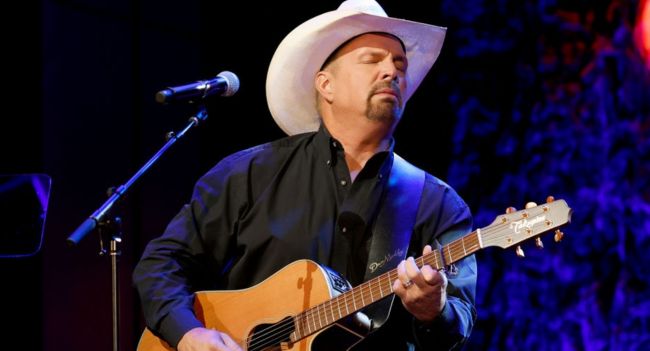
Garth Brooks Launches Blame It All on My Roots Tour With a Sold-Out Indianapolis Night Built on Hits, Nostalgia and Nearly 40 Years of Memories
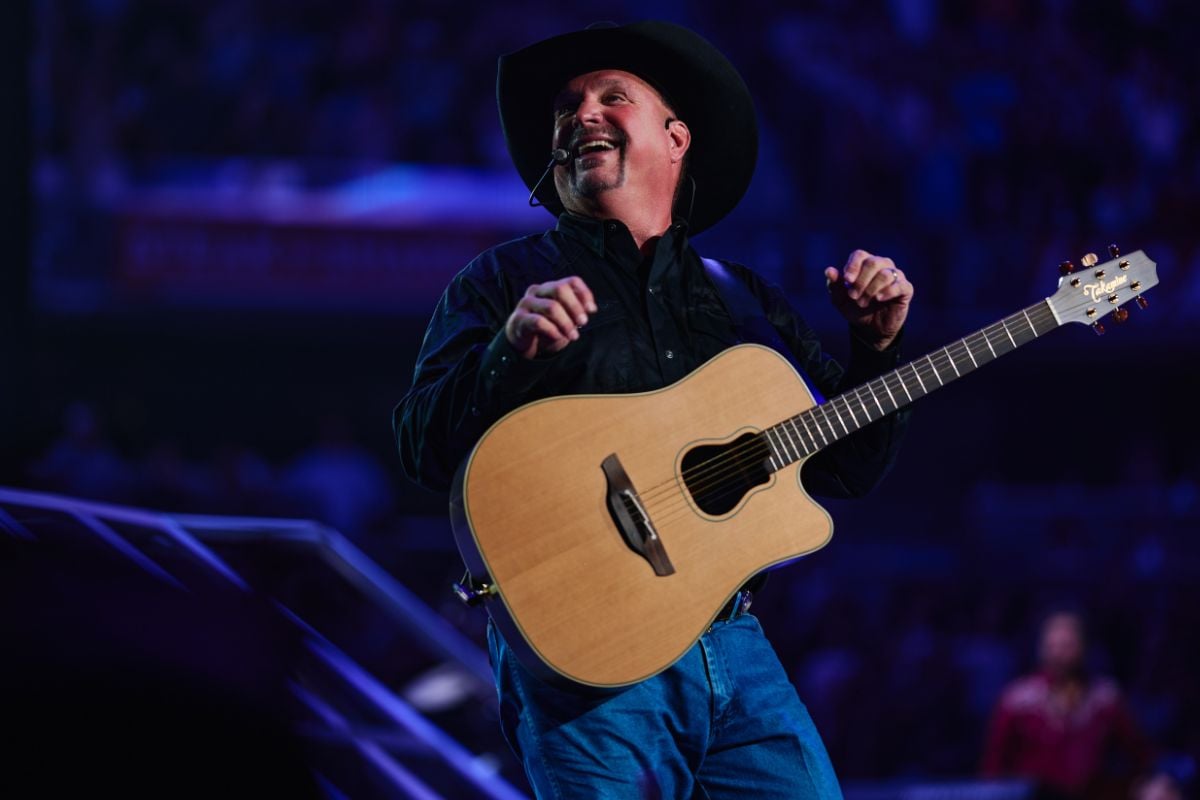
Garth Brooks; Photo by Ben Krebs
Garth Brooks did not need an opening act to warm up Indianapolis.
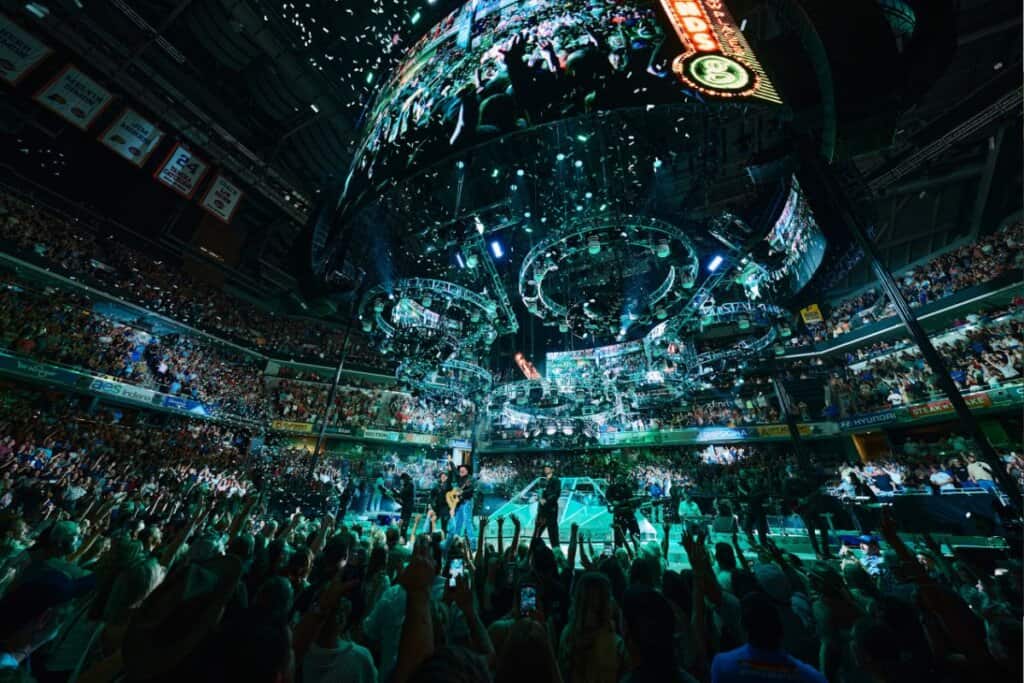
By the time the lights went down inside Gainbridge Fieldhouse on Thursday, August 20, anticipation had already filled the sold-out arena. Then a countdown appeared across “The Halo,” Brooks’ new 360-degree video system, the clock reached zero, and one of country music’s most successful live performers rose onto the stage to begin the first night of his Blame It All on My Roots Tour.
More than two hours later, after a set packed with career-defining hits, deep cuts, fan requests and production elements reaching back to his legendary 1990s tours, Brooks had made the purpose of this new run unmistakably clear.
This is not simply another Garth Brooks tour.
It is an attempt to bring the feeling of his classic arena years into 2026 — while proving that songs nearly four decades old can still make an entire building stand up and sing.
The Indianapolis opening eventually expanded to four shows from August 20 through August 23 after extraordinary ticket demand. Brooks’ official site said more than 380,000 fans virtually lined up when tickets went on sale.
No Opening Act — Just Garth Brooks
 Garth Brooks; Photo by Ben Krebs
Rather than placing another artist onstage before him, Brooks allowed the evening to build through career-spanning video montages shown around the arena.
He also recorded a message specifically for Indianapolis, thanking the band and crew who had spent roughly two years preparing the production and expressing his hope that fans would have one of the best nights of their lives.
Then the arena went dark.
A countdown began on The Halo, the tour’s circular video installation featuring screens facing both inward and outward. When it ended, Brooks emerged to an audience containing longtime followers who had watched his rise during the 1990s alongside younger listeners experiencing one of his arena concerts for the first time.
It was an appropriate introduction to a tour designed around two eras at once.
Brooks has described the production as a retro arena experience, bringing his biggest songs back into the kind of venues where much of his live reputation was originally built. The technology is modern, but several of the visual ideas deliberately reach into his past.
The Famous Drum Pod Returns Nearly 30 Years Later
The clearest connection with Brooks’ touring history came from the return of the Drum Pod.
Fans who saw his 1996–98 World Tour will recognize the concept. The original touring production became famous for putting his drummer and kit onto a platform that could rise above the stage, creating one of the defining visual images of Brooks’ arena shows.
Nearly three decades later, the idea has been redesigned using current technology and placed at the center of the Blame It All on My Roots production.
The historical connection is particularly meaningful because recordings from Brooks’ 1990s arena run ultimately became Double Live. His official website notes that the album has since been certified 25 million by the RIAA and became the biggest-selling live album in recorded music history.
The new tour is once again being used to capture live performances.
Each concert will contribute to Brooks’ new live recording project, Killer Live, continuing his interest in documenting what happens when his songs are played in front of an arena audience.
Indianapolis Connects Garth Brooks’ Past and Present
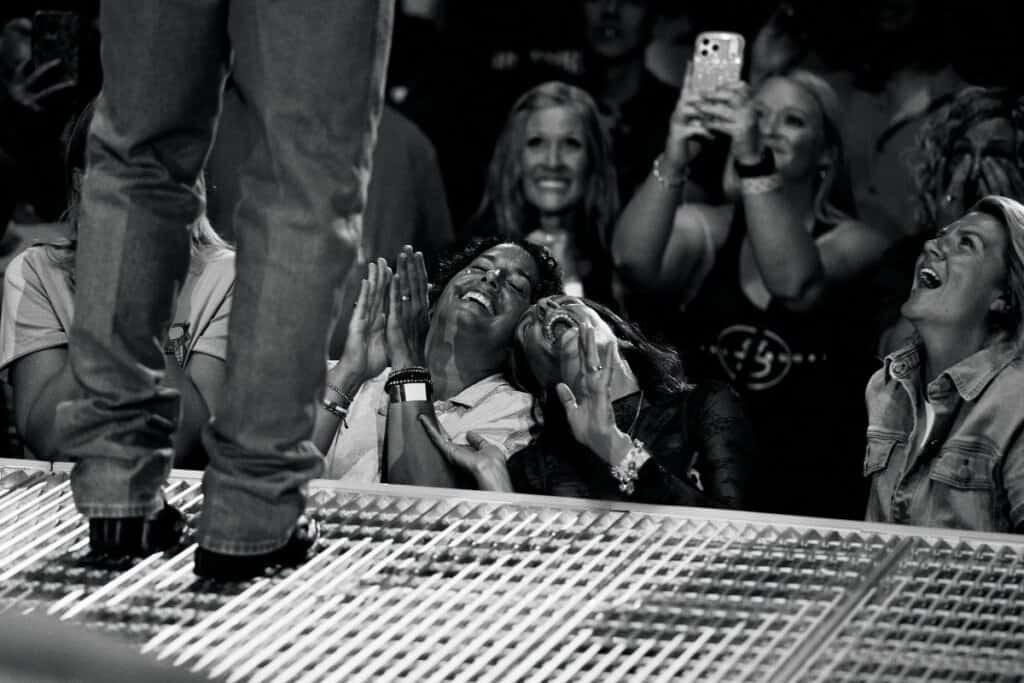 Garth Brooks; Photo by Ben Krebs
Opening this particular tour in Indianapolis carried another layer of history.
Brooks’ famous 1996–98 tour also visited the city, although those performances took place at Market Square Arena rather than Gainbridge Fieldhouse. Market Square Arena was demolished in 2001.
So while Brooks could not literally return to the same Indianapolis building, the new tour recreates something of the experience associated with that era: a comparatively intimate arena, a massive production and a deliberate effort to make the show feel immediate even for fans sitting far from the stage.
The philosophy fits something Brooks emphasized when Indianapolis ticket demand forced additional performances to be added.
“This is an arena tour, not a stadium tour, so every ticket is a great seat,” he said while announcing the expanded run. “This tour is going to get personal!”
Opening night demonstrated exactly what he meant.
The Setlist Went Straight Back to the 1990s
Brooks did not spend much time easing the audience into the show.
The early stretch leaned heavily into songs from the period when his career was reshaping mainstream country music.
“The Old Stuff” helped launch the night before Brooks moved through favorites including “Rodeo,” “Two of a Kind, Workin’ on a Full House,” “The Beaches of Cheyenne,” “Two Piña Coladas” and “Papa Loved Mama.”
Very quickly, Brooks noticed that the crowd was not merely watching.
They were singing.
He paused during the evening to reflect on something every touring artist understands: attracting an audience once is fortunate, but having that audience continue returning through the decades is something entirely different.
That relationship between performer and listener became one of the dominant themes of the night.
Songs recorded when many members of the audience were young adults were now being sung alongside children and, in some cases, another generation of fans.
“The River” Turns Into an Arena-Wide Singalong
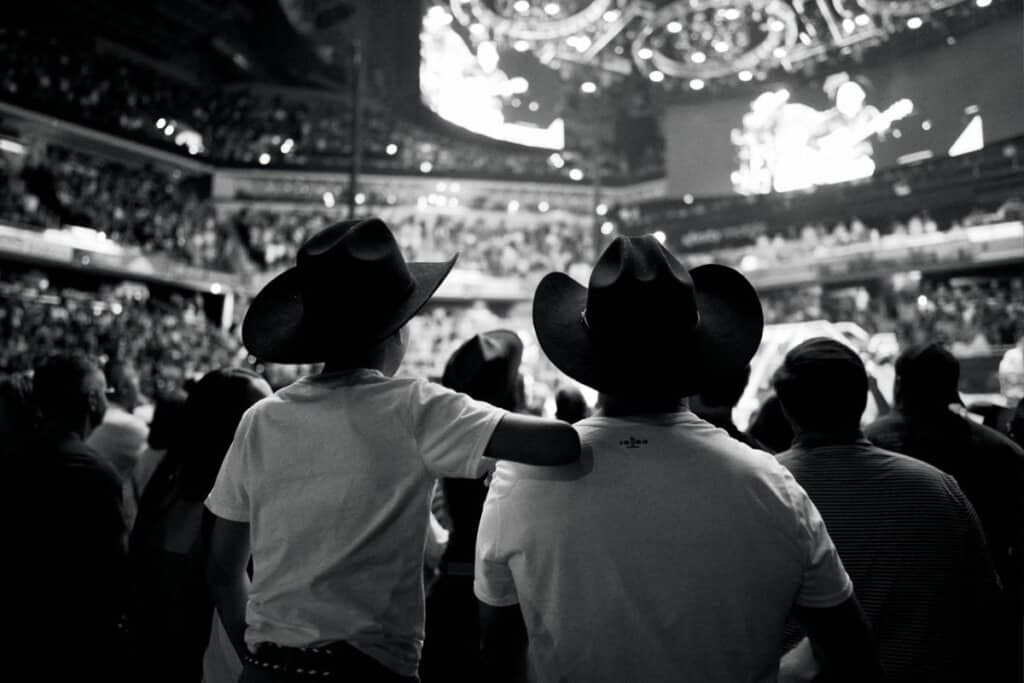 Garth Brooks; Photo by Ben Krebs
Few moments demonstrated that connection more clearly than “The River.”
As Brooks watched thousands of people sing the song back to him, he appeared visibly affected by the response.
Opening-night energy can be difficult to predict. A new production is being tested in front of its first full crowd, the band is discovering how the show feels in a real arena, and the audience has no previous setlists or reviews to guide its expectations.
Indianapolis removed much of that uncertainty almost immediately. Brooks told the crowd they had “set the pace for the whole tour,” before joking that anyone hoping to surpass the first Indianapolis audience would have serious work ahead of them.
Afterward, he expressed the same excitement publicly, declaring, “THIS is how you start a tour!!!” and describing Indianapolis as the first night of what could become “one hell of a ride.”
“The Thunder Rolls” Becomes a Full Arena Storm
As the concert progressed, Brooks moved deeper into the catalogue that made him one of country music’s defining artists.
“Unanswered Prayers” and “That Summer” were followed by songs including “Callin’ Baton Rouge” and “The Thunder Rolls.”
The latter gave the new production an opportunity to show what its technology could do.
Thunder cracked through the arena sound system while storm imagery filled the video screens, surrounding the song with dark skies and driving rain.
It was a reminder that the tour’s nostalgia does not mean Brooks is simply rebuilding a 1996 concert exactly as it existed.
Instead, he has taken recognizable ideas from that era and rebuilt them using modern equipment.
The Halo is one example. Its 360-degree construction allows visual content to reach audiences across the arena rather than focusing entirely on spectators facing a conventional stage.
The layout also allows Brooks to move around the performance area and interact with different sections of the building throughout the night.
Brooks Watched the Audience Almost as Closely as They Watched Him
Despite the production surrounding him, some of the evening’s most memorable moments came from Brooks paying attention to individual fans.
He spotted couples holding one another during love songs.
He noticed parents who had brought their children.
And throughout the concert, he read signs from audience members hoping to hear particular songs.
One sign carried Brooks all the way back to the beginning of his career.
A woman in attendance wrote that she had seen him perform at Southern Junction Nightclub & Steakhouse in Royse City, Texas, during the early 1990s.
Her request was “Bury the Hatchet,” a song that does not regularly appear in Brooks’ standard set.
He played it.
That trip into the past then led Brooks to his debut single, “Much Too Young (To Feel This Damn Old).”
Once again, the reaction caught his attention.
Decades after the song helped introduce him to country radio, thousands of people inside Gainbridge Fieldhouse could still sing it with him.
The Drum Pod Takes Flight During “Ain’t Goin’ Down”
If the quieter moments emphasized Brooks’ relationship with the crowd, “Ain’t Goin’ Down (‘Til the Sun Comes Up)” showcased the scale of the production.
During the song, the Drum Pod in the center of the stage lifted into the air.
Platforms on opposite sides also rose and rotated while the musicians continued performing, transforming the familiar hit into one of the evening’s largest visual sequences.
It offered perhaps the clearest demonstration of the tour’s central concept.
Fans familiar with Brooks’ 1990s concerts could recognize the DNA of what they were seeing, while the mechanics and technology had been rebuilt for a modern arena.
The result was nostalgia without treating the past like a museum piece.
Covers and Requests Keep the Setlist Unpredictable
Brooks also made space for music beyond his own catalogue.
Background singer Bob Bailey took the lead on a spirited rendition of The Isley Brothers’ “Shout,” while a fan request later prompted Brooks to perform Keith Whitley’s “Ten Feet Away.”
Those unexpected choices gave the concert some looseness despite its highly engineered production.
A Garth Brooks show may contain enormous video systems, moving platforms and carefully designed stage effects, but it still leaves room for the setlist to change because someone in the crowd held up a sign.
That balance became even more obvious after the scheduled main set reached its conclusion.
“Friends in Low Places” Turns the Arena Into One Giant Chorus
Few songs could realistically close the main portion of a Garth Brooks concert before the encore.
“Friends in Low Places” provided the inevitable arena-wide celebration.
Confetti filled Gainbridge Fieldhouse while thousands of voices joined Brooks on a song that has become inseparable from his live shows.
The moment illustrated why Brooks has repeatedly returned to arenas throughout his career.
“Friends in Low Places” works on radio and on record, but its reputation has also been shaped by what happens when tens of thousands of fans sing it together.
The atmosphere then shifted dramatically.
After the celebration came “The Dance.”
With one of his most enduring ballads, Brooks quieted the arena again, allowing the song itself — rather than the production — to carry the moment.
The Biggest Production Gives Way to One Man and a Guitar
Brooks briefly left the stage before returning alone.
No giant production sequence followed.
Instead, he entered what he calls “housekeeping,” a longstanding part of his concerts in which he looks around the audience, reads signs and performs requests that might otherwise never appear in the scheduled set.
Indianapolis received several notable deep cuts.
Brooks performed “The Red Strokes,” released in 1993, followed by 1995’s “She’s Every Woman” and 1997’s “Belleau Wood.”
The contrast was striking.
Earlier, platforms and musicians had risen toward the arena ceiling during “Ain’t Goin’ Down.”
Now one of country music’s biggest concert performers was standing with little more than an acoustic guitar, allowing fans to determine what came next.
That simplicity exposed the foundation underneath nearly four decades of increasingly sophisticated production.
The songs still have to work when everything else disappears.
In Indianapolis, they did.
“Standing Outside the Fire” Delivers One Final Explosion of Energy
For the closing number, Brooks brought his band back.
“Standing Outside the Fire” transformed the show into another full-scale celebration, with roughly a dozen musicians joining him across the stage.
The group included both newer players and longtime collaborators who have spent decades performing with Brooks.
When the final song ended, the entire band gathered for a bow.
Brooks waved toward the crowd, removed his familiar black cowboy hat and offered one final gesture of gratitude before leaving the stage.
The first night of the tour was over.
Indianapolis, however, was only getting started.
The city received three additional performances as part of the expanded four-show opening run, taking place from August 20 through August 23.
Nearly Four Decades of Songs — and Fans Still Know Every Word
Perhaps the most telling moment came after the music stopped.
As fans moved toward the exits, one concertgoer could be heard describing it simply as “the best concert of my life.”
That reaction is difficult to quantify, but the scene preceding it was not.
For more than two hours, an arena filled with fans from different generations had sung along to songs spanning nearly 40 years.
Some had followed Brooks since the beginning.
Others had not been born when “Much Too Young (To Feel This Damn Old)” was released.
Yet the catalogue connected them.
That may ultimately be the real purpose of Blame It All on My Roots.
The tour is filled with reminders of Brooks’ history — the Drum Pod, arena venues, video footage and songs that dominated country music during the 1990s.
But opening night did not feel like an artist simply revisiting his past.
It demonstrated what happens when that past remains active in the present.
Where the Blame It All on My Roots Tour Goes Next
Indianapolis is only the beginning of Brooks’ new arena run.
Following the four-show opening stretch at Gainbridge Fieldhouse, the tour heads to Denver’s Ball Arena in early September. Demand there was similarly intense, with Brooks’ official site reporting that more than half a million fans lined up for tickets.
Chicago follows with four performances at Allstate Arena in Rosemont from September 10 through September 13.
That venue carries its own place in Brooks’ touring history. Allstate Arena hosted the opening of his comeback tour in 2014, making its inclusion especially appropriate for a concert run designed around venues and memories from earlier chapters of his career.
Brooks then travels to Washington, D.C., for performances at Capital One Arena on September 18 and 19. His official site says ticket demand leading into the Washington dates followed more than 380,000 fans lining up in Indianapolis, 500,000 in Denver and another half-million in Chicago.
Every show will also contribute to the new live recording project, meaning the tour is not merely revisiting Brooks’ concert history.
It is documenting another chapter of it.
A Retro Tour That Still Feels Alive
Calling Blame It All on My Roots a nostalgia tour would not be entirely wrong.
Brooks has deliberately returned to the arena environment that helped define his career. The Drum Pod has returned after nearly three decades. Songs from the 1990s dominate large portions of the set. Even the production design openly acknowledges the tours that made him one of country music’s defining live performers.
Yet Indianapolis showed why nostalgia alone does not fully explain what Brooks is doing.
The most powerful moments were not always the biggest ones.
Sometimes it was an entire arena singing “The River.”
Sometimes it was Brooks seeing a fan sign and reaching back for a song he had not planned to play.
Sometimes it was thousands of people exploding during “Friends in Low Places.”
And sometimes it was simply Brooks standing alone with his guitar and discovering that people still remembered every word.
Nearly four decades into his career, Garth Brooks opened his latest tour surrounded by technology capable of transforming an arena.
But the first night in Indianapolis ultimately proved something much simpler.
The production may have changed.
The buildings may have changed.
The audience now includes multiple generations.
The songs are still doing what they always did.
And on opening night at Gainbridge Fieldhouse, they were loud enough to make the past feel very much alive.