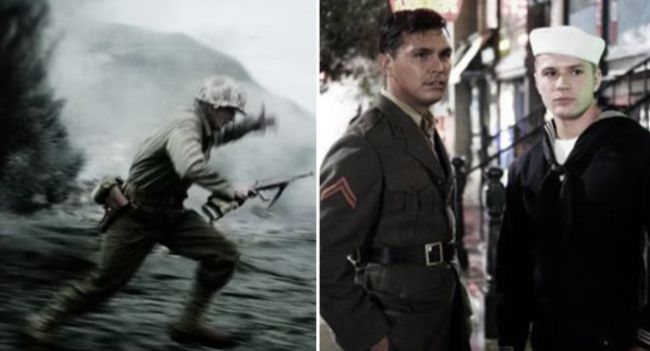
Clint Eastwood’s Flags of Our Fathers Is a Powerful World War II Masterpiece That Challenges the Myth of American Heroism
Clint Eastwood’s Flags of Our Fathers is far more than a conventional World War II film. Rather than celebrating battlefield victories or presenting soldiers as unquestionable heroes, the 2006 drama examines the devastating human cost of war and the way governments turn real acts of courage into powerful national symbols.
Directed by Eastwood, the film explores the Battle of Iwo Jima from the American perspective, focusing on the soldiers behind one of the most recognisable photographs in military history. Its companion film, Letters From Iwo Jima, approaches the same battle through the eyes of Japanese soldiers, offering a contrasting perspective on the conflict.
Together, the two films reveal Eastwood’s deeply sceptical approach to American military history and the stories nations tell about themselves.
What Is Flags of Our Fathers About?
The film follows the month-long Battle of Iwo Jima and the American servicemen who raised the flag atop Mount Suribachi. Their actions were captured by photographer Joe Rosenthal in an image that would soon become an enduring symbol of American victory.
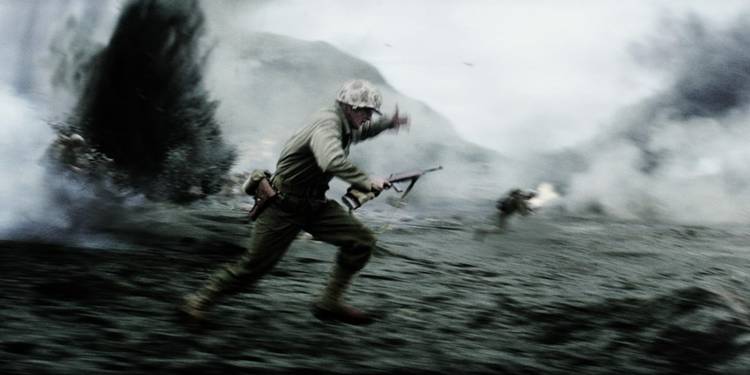
Eastwood recreates the American naval bombardment and the subsequent landing and capture of the island. The combat scenes are presented without unnecessary spectacle, emphasising the confusion, brutality and suffering experienced by the troops.
One of the story’s pivotal moments comes when Navy Secretary Forrestal orders an American flag to be raised on Japanese soil. After he asks to keep the flag as a souvenir, a colonel played by Robert Patrick arranges for a second flag to be raised. Rosenthal photographs that moment, and the image is transmitted around the world within hours.
But the photograph captures only a fraction of what happened on Iwo Jima. Fighting continues long after the flag is raised, with devastating consequences for the soldiers involved. The film also depicts the capture and killing of a young private played by Jamie Bell.
For those who survive, the end of the battle brings a different kind of struggle.
The Battle Doesn’t End When the Soldiers Return Home
Back in the United States, the men featured in Rosenthal’s photograph find themselves caught up in a national publicity campaign. Their identities become the subject of public attention, while the military and Treasury Department use the iconic image to promote the sale of war bonds.
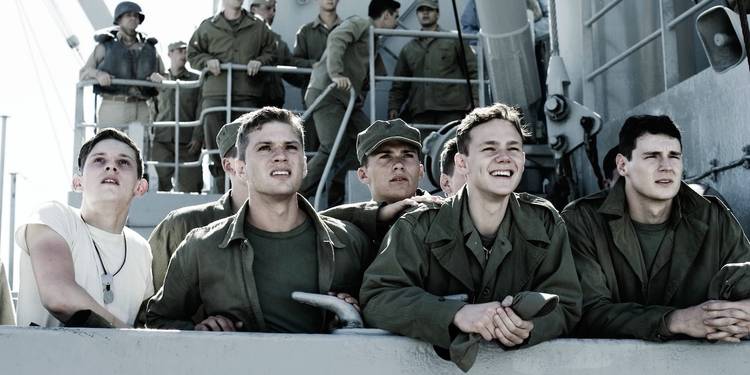
The surviving soldiers are expected to embody the nation’s idea of heroism, even as they struggle with the memories of what they have endured. Their efforts to return to ordinary life become another battle, complicated by trauma, personal difficulties and the pressure to live up to a public image they never asked for.
This shift in focus gives Flags of Our Fathers much of its emotional weight. The film is not simply interested in how the battle was won, but in what happened to the people who fought it and how their experiences were reshaped into a story of national pride.
Clint Eastwood Offers a Different Vision of Military Heroism
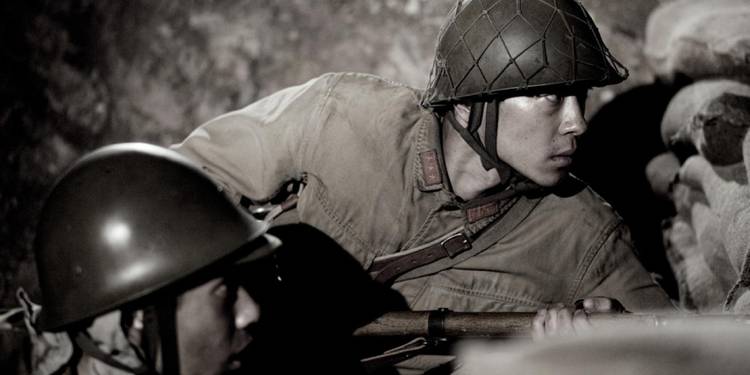
Eastwood’s approach was a striking departure from the more conventional treatment of World War II on screen. Drawing comparisons with Steven Spielberg’s Saving Private Ryan, Flags of Our Fathers uses desaturated colours and unflinching depictions of combat. Yet its overall effect is notably less triumphant.
The film’s muted, steel-grey visual palette reinforces its sombre atmosphere. According to Slashfilm, Eastwood deliberately encouraged cinematography that made the fighting feel bleak and harrowing rather than exciting. The emphasis is on the suffering behind the images of victory, as well as the complicated relationship between historical events and the national narratives built around them.
Speaking to NPR’s Terry Gross, Eastwood reflected on how the battle had unfolded far beyond what American forces initially expected.
“It was intended to be a three or four-day affair, lasted over a month. And they were pinned down a good portion of the way,” he said. “When you see an awful lot of your friends are wounded and killed, it’s not something you forget easily.”
That observation captures the film’s central concern: the psychological scars of war do not disappear when the fighting stops.
One of Eastwood’s Most Thought-Provoking War Films
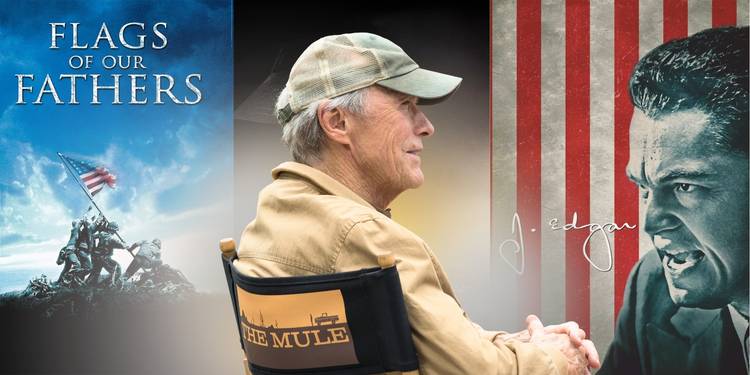
Throughout his later career, Eastwood repeatedly questioned America’s historical mythology, its use of power and the stories surrounding its national heroes. From Unforgiven, which challenged the romanticised violence of the Western genre, to historical dramas such as J. Edgar and Richard Jewell, his films often looked beyond familiar narratives to examine their more uncomfortable truths.
Flags of Our Fathers stands among the strongest examples of that approach. Its straightforward visual style and restrained storytelling make the emotional contradictions even more striking. Instead of offering an uncomplicated tribute to military heroism, Eastwood explores the relationship between trauma, alcoholism, public image and the construction of national identity.

The battle scenes are undeniably important, but the film’s deepest impact comes from following the survivors after they return home. Their experiences expose the distance between the brutal reality of war and the polished version of events presented to the public.
Bleak, thoughtful and deliberately unsentimental, Flags of Our Fathers remains one of Clint Eastwood’s finest films — a World War II drama that understands the difference between celebrating a heroic image and confronting the human cost behind it.