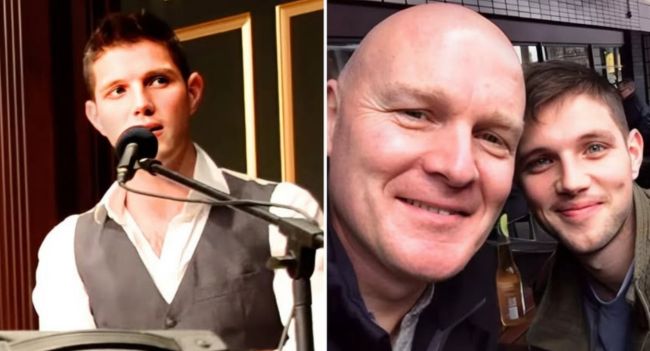
With a voice that carried both reverence and raw emotion, Celtic Thunder’s Colm Keegan delivered a performance that was as much a tribute as it was a continuation of a legacy.
During his solo tour stop at the Irish Center of Kansas City on May 3, 2015, Keegan, joined by his wife Laura Durrant, took the stage to honor the late George Donaldson with a stirring rendition of “A Song for Harry Chapin.”
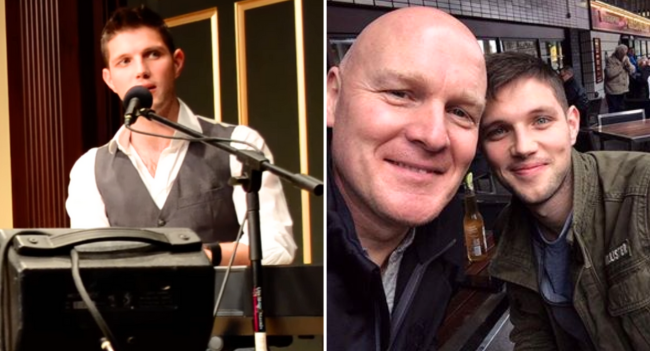
The choice was deeply symbolic: a song written by Donaldson himself in admiration of Chapin, now carried forward in memory of Donaldson by one of his closest musical companions.
From the very first verse, the performance struck a chord of intimacy and remembrance. The audience, many of whom had followed Celtic Thunder since its earliest days, knew the weight behind the moment.
Donaldson had written “A Song for Harry Chapin” as both homage and storytelling—recalling the way Chapin’s artistry shaped his own career and even forging a bond with Chapin’s family when he shared the song with them.
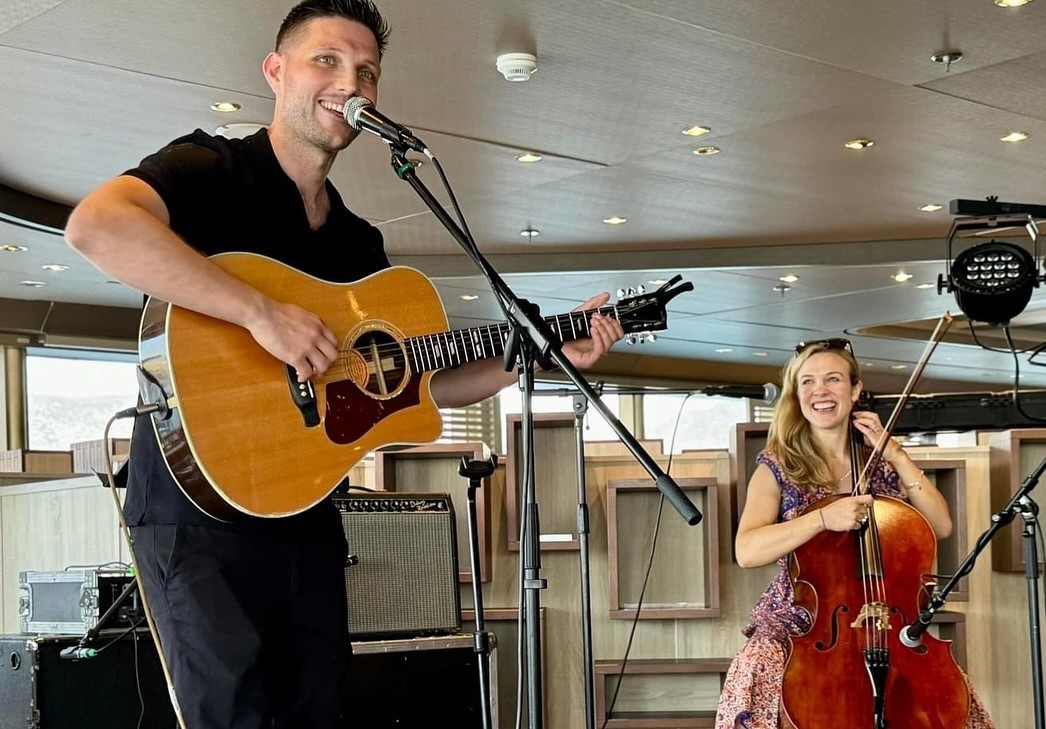
For Keegan to stand onstage years later, performing the piece in George’s memory, was not just a cover—it was an act of musical inheritance, a vow that Donaldson’s voice would not fade into silence.
The duet with Laura Durrant added another layer of tenderness, their harmonies weaving together in quiet strength. Audience members described the moment as “heartfelt music to honor George” and “a song that brought tears to my eyes.”
Others noted the unique bond between Keegan and Donaldson—“kindred spirits,” as one admirer wrote. Their camaraderie on and off stage had always been evident, and in this performance, Keegan carried not only his own voice but George’s enduring spirit.

Donaldson’s original composition, included on his album The White Rose, stood out as one of his most personal works. Inspired by Chapin’s storytelling style, Donaldson poured his admiration into lyrics that read like a journal entry, chronicling how Chapin’s music had opened his eyes to “a new style of song… like a book or like a movie, and it lasts just as long.”
Donaldson’s admiration for Chapin was lifelong, expressed not only in his songwriting but in covers such as “Cat’s in the Cradle” with Celtic Thunder and “Tangled Up Puppet,” recorded for his daughter Sarah.
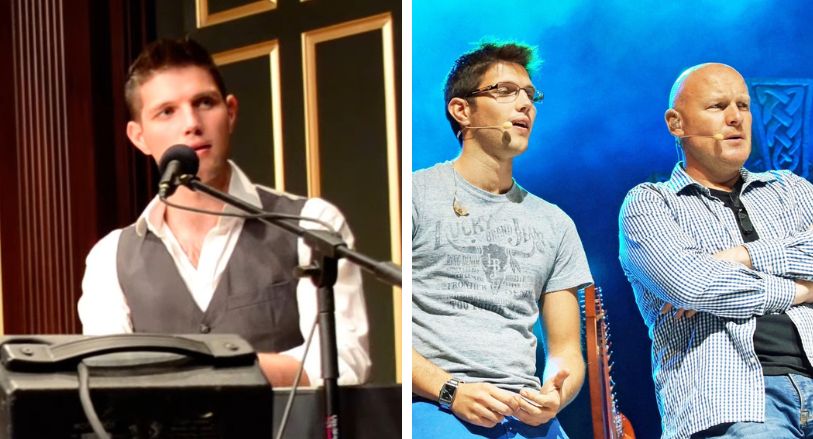
Keegan’s decision to keep this song alive in his setlist gave the performance a rare dual resonance: it was simultaneously a tribute to Harry Chapin through Donaldson’s pen, and a remembrance of Donaldson himself through Keegan’s voice. The crowd’s reaction reflected this double echo of legacy, with many left visibly moved, describing the moment as “beautiful, brilliant, heartfelt, and sincere.”
As the final chords rang out, the applause was more than appreciation—it was communal grief turned into celebration, a reminder that music has the power to outlive those who create it.