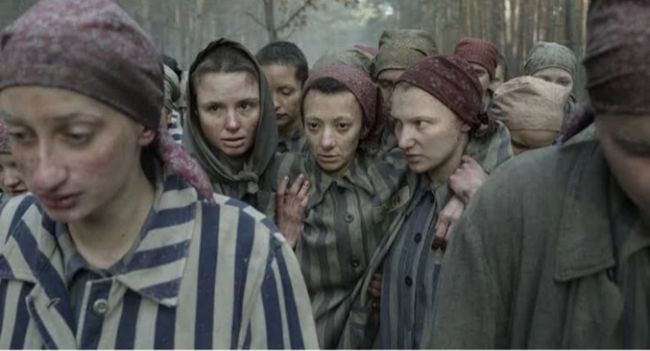

Few historical dramas present a more difficult emotional journey than The Tattooist of Auschwitz, a six-part series that explores love, survival and the enduring psychological consequences of the Holocaust.
Produced by Sky Studios and Peacock, the adaptation of Heather Morris’ bestselling 2018 novel follows two Jewish prisoners who develop an extraordinary connection amid the brutality of Auschwitz II-Birkenau.
Yet beneath its central romance lies a more complicated examination of historical accuracy, survivor guilt and the responsibility filmmakers carry when recreating one of humanity’s darkest chapters.
As a review published by Variety argues, the series is both profoundly moving and deeply uncomfortable, raising important concerns about how historical suffering is portrayed on screen.
The Extraordinary Story Behind The Tattooist Of Auschwitz
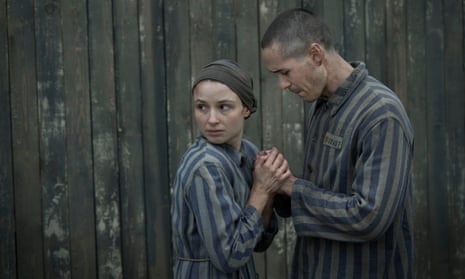
The series draws inspiration from the experiences of Lali Sokolov, born Ludwig Eisenberg, a Slovakian Holocaust survivor whose recollections formed the basis of Morris’ debut novel.
Arriving at Auschwitz in 1942, Lali eventually became a tattooist responsible for marking prisoners with identification numbers.
Among those prisoners was Gita Furman, a young woman with whom he developed a romantic relationship despite the extraordinary dangers surrounding them.
Their connection became a source of hope as they struggled to survive imprisonment. After the war, the couple reunited, married and eventually settled in Australia, where they raised a son.
Although their relationship was real, Morris’ novel was published as fiction. Historians subsequently identified several discrepancies between the book’s descriptions and established historical records.
The television adaptation attempts to acknowledge those concerns rather than present every aspect of Lali’s recollections as unquestionable fact.
Jonah Hauer-King Delivers A Haunting Performance
Directed and co-executive produced by Tali Shalom-Ezer, the drama unfolds through two interconnected timelines.
Harvey Keitel portrays an elderly Lali recounting his experiences to aspiring author Heather Morris, played by Melanie Lynskey. Their conversations introduce a series of flashbacks in which Jonah Hauer-King takes on the role of the 25-year-old prisoner.
Best known to many viewers as Prince Eric in Disney’s live-action adaptation of The Little Mermaid, Hauer-King tackles a considerably more demanding character here.
His performance captures the overwhelming psychological burden of a man forced to make impossible decisions under extraordinary circumstances.
Lali’s position as a tattooist provides him with comparatively better living conditions and additional food. However, those advantages come with an emotional cost as he is compelled to participate in the system responsible for his fellow prisoners’ suffering.
He attempts to preserve his humanity through small gestures of kindness, sharing food and apologising to those he must tattoo.
Anna Próchniak delivers an equally memorable performance as Gita, bringing warmth and determination to a character whose optimism becomes central to Lali’s determination to survive.
Their relationship provides the emotional foundation of the series without removing the devastating reality surrounding them.
Addressing The Controversies Surrounding Heather Morris’ Novel
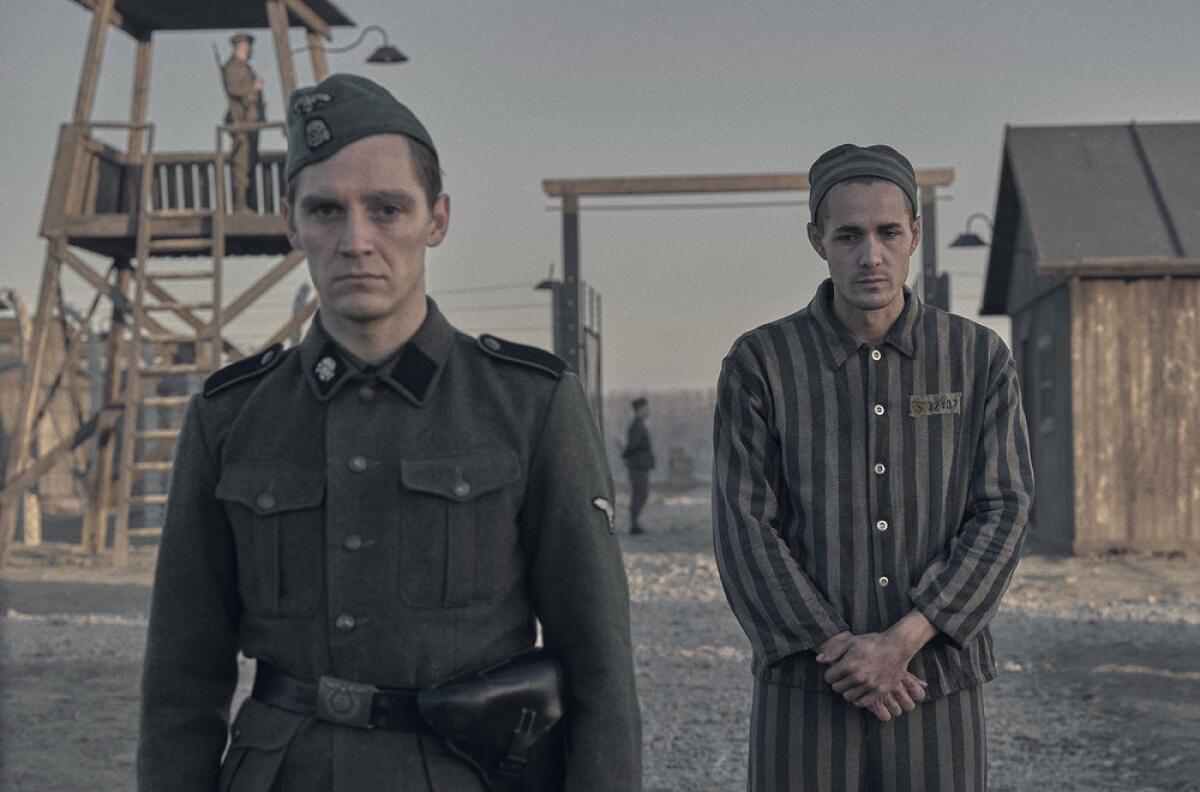
One of the greatest challenges facing the production was adapting a novel that had already attracted considerable criticism from Holocaust historians.
Questions had been raised about the book’s depiction of Auschwitz, historical chronology, medical treatments and certain details surrounding Lali and Gita’s relationship.
The production team consulted historical specialists, survivor testimonies and archival material while developing the adaptation. Several inaccuracies identified in the novel were subsequently addressed.
Among the most significant corrections was Gita’s prisoner identification number. While Morris’ novel used 34902, based on Lali’s recollection, the television adaptation uses 4562, the number Gita herself confirmed before her death.
The series also revises a scene involving medication used to treat Gita, addressing concerns about the historical availability of penicillin.
Nevertheless, the adaptation remains a dramatised interpretation of one survivor’s memories rather than a comprehensive historical account of Auschwitz.
A Disturbing Portrayal Of Human Suffering
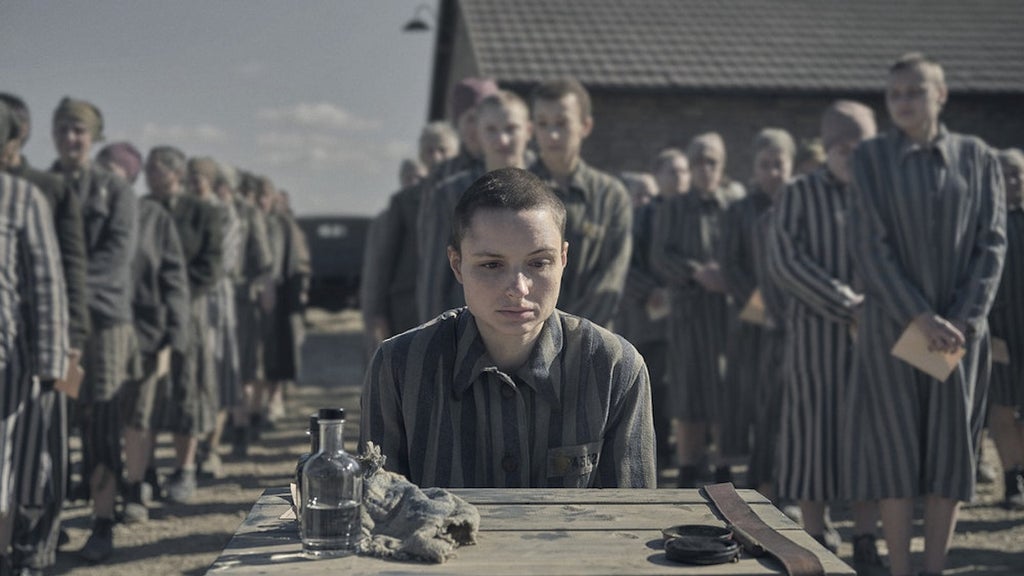
The filmmakers make little attempt to soften the cruelty experienced by concentration camp prisoners.
The series repeatedly confronts viewers with persecution, dehumanisation, violence and the constant threat of death.
An estimated 1.1 million people died at Auschwitz, and the production seeks to acknowledge those who never had the opportunity to share their experiences.
One of its most affecting visual techniques involves close-up portraits of victims looking directly towards the camera, restoring a sense of individuality to people whom the Nazi regime attempted to reduce to identification numbers.
However, the Variety review argues that some of the more graphic sequences risk overwhelming the audience without necessarily contributing greater historical understanding.
The challenge is particularly significant across six episodes, where the cumulative emotional weight makes the drama difficult to watch in a single sitting.
The production’s most powerful moments frequently emerge through quieter exchanges, when compassion and solidarity reveal the humanity that prisoners fought to preserve.
Harvey Keitel Explores The Lifelong Burden Of Survival
The scenes featuring the older Lali offer more than a temporary departure from the disturbing concentration camp sequences.
Through Keitel’s restrained performance, the series examines how trauma continues long after liberation.
Lali remains haunted by memories of people he encountered during his imprisonment. Figures from his past repeatedly appear before him, illustrating the extent to which those experiences continue to shape his understanding of himself.
Meanwhile, Melanie Lynskey’s Heather struggles with the emotional consequences of listening to his testimony.
Their relationship introduces another important dimension to the drama: the difficulty of reconstructing historical events through memories shaped by decades of grief, guilt and psychological trauma.
Rather than dismissing Lali’s testimony because certain details are disputed, the series acknowledges the complexities of remembering and communicating experiences of extreme suffering.
A Powerful Historical Drama That Demands Emotional Endurance
Released on Peacock on May 2, 2024, The Tattooist of Auschwitz is ultimately a complicated adaptation that combines a remarkable personal story with an examination of humanity’s capacity for both compassion and cruelty.
Its strongest performances reveal the psychological consequences of survival, while its framing narrative encourages viewers to distinguish personal recollection from documented historical fact.
Despite the controversies surrounding its source material and the intensity of its content, the drama offers a deeply affecting portrayal of two people determined to maintain their connection under unimaginable circumstances.
Lali and Gita’s story deserves to be remembered, but its significance extends beyond their eventual reunion. Their experiences belong to a much wider history of persecution, loss and generational trauma that must never be forgotten.
The Tattooist of Auschwitz is available as a six-part historical drama on Peacock.