“A Lot of Fun”: Martha Plimpton on Faye’s Disturbing Downfall and Working Opposite Florence Pugh in Netflix’s East of Eden
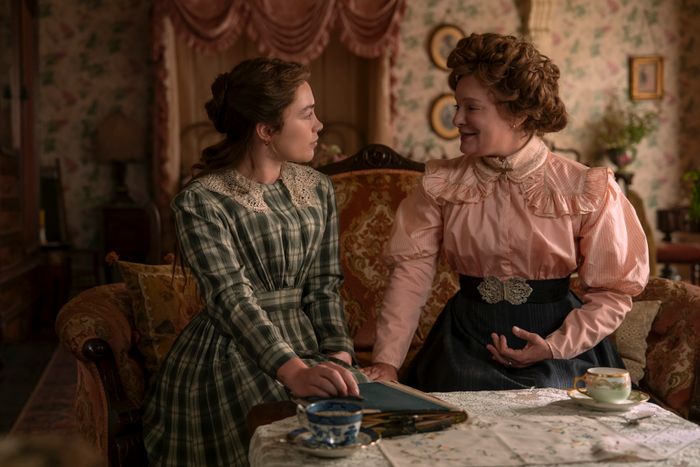
In John Steinbeck’s East of Eden, brothel madam Faye serves as one of the most tragic casualties of Cathy Ames’ path of destruction. In Zoe Kazan’s limited series adaptation for Netflix, the slow, calculated poisoning of Faye marks the turning point where Cathy—now operating under the alias “Kate”—fully transitions from an abused runaway into an uncompromising manipulator.
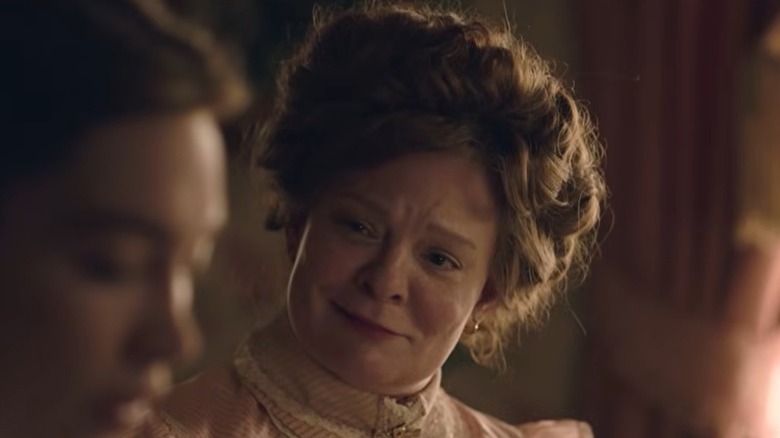
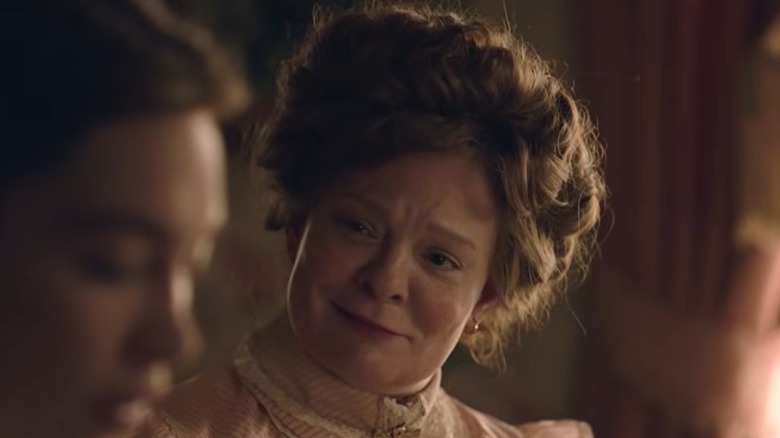
Portrayed by veteran stage and screen actress Martha Plimpton, Faye departs from the caricature of a brassy bordello keeper. Plimpton reimagines her as an elegant, guileless businesswoman whose yearning for maternal connection leaves her fatally blind to the predator under her roof.
Key Highlights from Martha Plimpton’s Discussion
-
Subverting the Bordello Cliché: Rather than playing a rowdy or cynical madam, Plimpton leaned into Steinbeck’s text, portraying Faye as an astute, tasteful woman who takes pride in creating a refined establishment and shielding the young women who work for her.
-
The Fatal Flaw of Loneliness: Faye’s vulnerability stems from a lifelong desire for family. She embraces Kate as a surrogate daughter, indulging in fantasies of traveling to Paris together as women of leisure—a fantasy that leaves her defenseless against Kate’s schemes.
-
Intense, Cut Sequences: Plimpton revealed that filming the psychological and physical manipulation in Episode 4 (“Kate”) included moments cut for being too extreme, including a sequence involving a knitting needle. Plimpton played the scenes in an alcohol-induced stupor to preserve Faye’s character integrity: “She’s guileless; she’s not stupid… She thinks it was all a dream because she just can’t conceive that her precious girl, her daughter, would do something like that.”
-
Embracing the Macabre Prosthetics: For Faye’s grim, blue-tinted deathbed demise, Plimpton wore vision-obscuring contact lenses to simulate pinpoint pupils caused by heavy metal poisoning: “When you see yourself in the mirror and go, ‘Man, this is good. I can work with this,’ you know it’s going to be a lot of fun… You have no sight, and you are literally at other people’s mercy.”
-
The Haunting Aftermath: Unlike Steinbeck’s novel, where Cathy never spares another thought for the woman she murdered, the Netflix series portrays Faye as an enduring emotional specter that lingers in Kate’s psyche across subsequent decades.
A Reimagined Dynamic: Innocence Meets Ambition

Plimpton views the clash between Faye and Kate through Steinbeck’s thematic framework of timshel (“thou mayest”), representing humanity’s moral agency and the deliberate choice between good and evil:
“She’s an avatar for the innocence of the businesswoman in that period of time. And Kate comes along to say, ‘No, I’m going to take this. You’re not being careful enough.’ If Kate is the serpent, or the side of humanity that chooses violence, then the allegorical role Faye plays is one of gentility. She wants to provide. She is a figure that Kate finds an opportunity to slowly destroy.”
Praising Florence Pugh’s focused preparation, Plimpton noted that grounded acting grounded the grand allegory:
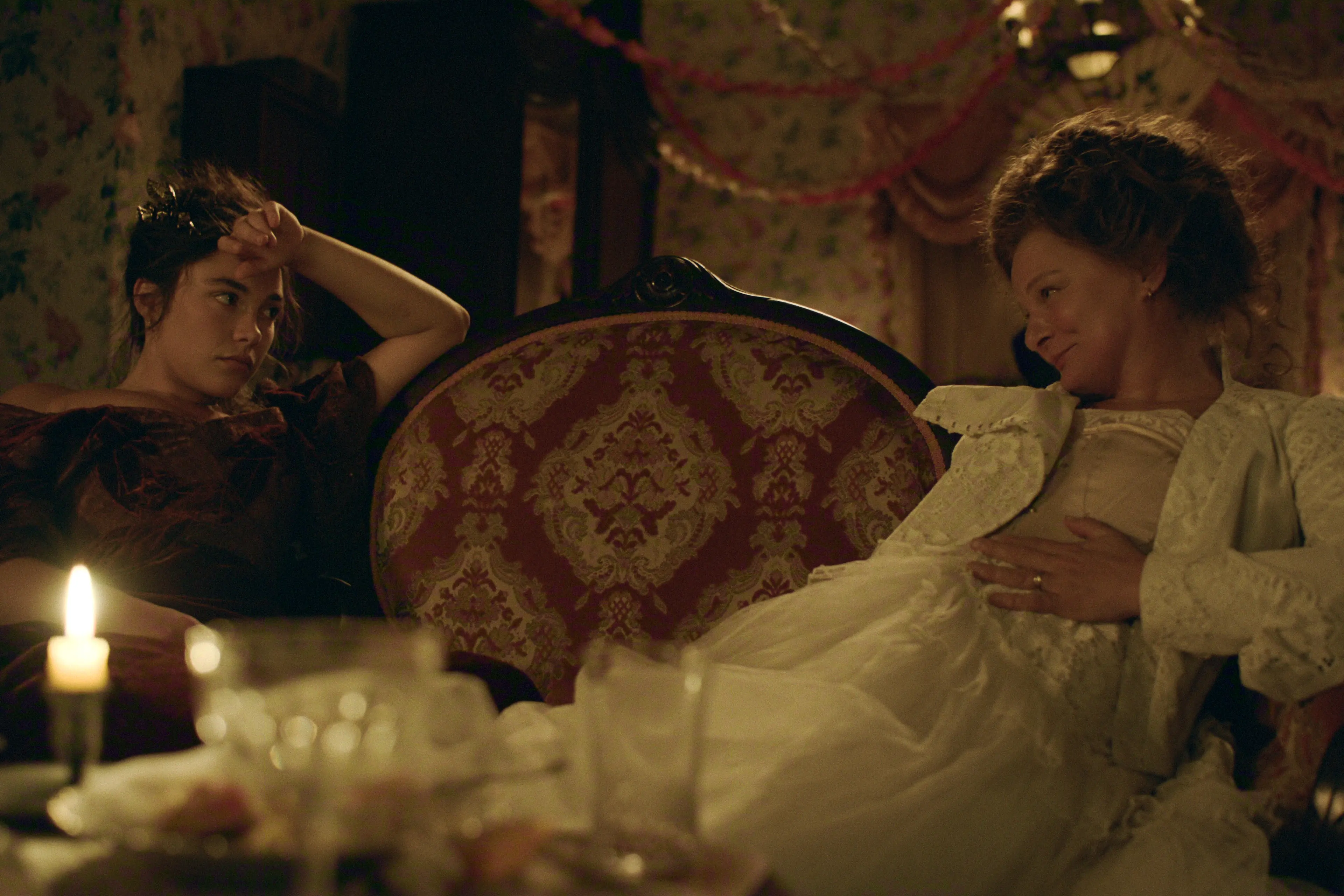
“Florence had this in her brain for several years before we shot it. She comes extremely prepared and is wonderfully game… What Zoe achieved, with Florence’s help, is examining a character who has been a symbol for a lot of things from a modern perspective. She’s less of a symbol and more of a full human being in this version.”
By infusing Faye with warmth, maternal yearning, and genuine tragic dignity, Plimpton ensures that her demise carries genuine emotional weight—anchoring one of the most chilling sequences in modern literary television.