‘Both a Murderer and a Survivor’: Zoe Kazan on Reimagining Cathy, Expanding Lee, and the Tragic Ending of Netflix’s ‘East of Eden’

In a wide-ranging post-finale discussion with Variety, creator, showrunner, and executive producer Zoe Kazan pulled back the curtain on the creative risks, budget realities, and deep personal history that shaped Netflix’s seven-part adaptation of John Steinbeck’s East of Eden.

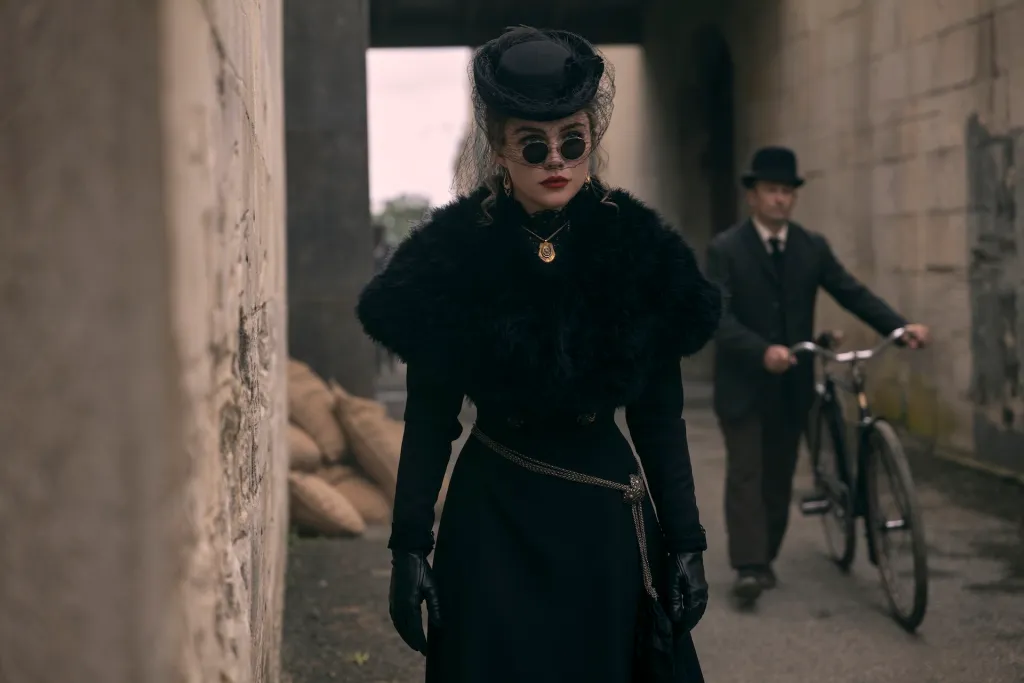
Coming more than seven decades after her grandfather Elia Kazan directed the iconic 1955 film starring James Dean, the younger Kazan spent six years developing the full literary epic. Rather than presenting a simple binary of good versus evil, her adaptation centers on the complex trauma of Cathy Ames (Florence Pugh), elevates Trask household confidant Lee (Hoon Lee) to the emotional core, and examines how generational grief can be altered through human choice.

Reframing Cathy: From Steinbeck’s ‘Monster’ to Disassociated Survivor
While Steinbeck famously introduced Cathy as someone “born a monster” devoid of a soul, Kazan’s interpretation grounds her cruelty in self-preservation and trauma:

-
Reading Between the Textual Lines: Kazan pointed to a harrowing childhood sequence described in the novel where Cathy was victimized and disbelieved, seeing in it a portrait of severe psychological dissociation:“She is unbelievably mysterious — and she’s not one thing. She is a liar, and she’s incredibly honest. She is a murderer, and she is a person who is trying to survive… She would pretend that she was shrinking down with ‘Alice in Wonderland’ and disappearing into Wonderland where nobody could hurt her. What I saw was a portrait of disassociation, and I profoundly understood that.”
-
Steinbeck’s Shifting Empathy: Analyzing Steinbeck’s published ledger letters to his editor Pascal Covici, Kazan observed that the author himself developed surprising empathy for Cathy as he wrote, transitioning from framing her as an alien beast to recognizing that “we all have a little monster blood in us.”
-
The Descent into Isolation: To dramatize Cathy’s mental unraveling and eventual suicide, Kazan visualized her agoraphobia, untreated trauma, and morphine dependency by confining her to her bedroom and using auditory hallucinations of Charles Trask (Mike Faist) as an externalized manifestation of her internal monologue.
The Lost Episode: Expanding Lee with Alexander Chee

One of the adaptation’s most significant creative triumphs—and difficult production cuts—centered on Lee’s standalone storyline:
-
The Cut San Francisco Episode: Kazan originally scripted an eight-episode order. Episode 5 was designed as an entire standalone hour following Lee’s departure to 1912 San Francisco to chase his dream of opening a bookstore.
-
Budget Constraints: Recreating historical San Francisco in 1912 across one-off locations in New Zealand would have inflated the entire production budget by a third, forcing Kazan to cut roughly 10 pages per episode and condense Lee’s journey into selective, impactful scenes.
-
Collaborating with Alexander Chee: To address the racial blind spots of mid-century American literature, Kazan partnered with acclaimed Asian American novelist Alexander Chee (Edinburgh) to script Lee’s inner journey:“I truly believe that Lee’s storyline is stronger for being integrated with the rest of this story and not siloed into its own episode… If we have done our job of giving Lee a bigger life here, it is really because of the gentle and confident hands that this role was in with Hoon Lee.”

-
The Platonic Marriage: Kazan noted that while she and Chee discussed the subtext of Lee’s sexuality and his deeply intertwined, “platonic marriage” dynamic with Adam Trask (Christopher Abbott), those discussions were kept open-ended and were not explicitly imposed on the final cut.
Key Creative Decisions & Adaptational Pivots
| Creative Choice | Book / 1955 Film Precedent | Netflix Miniseries Direction |
| Feminist Lens | A director suggested making the show solely about Cathy. | Kazan rejected excluding men, choosing instead to explore gender parity across fathers, sons, and brothers. |
| Cutting the Hamiltons | Generational immigrant clan spanning multiple subplots. | Condensed to prevent the miniseries from becoming an episodic “survey course” of history, keeping focus on the Trask drama. |
| The Devastating Climax | Cal takes Aron to Cathy’s brothel; Aron dies in WWI; Adam forgives Cal on his deathbed. | Kazan adhered strictly to Steinbeck’s text, calling the final blessing scene her narrative “North Star” from day one. |
Next Project: Taking on Larry McMurtry’s ‘Lonesome Dove’


Relieved to step away from the personal weight of Steinbeck and her own family’s Hollywood legacy, Kazan confirmed her next project with co-showrunner Jeb Stuart for Netflix: an adaptation of Larry McMurtry’s classic Western epic, Lonesome Dove.
-
A New Creative Chapter: Kazan admitted she previously viewed the book as “for boys” until reading it on set in New Zealand:“I think like all great Westerns, it’s a rumination on death and how we make meaning of our lives in the face of our certain mortality… I don’t think anyone would presume that we are going to do better than Robert Duvall as Gus. That’s a performance for the ages. But I do think that these stories can be told again and again by different people.”