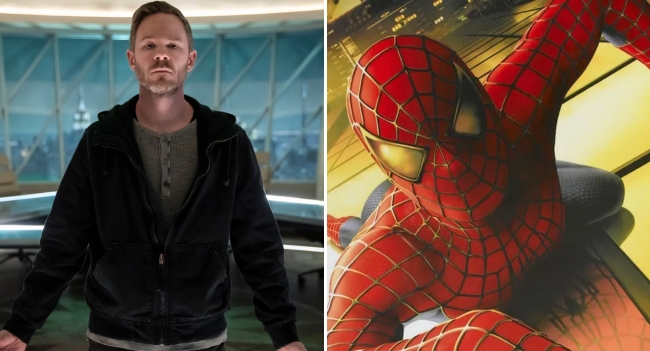
Prime Video’s Invincible Is What Happens When Spider-Man Meets The Boys


When The Boys premiered on Prime Video in 2019, it changed what audiences could expect from television superhero stories. Its success showed that viewers were willing to embrace comic-book adaptations that had nothing to do with Marvel or DC, particularly when those stories were willing to push violence, cynicism and adult themes much further than traditional superhero fare.
Prime Video soon found another way to explore that audience.
In 2021, the streaming service launched Invincible, an animated adaptation of Robert Kirkman’s comic series. While it shares The Boys’ appetite for brutal violence and mature storytelling, Invincible takes its superhero world in a very different direction.
At its center is Mark Grayson, voiced by Steven Yeun, a teenager whose father is the Superman-like Omni-Man, voiced by J.K. Simmons. Mark is trying to figure out who he is, manage school, family, friendships and romance, and learn how to use his emerging abilities.
That setup makes Invincible feel remarkably close to a darker, bloodier version of the classic Spider-Man coming-of-age story.
The difference is the world Mark eventually discovers beyond Earth. What begins as the story of a teenager becoming a superhero grows into an enormous science-fiction saga involving the Viltrumites, alien civilizations, interplanetary wars, alternate realities and threats on a multiversal scale.
By its fourth season, Invincible has transformed its relatively simple superhero premise into one of Prime Video’s most expansive genre stories. Season 4 premiered on March 18, 2026, with eight episodes, and all eight are now streaming on Prime Video.
Invincible Has the Coming-of-Age Story of Spider-Man


One of the enduring strengths of Spider-Man is that Peter Parker’s story has always been about more than putting on a costume and fighting villains. His powers arrive at a crucial stage of his life, forcing him to deal with the ordinary difficulties of growing up while carrying extraordinary responsibilities.
Mark Grayson follows much the same path.
At the beginning of Invincible, Mark is a teenager trying to understand his abilities and determine what kind of hero he wants to become. He has to deal with the same everyday concerns as other young people while learning that being a superhero demands considerably more than simply possessing superpowers.
Like Peter Parker, Mark is also quick with a joke and genuinely excited by the idea of becoming a hero. He wants to do the right thing, and part of the show’s early appeal comes from watching that optimism collide with the reality of superhero work.
There is an important twist, though.
Mark’s journey takes place in a world where horrific violence is never far away. Invincible does not shield its young protagonist from the consequences of his inexperience simply because he is still growing up. People die brutally, characters suffer devastating injuries, and even powerful superheroes can be left helpless in the face of overwhelming force.
That contrast gives Mark’s story much of its personality. His enthusiasm and humor recall the more youthful side of Spider-Man, while the world around him can be every bit as cruel and unforgiving as the one inhabited by Homelander and Butcher in The Boys.
The result is a superhero coming-of-age story where optimism constantly has to survive contact with a deeply violent reality.
Where Invincible and The Boys Take Different Paths
Although The Boys and Invincible occupy similar territory, their worlds operate according to very different rules.
The Boys deliberately creates a grounded setting. Its superheroes exist in a world that is recognizable enough for the satire to work, with superpowers treated through a semi-plausible science-fiction framework. The series uses that relatively realistic foundation to examine what would happen if superheroes were controlled by corporations and treated as commercial products.
That grounding is central to what makes The Boys work.
It also places limits on how far the series can go. The show can explore increasingly outrageous superhero concepts, but it still has to maintain the basic illusion that its world could plausibly exist.
Invincible has no such restriction.
Because it is animated, the series can move freely between Earth, alien worlds and enormous battles without having to reproduce everything through the physical limitations and costs of live-action production. More importantly, realism was never the central goal of Invincible. Its world is openly comic-book in scale and design.
That gives the series room to grow in ways The Boys simply cannot.
Mark’s Story Quickly Becomes Much Bigger


The clever part of Invincible is that it does not remain focused on Mark simply learning how to be a superhero.
His relationship with Omni-Man becomes the gateway to a much larger mythology. Mark’s powers are connected to his father’s Viltrumite heritage, and that revelation gradually pulls him into conflicts that extend far beyond his family or even Earth itself.
The scope expands into alien civilizations, interplanetary warfare, alternate realities and eventually multiversal threats.
What initially resembles a relatively familiar superhero origin story therefore becomes something much closer to a sprawling science-fiction epic. Mark is still dealing with the personal consequences of growing up and becoming a hero, but those struggles are increasingly tied to conflicts involving entire worlds and civilizations.
That expansion is one of the biggest distinctions between Invincible and The Boys.
The Boys remains deliberately constrained by the world it has created. Its satire depends on recognizable institutions, corporate power and a version of superhero culture that feels uncomfortably close to reality.
Invincible can keep widening the canvas.
The animated format allows the series to depict alien environments, gigantic battles, strange abilities and increasingly elaborate versions of comic-book reality without compromising its basic premise. The show can be as fantastical as the source material demands while retaining the graphic violence and mature storytelling that helped make it stand out in the first place.
Four Seasons Have Turned Invincible Into a Superhero Epic
By the time Invincible reached its fourth season in 2026, the contrast between its humble beginnings and its enormous mythology had become especially clear.
The fourth season follows Mark as he deals with the aftermath of the catastrophe of the previous season while struggling with guilt and trying to protect his home and the people he loves. Prime Video describes the season as setting Mark on a collision course with a powerful new threat capable of changing humanity’s fate.
The season also continues the show’s established balance between personal drama and increasingly enormous superhero conflicts. Mark remains at the center, but the story around him has become vastly larger than the teenager who originally wanted to discover what it meant to be a hero.
That evolution is ultimately what makes the Spider-Man comparison so useful.
Like Peter Parker, Mark Grayson begins as a young person trying to balance ordinary life with extraordinary responsibility. Like The Boys, Invincible refuses to make superhero violence safe or comfortable. But unlike either comparison point, Invincible eventually has the freedom to push its mythology deep into cosmic science fiction.
The show can move from school, family and teenage relationships to alien wars and multiversal danger without abandoning the character at its center.
That combination gives Invincible a distinctive place among modern superhero series. It has the youthful energy and coming-of-age structure associated with Spider-Man, the graphic violence and cynical edge that made The Boys such a landmark for Prime Video, and a mythology expansive enough to compete with the biggest superhero universes.
The difference is that Mark’s journey keeps getting bigger.
What begins with a teenager discovering his powers ultimately becomes a sprawling story about family, identity, responsibility and survival on a scale that reaches far beyond Earth. Four seasons in, Invincible has shown just how far a superhero coming-of-age story can go when it is freed from the boundaries of live-action realism.