Netflix Canceled 1899 After One Season. It Still Deserves Your Attention


There are plenty of shows you can finish and immediately move on from. 1899 is not one of them.
Released on Netflix in November 2022, the eight-episode sci-fi mystery takes a familiar setup, a passenger ship crossing the Atlantic, and turns it into something far more unsettling. A missing vessel suddenly appears in the middle of the ocean. A silent boy becomes central to the mystery. Strange symbols begin appearing. Memories, identity, reality, and consciousness all become increasingly difficult to separate.
Then Netflix canceled the series after its first season.
That decision left 1899 with a cliffhanger and a story that was clearly built to continue. Yet the eight episodes that exist remain one of Netflix’s most ambitious and visually distinctive mystery series, particularly for viewers who enjoy stories that refuse to explain themselves too quickly.
A Ghost Ship Is Only the Beginning
The story takes place in 1899 aboard the Kerberos, a steamship carrying European emigrants toward New York.
The passengers come from different countries and backgrounds, and many are carrying secrets of their own. They are hoping for a new beginning, but the voyage quickly becomes anything but hopeful. Netflix describes the series as a mind-bending mystery in which unexplained events alter the course of an immigrant ship bound for New York.
The first major mystery arrives when the Kerberos receives a signal concerning the Prometheus, a sister ship that disappeared four months earlier.
The vessel is eventually found drifting in the Atlantic, apparently abandoned.
That discovery changes everything.
What begins as a dark period mystery gradually develops into a much stranger science-fiction puzzle. The passengers encounter impossible events, recurring symbols, disturbing memories and questions about what they can actually trust. The ship’s confined corridors and shadowy interiors intensify the feeling that there is nowhere to escape and nowhere to find a straightforward explanation.
The result is a series that constantly changes the viewer’s understanding of what is happening without abandoning the central mystery.


Emily Beecham Leads a Cast Full of Secrets
At the center of 1899 is Emily Beecham as Maura Franklin, a neurologist traveling alone at a time when doing so sharply sets her apart from the expectations surrounding women of the period.
Maura is intelligent, determined and clearly carrying her own emotional wounds. As the strange events aboard the Kerberos escalate, she approaches them with the instincts of a scientist, searching for explanations even when the evidence becomes increasingly difficult to reconcile with reality.
Aneurin Barnard plays Daniel, a mysterious passenger whose presence raises almost as many questions as the events surrounding the ship. He becomes increasingly important to Maura as the series progresses, challenging her understanding of what she sees and what she remembers.
Andreas Pietschmann plays Captain Eyk Larsen, the exhausted and melancholy commander of the Kerberos. His own history gradually becomes part of the larger puzzle, adding another layer to a character who initially appears to be a more conventional ship captain.
The ensemble is one of the show’s greatest strengths. The passengers speak different languages and come from different cultures, giving the series an unusually international quality. Netflix specifically highlighted its multilingual format when announcing the show, with performers speaking in their respective mother tongues.
Every passenger has a reason for wanting to leave the past behind. As their secrets emerge, those individual stories begin connecting to the central mystery.
The more the passengers learn about one another, the less certain they become about the world around them.
1899 Shares the DNA of Dark


For anyone who enjoyed Dark, the appeal of 1899 is obvious.
Both series were created by Jantje Friese and Baran bo Odar, the duo behind Netflix’s German science-fiction mystery Dark. That earlier series became known for its tangled timelines, interconnected characters and increasingly elaborate exploration of time, identity and causality.
1899 carries many of the same creative instincts.
The story asks viewers to question what they think they know. Memories may not be as reliable as they seem. Identity becomes increasingly complicated. Seemingly insignificant details can acquire new meaning later.
But the setting gives 1899 a very different personality.
Where Dark centered on a small German community and gradually expanded across generations and timelines, 1899 places an international group of strangers together on a single ship. Their different languages and personal histories become part of the mystery rather than simply background details.
That makes the series feel broader from the start while retaining the creators’ fascination with puzzles and hidden connections.
A Visually Striking Mystery
One of the easiest things to appreciate about 1899 is how carefully its atmosphere is constructed.
The Kerberos is almost a character in its own right. Its wooden corridors, cramped rooms, dark passageways and flickering lights create a constant sense of confinement. The gray Atlantic outside provides little relief.
Netflix also promoted the production’s elaborate sets and costumes, including period clothing designed for the show’s multinational ensemble. The production was created at DARK BAY, a virtual-production studio founded by DARK WAYS and Studio Babelsberg.
That attention to visual detail matters because 1899 spends much of its first season balancing two very different sensations.
On one hand, it looks like a lavish period drama about European emigrants crossing the Atlantic at the end of the 19th century.
On the other, increasingly strange events suggest that the apparent reality of the story may be hiding something much larger.
The contrast is what makes the show so effective.
The Mystery Keeps Expanding
The series begins with the Prometheus mystery, but that is only the first layer.
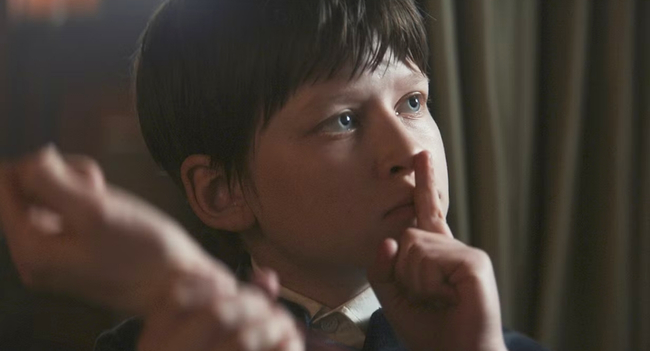
As the eight episodes progress, 1899 introduces time loops, simulations, recurring geometric symbols, disturbing memories and the mysterious child Elliot. The story repeatedly takes something familiar and makes it uncertain.
That approach can be demanding, but it is also what gives the series its identity.
Rather than treating the audience as if it needs every mystery explained immediately, 1899 asks viewers to pay attention to patterns and details. Even seemingly minor elements can become part of the larger puzzle.
The creators later explained that the show deliberately planted clues throughout the season, including visual and numerical references connected to its larger ideas about simulations and virtual realities.
There is also a thematic thread running underneath the mystery. 1899 repeatedly returns to questions about memory, trauma, identity and consciousness. The supernatural and science-fiction elements are therefore more than simple twists. They give the series a way to examine how much of a person depends on what they remember and what they believe to be real.
Netflix’s Cancellation Changed the Experience
Netflix premiered 1899 worldwide on November 17, 2022, with eight episodes.
Less than two months later, the series was canceled.
On January 2, 2023, creators Baran bo Odar and Jantje Friese announced that 1899 would not return. They said they had hoped to complete the story across a second and third season, as they had done with Dark.
That is the frustrating part of watching 1899 now.
The first season was designed as part of a larger mystery. The finale provides revelations and changes the direction of the story, but it also leaves significant questions unresolved. The cancellation means viewers will never see the continuation that the creators had envisioned.
Still, that does not make the existing season worthless.
In fact, the unfinished nature of 1899 is part of what makes it such an intriguing piece of Netflix’s science-fiction catalog. The series establishes an elaborate mystery, develops a large ensemble of complicated characters and spends eight episodes steadily undermining the audience’s assumptions.


Why 1899 Is Still Worth Watching
The simplest reason is that very few shows look or feel quite like it.
1899 combines period drama, psychological thriller, science fiction and mystery without settling comfortably into any one category. Its multilingual ensemble gives the story a distinctive international character, while the isolated setting keeps the narrative tightly focused.
The performances help, particularly from Emily Beecham, Aneurin Barnard and Andreas Pietschmann. Their characters all arrive aboard the Kerberos with histories they would rather leave behind, and those histories gradually become inseparable from the larger mystery.
Most importantly, the show is willing to leave the viewer unsettled.
If you need every question answered and every storyline neatly resolved, the cancellation will make 1899 a difficult recommendation. But if you enjoy ambitious mystery stories that invite you to examine every detail and reconsider what you think you know, the first season still offers plenty to dig into.
There are only eight episodes, so the entire existing story can be watched in a single day. Netflix still lists all eight episodes on its official series page.
1899 may never get the opportunity to complete its journey. But the season that exists remains a striking example of how much a television mystery can accomplish when it embraces ambiguity, atmosphere and genuinely strange ideas.
Sometimes a canceled series is remembered for what it failed to finish.
1899 deserves to be remembered for what it managed to build in the first place.