BRAIN TEASER: The 1% Club Contestants Face A Tricky Four-Digit PIN Challenge, But Can You Solve It In Just 30 Seconds?
Only one contestant cracked the final puzzle on The 1% Club, securing the correct answer as viewers debated whether the supposedly toughest question was easier than the riddles that came before it.

ITV’s The 1% Club put contestants’ logic and reasoning skills to the test once again, but a four-digit PIN puzzle left several players struggling to find the right answer.
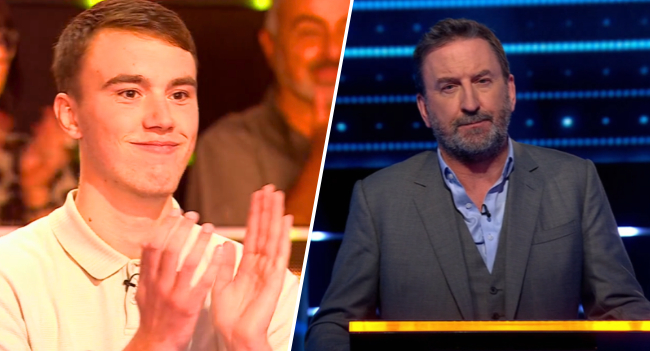
Presented by Lee Mack, 56, the popular game show brings 100 contestants together to tackle a series of puzzles designed to test their reasoning, common sense and ability to think under pressure. Rather than relying on general knowledge, players must work through each challenge within a strict 30-second time limit.
On the Saturday, April 26, 2025, episode, three contestants reached the final round, giving them a chance to win a share of the substantial jackpot and earn a place in the exclusive 1% Club.

Can You Crack The Four-Digit PIN Puzzle?
The final challenge presented players with a diagram containing letters arranged in what initially appeared to be a random pattern.
Lee introduced the question with a personal scenario:
“I keep forgetting my four-digit PIN number. I know each digit is higher than the previous digit but I need this diagram to remember it.
“What is my four-digit PIN number?”

Contestants had to examine the letter grid, work out how it revealed the four digits and identify the PIN before time ran out.
Only one contestant, Dominic, managed to give the correct answer: 1489.
Another player came within a single digit of solving the puzzle. Had the contestant answered correctly, they would have joined Dominic in the 1% Club, meaning the jackpot would have been shared between the successful players.
The challenge offered a final opportunity to claim part of the £96,000 prize, making the result particularly significant for those who had survived the earlier rounds.

Viewers Debate Whether The Final Question Was Too Easy
While the contestants faced a race against the clock, the puzzle prompted a different debate among viewers watching at home.
Several fans took to social media to argue that the final question was surprisingly straightforward compared with some of the earlier challenges.
One viewer wrote: “That one per cent question was just a word search puzzle, found earlier questions much harder”
Another agreed, commenting: “Some of the later questions are, once again, easier than some of the earlier questions.”
A third viewer shared a similar opinion, writing: “The 1% question was sooo easy and the one before v difficult in 30 seconds without a terrific memory.”

The comments highlighted a recurring point of discussion among fans of the programme: the perceived difficulty of the questions does not always increase as contestants progress through the game.
For some viewers, the final PIN challenge was far more manageable than the puzzles that preceded it. Others felt that the earlier questions demanded sharper memory and faster thinking, particularly when contestants had only half a minute to work out an answer.
Despite the mixed reactions, the challenge still required players to interpret the diagram correctly under pressure, and only one of the three finalists successfully identified the four-digit code.

The correct PIN was 1489. Would you have spotted the pattern in 30 seconds, or would one of the earlier puzzles have proved even harder?