Agatha Christie’s Tommy & Tuppence Could Fix Two Problems That Have Weakened Recent Adaptations


Agatha Christie has been adapted so many times that another screen version can easily feel like familiar territory. Yet Agatha Christie’s Tommy & Tuppence has a particularly promising advantage: it appears to understand two things that some recent adaptations have struggled with, namely how to make Christie feel contemporary and how to preserve the humor that made her mysteries so distinctive.
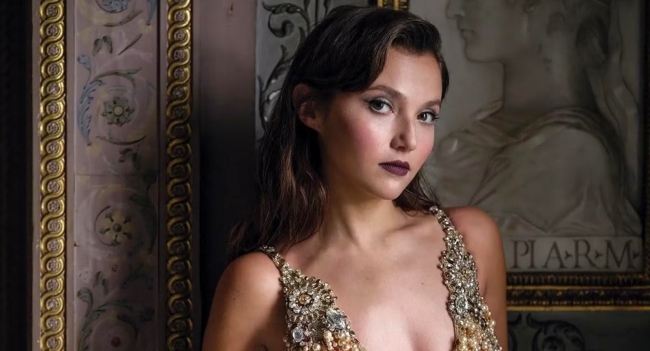
The six-part BritBox series stars Antonia Thomas and Josh Dylan as Tuppence and Tommy, with Imelda Staunton as Aunt Ada. It premieres in the U.S. and Canada on September 15, 2026, and is officially described as the first contemporary English-language television adaptation of Christie’s work.
That approach could be exactly what the material needs.
Christie remains one of the most influential mystery writers in history. Her detective stories helped establish a template that continues to shape television and film, from the observational brilliance of Hercule Poirot and Miss Marple to later detectives such as Columbo‘s Frank Columbo and Murder, She Wrote‘s Jessica Fletcher.
Her influence also extends well beyond traditional whodunits. The structure of And Then There Were None, published in 1939, helped establish the isolated-group murder formula that would become a staple of crime and horror. The novel’s legacy can be felt in everything from Friday the 13th to later, darker mystery stories such as Sharp Objects and His & Hers.
That is a substantial legacy for any new Christie adaptation to inherit.
Tommy & Tuppence Brings Christie Into the Present
Tommy and Tuppence have never had quite the same cultural visibility as Poirot or Miss Marple, but the pair occupy a distinctive place in Christie’s body of work.
Thomas Beresford and Prudence “Tuppence” Cowley appear together in five stories: The Secret Adversary, Partners in Crime, N or M?, By the Pricking of My Thumbs, and Postern of Fate. Unlike many of Christie’s recurring characters, Tommy and Tuppence age as the series progresses, with their stories stretching from 1922 to 1973.
Their appeal comes partly from the contrast between them. Tommy is practical, loyal and less inclined toward Tuppence’s imaginative leaps, while Tuppence is energetic, impulsive and eager to throw herself into an investigation. Their differences make them natural partners: Tommy can rein in Tuppence’s more adventurous instincts, while Tuppence is often the person willing to take the first step toward danger.
The new series takes that relationship and gives it a contemporary setting.
Thomas plays Tuppence as an actress and Dylan plays Tommy as a crime writer who has lost some of his enthusiasm for the profession. Their relationship also begins from a different place than it does in the original stories. They are exes who reconnect, rather than simply appearing as the young married couple familiar to readers of Partners in Crime. The first episode finds them reunited at a lavish wedding before a murder gives them a reason to investigate together again.
That modernization is significant because Christie herself was not writing historical fiction.
When The Secret Adversary appeared in 1922, its world was contemporary. The same is true of the later novels as Christie moved through different decades and responded to changing social circumstances. Her characters and settings evolved with the period in which she was writing.
That makes a modern Tommy & Tuppence adaptation arguably more faithful to the spirit of the books than an adaptation that automatically assumes Christie must be presented as a period piece.
Christie Was Never Really a Period Mystery Writer


Part of the modern perception of Christie comes from the sheer number of adaptations that recreate the visual language of the early 20th century.
That approach can work beautifully. Netflix’s Agatha Christie’s Seven Dials, for example, deliberately embraces its 1920s setting, with Mia McKenna-Bruce playing Lady Eileen “Bundle” Brent in the three-part adaptation released in January 2026.
Kenneth Branagh’s Poirot films have likewise leaned heavily into elaborate historical settings and period atmosphere.
But there is a danger in treating the period setting as though it were the central attraction of Christie’s stories. Her books were written for contemporary readers, and she regularly incorporated the social changes and anxieties of her own time.
Her later work demonstrates that particularly well. Hallowe’en Party, published in 1969, is rooted in the changing world of the 1960s, while other late Christie stories engaged with modern concerns rather than attempting to preserve the atmosphere of an earlier generation.
That perspective makes Tommy & Tuppence‘s present-day setting more interesting than a simple modernization exercise.
The show can retain the fundamental machinery of a Christie mystery while allowing the characters to exist in a world that audiences recognize. Phones, the internet and modern social life can coexist with secrets, red herrings and carefully constructed puzzles. The production has also been described as using modern technology selectively rather than allowing it to make the mysteries effortless.
That distinction matters. Updating Christie works best when the technology changes the circumstances without eliminating the need for deduction.
The Other Big Change Is Tone
The setting is only half of what makes Tommy & Tuppence intriguing.
The other change is tonal.
Christie’s mysteries can contain murder, tragedy and genuine suspense, but they can also be funny. Her characters often have a playful relationship with the absurdity of the situations around them. That lighter quality can disappear when adaptations attempt to give every Christie story the grim atmosphere of a modern prestige crime drama.
The trend toward increasingly bleak mysteries became especially prominent during the late 2010s and early 2020s. Series such as True Detective, Sharp Objects, The Killing, Mindhunter and Mare of Easttown helped establish an appetite for grim investigations, damaged protagonists and oppressive atmospheres.
Those qualities can work brilliantly in the right story. They are less effective when imposed on a Christie mystery whose appeal depends partly on wit and theatricality.
And Then There Were None is an obvious exception. The 1939 novel is considerably darker than much of Christie’s work, so the bleakness of the 2015 television adaptation made sense for the material.
The same approach is harder to justify with stories that are fundamentally more playful.
Some Recent Christie Adaptations Have Taken the Wrong Lesson
The 2018 adaptation of The ABC Murders illustrates the problem.
With John Malkovich playing Hercule Poirot, the series had an impressive lead actor and a famous Christie mystery to work with. Yet its deliberately somber treatment drained much of the strange, eccentric pleasure from the material. The result felt closer to a grim modern crime thriller than to the mischievous mystery writing that made Poirot such an enduring character.
Kenneth Branagh’s Murder on the Orient Express from 2017 had a similar, though less pronounced, issue. The film was not as tonally distant from Christie, but its weighty treatment of the central story sometimes overwhelmed the lighter qualities of the original novel.
There is nothing inherently wrong with making a Christie story darker. And Then There Were None proves that the author’s work can support it. The problem comes when darkness becomes the default rather than a response to the particular story being adapted.
That is where Tommy & Tuppence appears to have made a smarter choice.
A More Playful Christie Could Be the Right Christie


The official description of Tommy & Tuppence emphasizes the duo’s romance, comedy and mystery in equal measure. BritBox presents them as detectives who repeatedly fall in and out of love while becoming involved in entertaining cases.
That combination feels particularly well suited to these characters.
Tommy and Tuppence were never simply two interchangeable investigators. Their relationship is part of the appeal, and the friction between Tommy’s practicality and Tuppence’s impulsiveness gives their investigations a natural comic rhythm.
The new series also has Imelda Staunton playing Aunt Ada, Tommy’s wry retired private-detective aunt. Her presence gives the central pair another source of personality and comic energy.
The result could be a mystery series that allows suspense to coexist with fun rather than forcing the two into separate categories.
That balance may be the show’s biggest opportunity.
A Christie adaptation does not need to choose between being genuinely mysterious and being entertaining. The author’s own work routinely did both. The puzzle keeps viewers guessing, while the characters, dialogue and situations prevent the story from becoming oppressively solemn.
That is especially important for Tommy & Tuppence, whose original stories were built around a partnership that could accommodate adventure, romance, comedy and crime.
Why the Modern Setting Could Make the Characters Feel More Like Christie
There is an irony to the way Christie adaptations are often presented today.
The more faithfully they reproduce the visual details of the 1920s or 1930s, the more they can sometimes feel removed from the qualities that made the books exciting when they were first published.
A contemporary setting reverses that equation.
Instead of asking viewers to step backward into a historical version of Christie’s world, Tommy & Tuppence brings Christie’s storytelling methods into the world audiences already know. The mystery can still revolve around suspicious behavior, hidden motives, false leads and apparently impossible circumstances, but the surrounding details belong to the present.
That gives the series a chance to demonstrate why Christie’s storytelling remains so adaptable in the first place.
It also helps distinguish Tommy & Tuppence from recent period adaptations such as Seven Dials. Netflix’s 2026 series deliberately recreated the 1920s and was built around the period atmosphere as part of its identity. Tommy & Tuppence, by contrast, is making its contemporary setting central to the concept.
Neither approach is inherently superior. The difference is that Tommy & Tuppence is making a deliberate choice to treat Christie as a living storytelling tradition rather than something that can only exist inside a historical costume drama.
Tommy & Tuppence Has the Ingredients for a Strong Christie Revival
There is still plenty of room for the series to go wrong.
A contemporary setting could become too dependent on modern references. The comedy could become overly twee. The romance could overwhelm the mysteries. Or the production could swing too far in the opposite direction and lose the lightness that makes the characters distinctive.
For now, however, the signs are encouraging.
Agatha Christie’s Tommy & Tuppence brings Antonia Thomas and Josh Dylan together as two characters whose contrasting personalities naturally create both investigative tension and comedy. It updates their world without discarding the fundamental appeal of the partnership, while the six-part format gives the series room to explore multiple mysteries.
Most importantly, it appears to have recognized two problems that have affected some recent Christie adaptations: the tendency to make her work look more historical than it actually was, and the tendency to make her mysteries darker than their source material requires.
The series premieres on BritBox in the U.S. and Canada on September 15, 2026, with six 45-minute episodes releasing two at a time before continuing weekly.
Whether Tommy & Tuppence ultimately finds the right balance between comedy, romance and murder remains to be seen. But by bringing Christie’s sleuths into the present while restoring some of the playfulness associated with her writing, the series has chosen a promising way to make one of her lesser-known detective partnerships feel relevant again.